
Last updated November 14, 2026
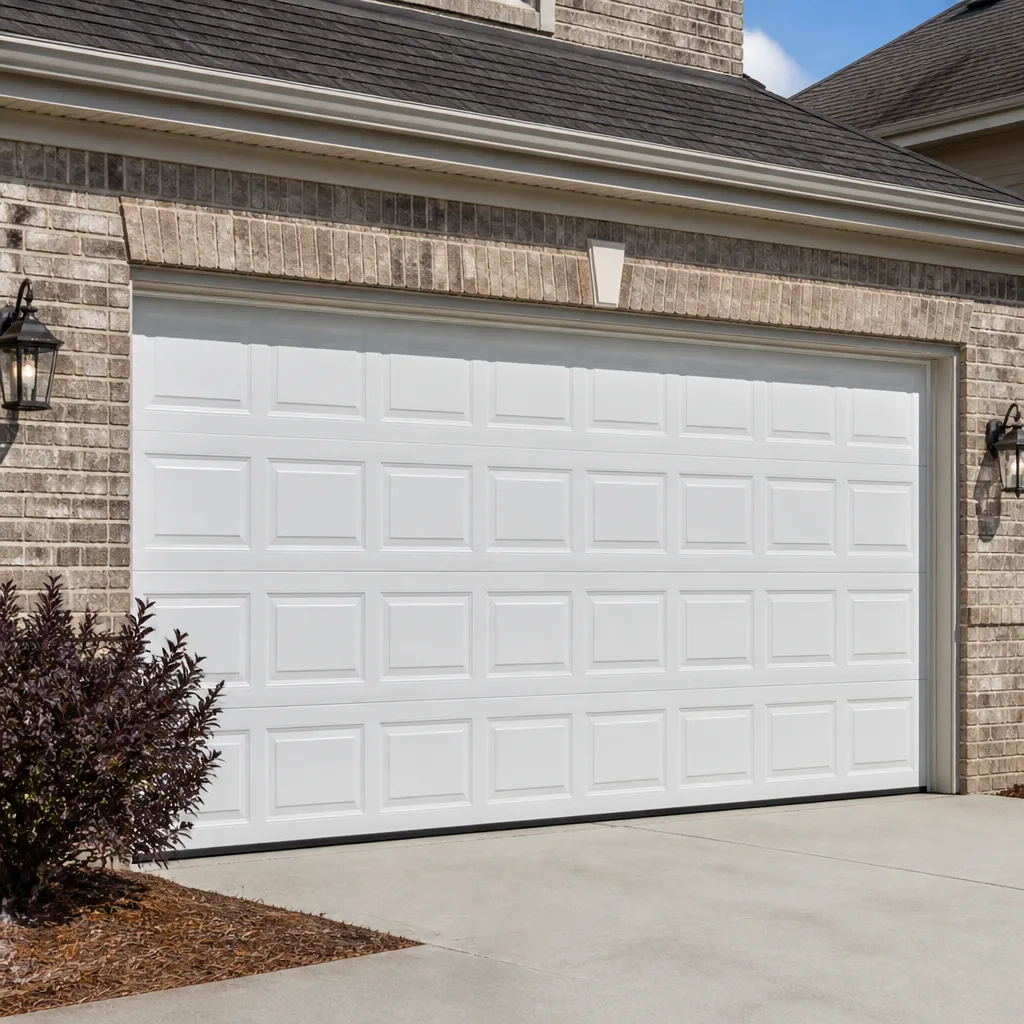 Raised-panel steel
 Carriage house
 Modern flush
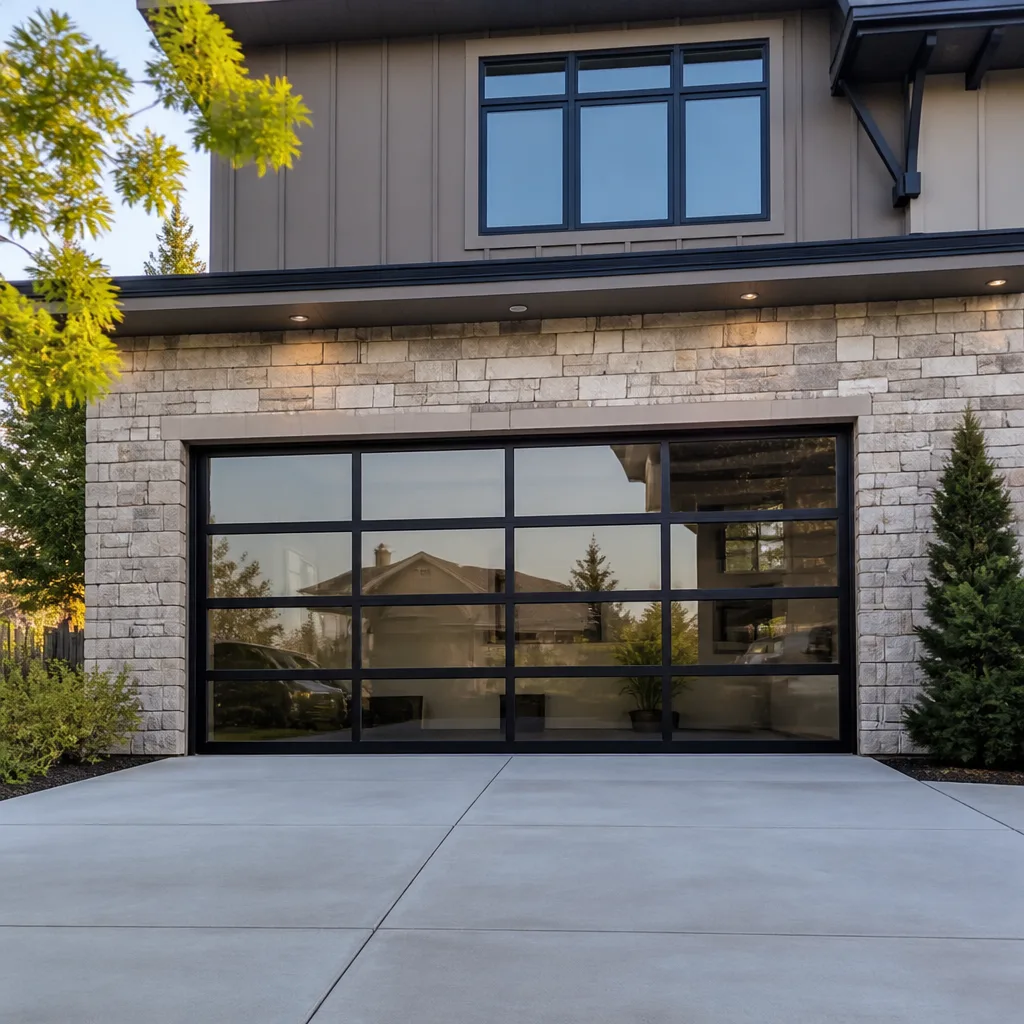 Full-view glass
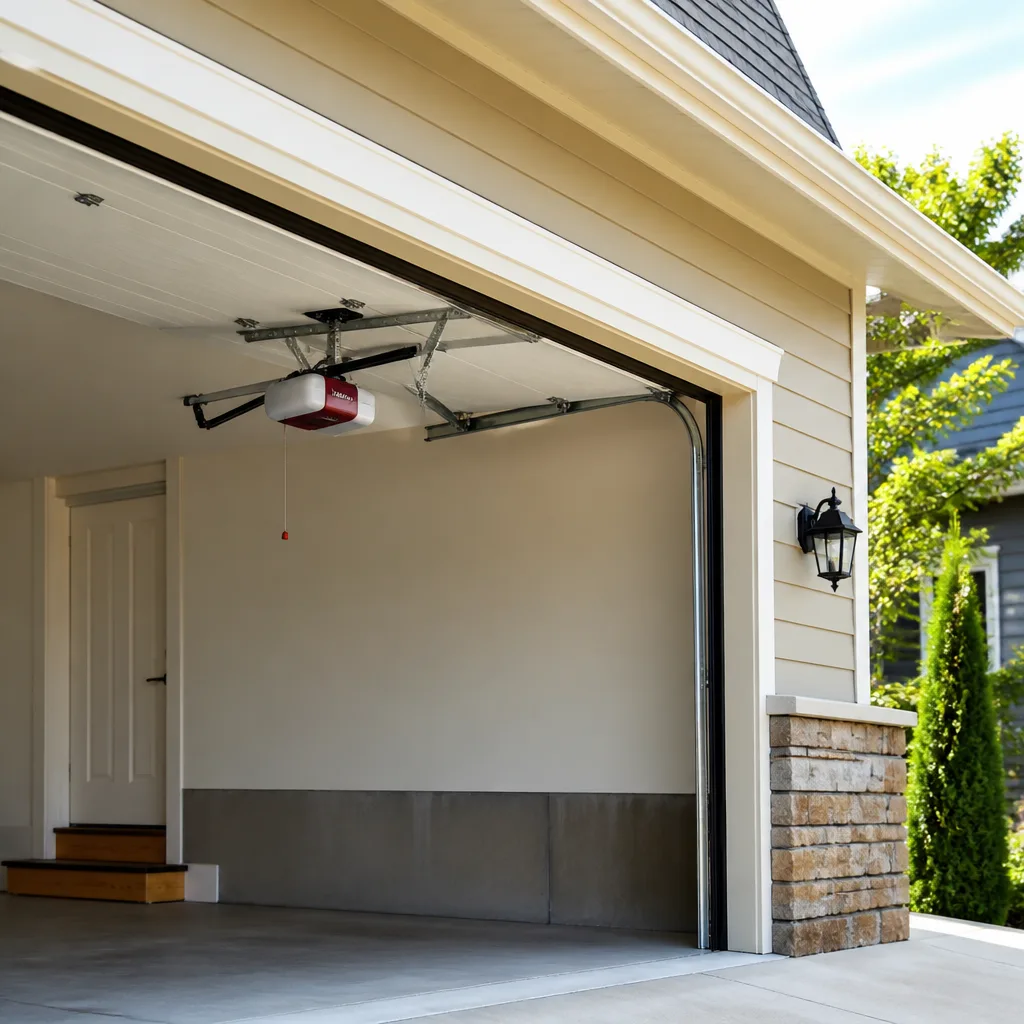 LiftMaster openers
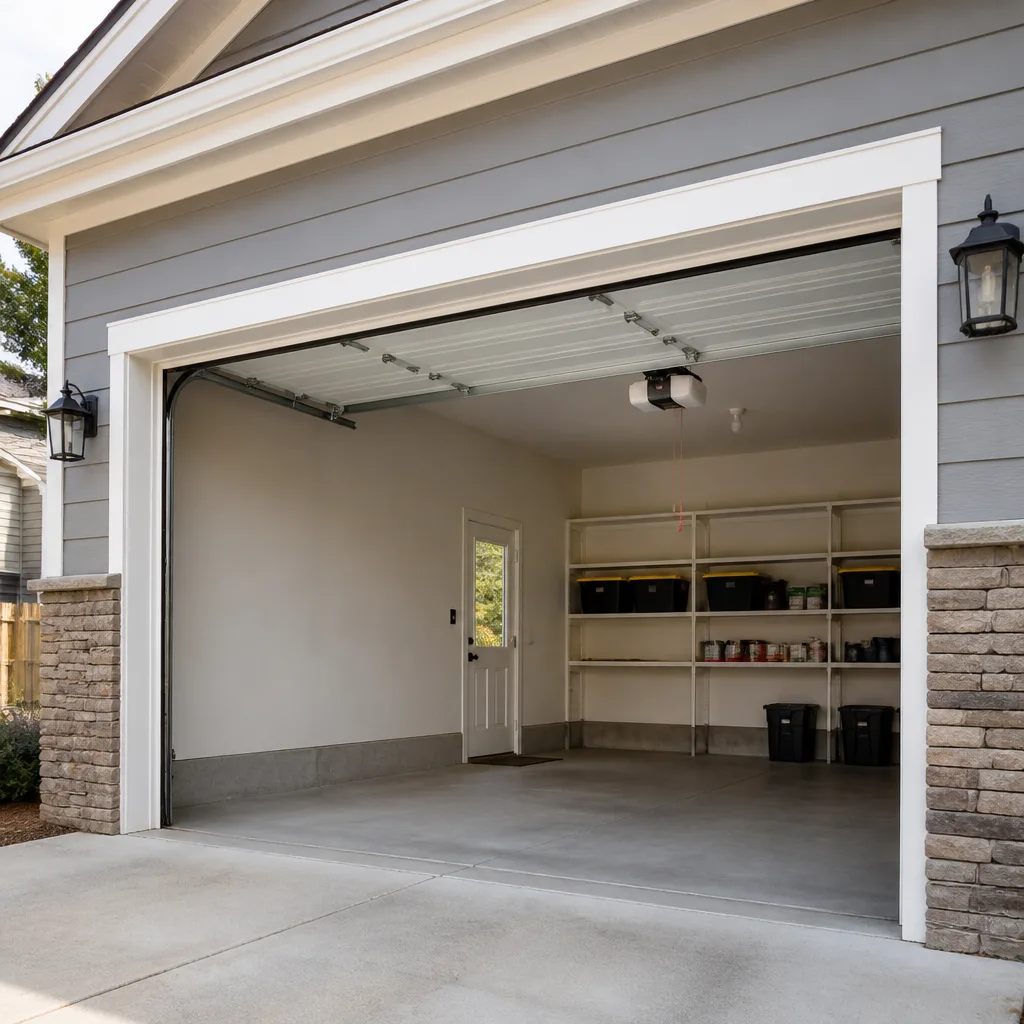 Chamberlain openers
Full 25-point door and opener safety check with every visit - springs, cables, rollers, tracks, and your LiftMaster or Chamberlain opener included
You get a price before we start. It does not change when the truck arrives.
Get your free estimateDIY vs Professional Garage Door: The West Jordan Homeowner’s Decision Guide
Lubricating your hinges takes ten minutes and about twelve dollars in supplies. Adjusting torsion spring tension is a job where a quarter-turn error can throw a winding bar across the garage with enough force to break a wrist or worse. Those two tasks sit at opposite ends of the same door, and most tutorials treat them as if they’re neighbors. They aren’t. The real question in West Jordan isn’t whether you’re handy enough to touch a garage door. It’s whether you can correctly sort each task by what it costs when it goes wrong. This guide does that sorting for you: which jobs are genuinely DIY-appropriate, which ones cross into professional territory, the tools that mark the line, and how Utah liability and your homeowner’s policy treat a self-performed repair.
Quick Answer
Most garage door maintenance is safe and sensible to do yourself: lubrication, visual inspection, balancing checks, and cleaning the photo-eye lenses. Anything that stores or releases tension – torsion springs, extension springs, cables, and cable drums – belongs to a trained technician, because the failure mode is violent and fast. If a task involves a winding bar, a cable under load, or a spring you can’t safely de-tension, the call pays for itself. For everything else in West Jordan, roll up your sleeves.
Styles & brands we work with
- Raised-panel steel
- Carriage house
- Modern flush
- Full-view glass
- LiftMaster openers
- Chamberlain openers
Table of Contents
- How to Sort a Garage Door Task by Error Cost
- Tasks That Are Genuinely DIY-Appropriate
- Tasks That Cross Into Professional Territory
- The Tool Test: When Your Toolbox Says Stop
- Utah Liability, Insurance, and Self-Performed Repairs
- The Hidden Cost of Common DIY Mistakes
- A Three-Question Decision Framework
- West Jordan Conditions That Affect the Decision
How to Sort a Garage Door Task by Error Cost
The useful way to think about any garage door job is error cost: what happens if you do it wrong. Not how hard it is. A task can be physically simple and still carry an enormous error cost. A task can be fiddly and still carry almost none. Sort by consequence first, effort second.
Low error cost means a mistake is annoying, reversible, and cheap to fix. You over-grease a roller and it attracts dust. You tighten a bolt a little too much and strip the threads – irritating, but a new bolt solves it. You clean the photo-eye and the door still won’t close because the sun is hitting it, and you learn to shade the lens. None of these outcomes hurt anyone or damage the door beyond a small part.
High error cost means a mistake is sudden, violent, and expensive. Torsion springs store enough energy to move a winding bar with real force the instant your grip slips. Cables under tension can whip. A door that comes off its track under load can fall. These aren’t “be careful” situations; they’re situations where the margin for error is set by the hardware, not by your attention span.
In our experience across West Jordan, homeowners usually underestimate the middle tier: jobs that seem low-risk because nothing snaps immediately, but that leave the door misbalanced or a spring mismatched, which then wears the opener and cables faster. Those are the quiet ones. They don’t hurt you; they just cost you later.
Tasks That Are Genuinely DIY-Appropriate
Plenty of garage door upkeep is well within reach for a careful homeowner, and doing it yourself saves money without taking on real risk. These jobs are worth learning:
- Lubricating hinges, rollers, and tracks. A garage-door-rated lubricant on the hinge pivots and roller stems, a light wipe of the tracks. Low error cost, real payoff in smooth operation.
- Cleaning the photo-eye lenses. Wipe both lenses at the bottom of the tracks. If the door won’t close, this is the first thing to check.
- The balance test. Disconnect the opener (pull the release cord), lift the door to about halfway, and let go. A balanced door holds position. One that slams down or drifts needs a technician.
- Visual inspection. Look for frayed cables, worn rollers, bent track sections, and springs with visible gaps. You don’t fix these; you spot them.
- Testing the safety reverse. Place a piece of wood flat in the door’s path and close it; the door should reverse on contact. Checks the opener’s safety system.
- Tightening loose track bolts. Snug, not torqued. Overtightening is a common way to warp a track.
- Clearing obstructions. Debris, stored items leaning on the track, or a car parked close enough to interrupt the photo-eye.
None of these require special tools, and all of them either prevent problems or tell you when to stop. In West Jordan’s dry summers and cold winters, that balance test and a visual check before the first hard freeze are worth doing twice a year. It’s the same inspection logic we use on a service call, just without the load-bearing jobs.
Tasks That Cross Into Professional Territory
This is where the math flips. Each of these jobs has a failure mode serious enough that a technician’s visit isn’t an upsell – it’s the cheaper option once you account for what a slip can cost you.
- Torsion spring replacement or adjustment. The spring above the door is under heavy tension. A winding bar that loses grip can swing with the stored energy of the spring. The failure mode is a fast, uncontrolled release. Trained technicians use proper bars, control the tension deliberately, and set the spring to the correct wire gauge and turns for your door.
- Extension spring work. Lower on the door and backed by a safety cable when installed correctly, but still under load. The cable is what keeps a broken spring from flying; if it’s missing or worn, the risk climbs.
- Cable replacement. Cables are the tension link between springs and door. They can snap or whip under load, and re-terminating one at the drum requires getting the winding right or the door drops out of balance.
- Cable drum replacement or reset. The drums wind the cables and set the door’s balance. A drum that’s off by a segment changes the geometry of the whole door.
- Track realignment after an impact. A bent track looks like a hammer-and-pry-bar fix. It isn’t; the track carries the rollers and geometry, and a wrong bend compounds.
- Opener control board or logic board diagnosis. Modern openers across Genie, LiftMaster, and Chamberlain lines have boards and sensors that fail in specific ways. Diagnosis is a discipline, not a guess.
- Spring and cable work on a door you didn’t install. You don’t know its history or who set the tension last. Treat it as professional-only.
We say “repair first” because a lot of these jobs are fixes, not replacements. A torsion spring, a cable, a control board – they get repaired. When you call for garage door repair, that’s the conversation: what’s actually wrong, and what’s the smallest correct fix.
The Tool Test: When Your Toolbox Says Stop
There’s a simple way to know whether a job has crossed the line: look at what it needs. If the tool list is ordinary, the task is probably ordinary. If the tool list is specialized, the job is telling you something.
Legitimate DIY garage door work uses what most homeowners already own: a socket set, a screwdriver, pliers, a level, a shop vacuum, a garage-door-rated lubricant, and a piece of scrap wood for the safety-reverse test. That’s it. If you need more than that, slow down.
The tools that signal you’ve crossed into professional territory:
- Torsion winding bars. Solid steel rods you insert into the spring’s winding cone to control the stored energy. They only exist for the tension job, and that’s the job with the highest error cost on the whole door.
- Cable drums and a way to wind them correctly. Setting cable tension on the drums requires the right equipment and the right number of turns.
- A tension gauge. Verifies spring or cable tension is where it should be. Without it, you’re guessing at the setting that holds the door’s weight.
- Spring winding charts and door-weight references. Matching spring wire gauge to your door’s weight isn’t eyeballed. The wrong gauge means the door lifts heavy or drops fast.
If the list of tools you don’t have includes winding bars or a tension gauge, that’s the moment the job belongs to a technician. We keep those tools on the truck because that’s the work, not because we’re gatekeeping. On garage door opener repair, the same logic applies on the electrical side: board-level diagnosis is a job for someone who does it regularly.
Utah Liability, Insurance, and Self-Performed Repairs
Here’s the part most DIY guides skip. In Utah, if you do the work on your own home, your homeowner’s policy is usually the backstop for property damage – but the details matter, and a failed DIY repair can complicate a claim in ways a professional repair doesn’t.
The short version: when a licensed, insured technician does the work, the liability for that work sits with the company. When you do it, you own it. If a spring you replaced fails and damages the door, a car, or a person, the question becomes whether your policy covers it and whether the failure traces to your work. That’s a conversation with your insurer, and the answer depends on your policy – not on anything a guide can promise. What we can say plainly is that a professional repair keeps that work on the company’s side of the line.
Utah doesn’t have a single statewide license requirement for garage door work that every job falls under the same way; local rules vary and can change, so confirm specifics with your city’s building department and your insurer rather than assuming. If you’re unsure whether a repair needs a permit or how your policy treats self-performed work, those are the two calls worth making before you pick up a tool.
The practical takeaway: low-error-cost DIY (lubrication, inspection, cleaning) carries little liability exposure. High-error-cost work (springs, cables) shifts real risk onto you and your policy the moment you start. That’s not a scare tactic. It’s the same reason we tell people to call their insurer before a big repair – know where the line is.
The Hidden Cost of Common DIY Mistakes
Most amateur garage door work doesn’t injure anyone. It just creates a second repair. The first attempt is the “free” one; the second is what you pay for. These are the mistakes we correct most often, and each one has a real cost:
- Stripped cable drum set screws. Over-torquing the set screw that holds the drum to the shaft strips the threads. Now the drum won’t hold and the cable can’t stay wound. The fix is a new drum, not a new screw.
- Mismatched spring wire gauge. Buying a spring by length alone, not by the door’s weight and required gauge, leaves the door lifting heavy or dropping fast. The spring then wears the opener and the cables, and you end up paying to redo the job plus replace parts that failed as a side effect.
- Overtightened track bolts. Cranking a track bolt to “make sure” warps the track and pinches the rollers. The door then binds and the opener strains.
- Adjusting spring tension by feel. Without a tension gauge and the right number of turns, the door ends up out of balance and the opener carries weight it wasn’t meant to. That shortens the opener’s life.
- Skipping the safety cable on an extension spring. A missing or loose cable turns a broken spring into a projectile.
- Forcing a bent track back with a pry bar. The bend comes back, or moves, and the door’s geometry goes with it.
- Replacing a control board instead of diagnosing the opener. A board swap is a guess if the symptom was actually a sensor, a limit switch, or a wiring fault. The part goes in, the door still won’t close, and now you own a spare board.
Each of these is a case where the do-it-yourself attempt cost more than the professional repair would have. That’s the honest pattern. It’s not that DIY can’t work; it’s that when it goes wrong on the load-bearing parts, the bill compounds.
A Three-Question Decision Framework
Before you pick up a tool, ask three questions. If you can honestly answer yes to all three, the task is DIY-appropriate. If you can’t, the technician call pays for itself.
- Can I name the failure mode, and is it safe if it happens? If the worst outcome of getting it wrong is a dirty hinge or a loose bolt, yes. If the worst outcome is stored energy releasing, a cable whipping, or a door falling, no.
- Do I have the right tools, including the specialized ones? Ordinary hand tools and a lubricant: yes. Winding bars, a tension gauge, cable drums: no.
- Am I sure the part matches my door? If you can verify the spring gauge, the drum, the cable, and the correct settings against your door’s weight, yes. If you’d be matching by eye or by “this looks about right,” no.
Three yeses and you’re cleared for a safe DIY task. Any no and you’ve found the boundary. That’s the whole framework. It’s not complicated, and it doesn’t require you to be timid. It just requires you to be honest about which side of the line a task is on. In our experience in West Jordan, most people answer all three questions correctly once they’re asked out loud. The trouble is that most tutorials never ask.
West Jordan Conditions That Affect the Decision
Where you live shapes how often a garage door needs attention and which parts wear. West Jordan sits in the Salt Lake Valley, where summers are hot and dry and winters bring hard freezes and the occasional heavy snow load on a door that’s been left open. Both ends of that swing put stress on the door.
The dry summer air dries out lubricant on hinges and rollers faster than a humid climate would, so those DIY-appropriate maintenance tasks – greasing the moving parts, checking the balance – need doing a little more often than a generic guide suggests. The cold snaps are the bigger factor: a torsion spring that’s nearing the end of its life is more likely to snap on the first hard cold morning of the season, which is exactly when people are trying to leave for work. That failure is a professional repair, not a DIY project, and it’s the single most common reason people call us in West Jordan in the winter.
The housing stock across West Jordan runs from older homes with heavier wood doors on older openers to newer builds with lighter doors and modern smart-drive units. Which brand and era you’re working with matters for diagnosis: a Clopay or Amarr door on a legacy opener behaves differently from a newer Wayne Dalton with a modern drive. Brand-agnostic diagnosis means we work on the system you already have instead of steering you toward a brand we happen to stock. We’re set up for that across West Jordan, and it’s the reason we can repair a Genie opener in one home and source parts for a Wayne Dalton door in the next without sending either customer elsewhere.
One more local note: snow and ice in the tracks aren’t a maintenance task. Clearing them is, but a door that won’t close after a freeze is worth having looked at before you force it – the opener will try to drive a door that’s fighting ice, and that’s how limit switches and gears get damaged. If your door is stuck after a cold snap, that’s a call, not a project.
Common Mistakes to Avoid
- Treating “I watched a video” as training. A video shows the steps, not the feel of a spring under tension or the sound of a cable about to let go. That gap is exactly where the high-error-cost jobs go wrong.
- Buying a spring by length alone. Spring wire gauge and the door’s weight have to match. A spring that’s the right length but the wrong gauge leaves the door out of balance and wears your opener. Match the gauge or have a technician do it.
- Overtightening track bolts. Snug is the goal. Cranking them warps the track and pinches the rollers, and then the door binds every time it moves.
- Adjusting torsion tension without a gauge. Spring setting is a measurement, not a feel. Guess wrong and the door drops fast or lifts heavy, and the opener pays for it.
- Skipping lubrication until something squeaks. In West Jordan’s dry summers, hinges and rollers dry out. Greasing them twice a year is a twelve-dollar task that prevents a much larger one.
- Forcing a door that won’t close after a freeze. Ice in the track means the door is fighting the opener. Forcing it damages the opener instead of fixing the cause.
- Replacing parts to avoid diagnosis. Swapping a control board when the problem is a sensor or a limit switch is a guess, and guesses cost more than a diagnosis.
See the difference
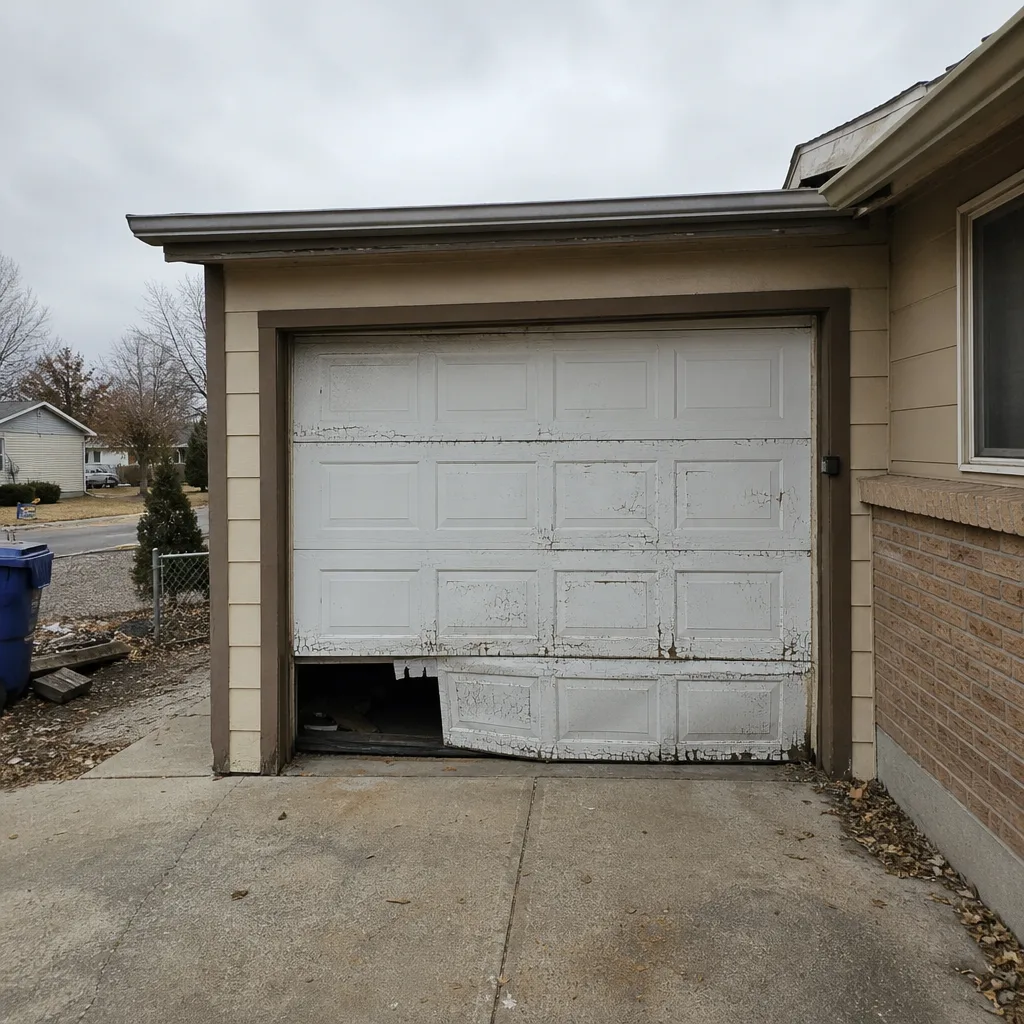 Before
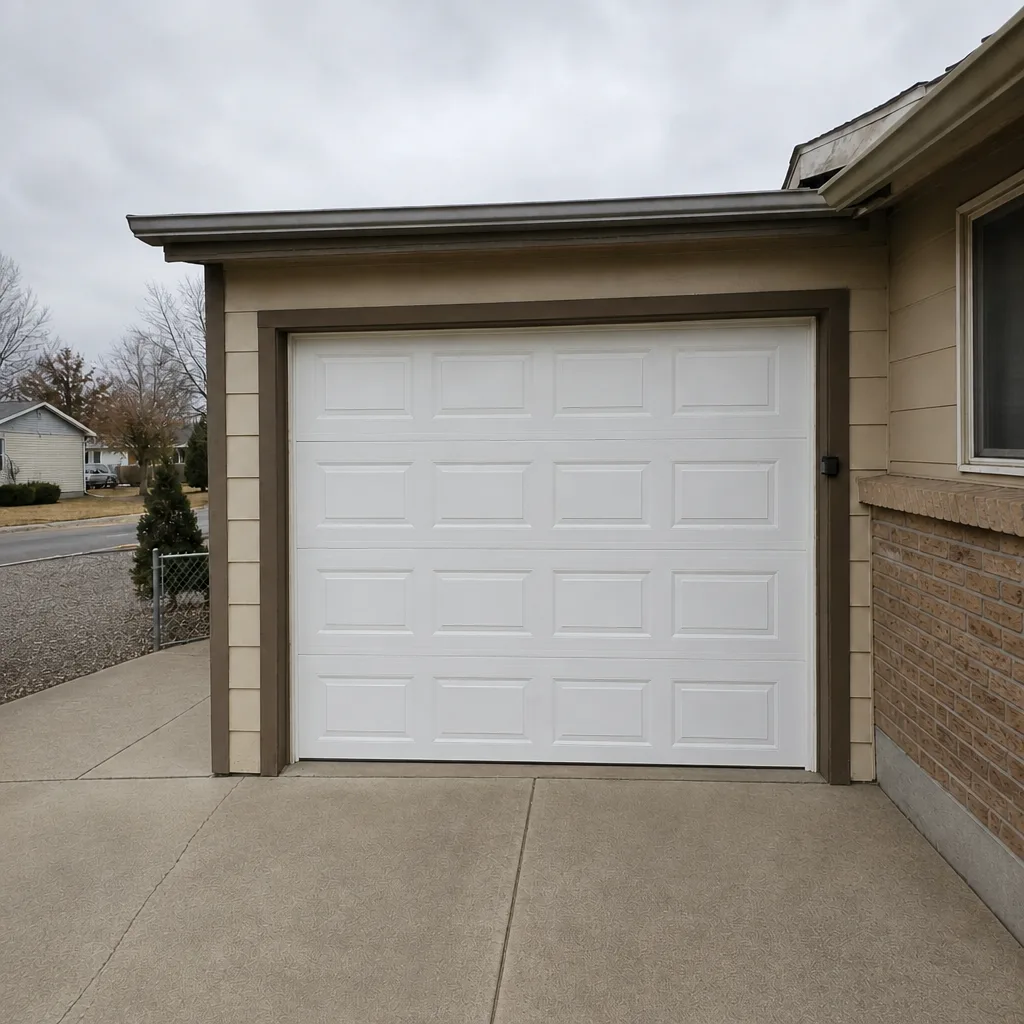 After
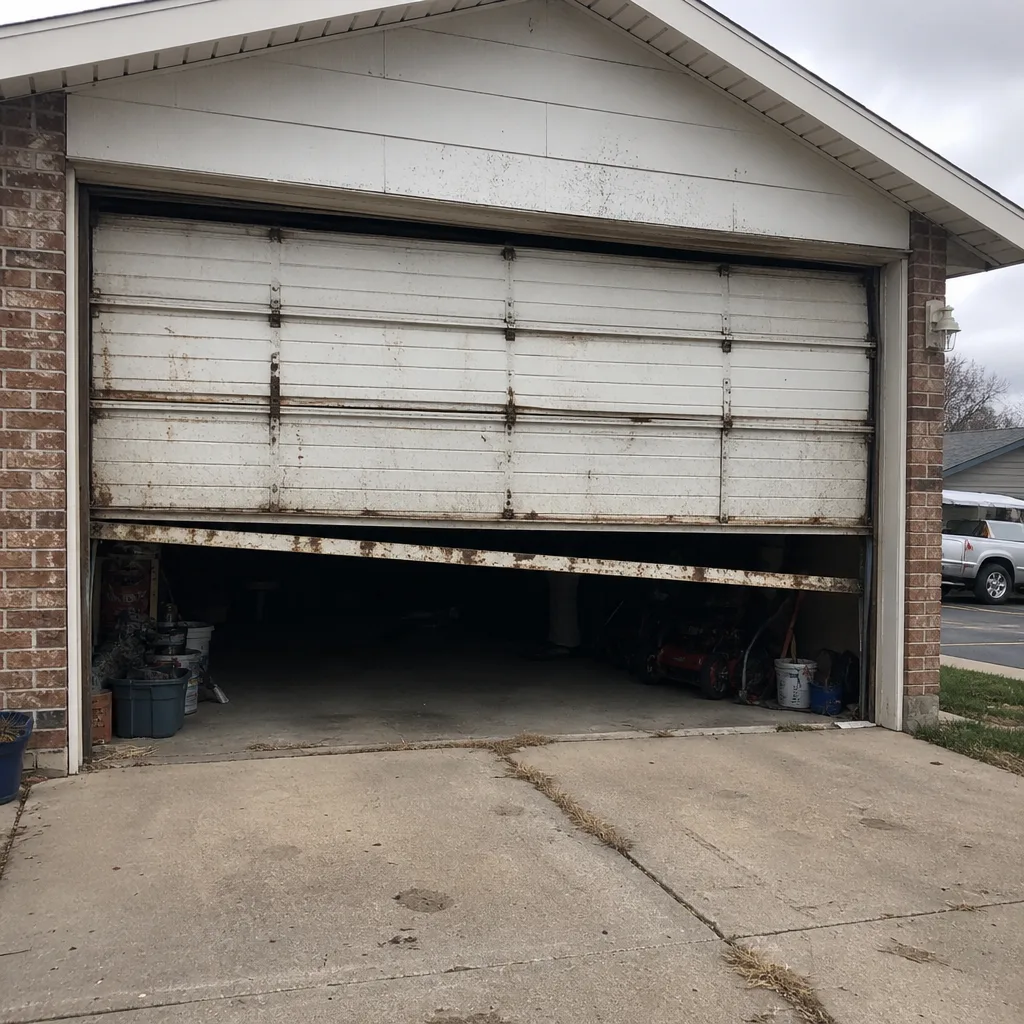 Before
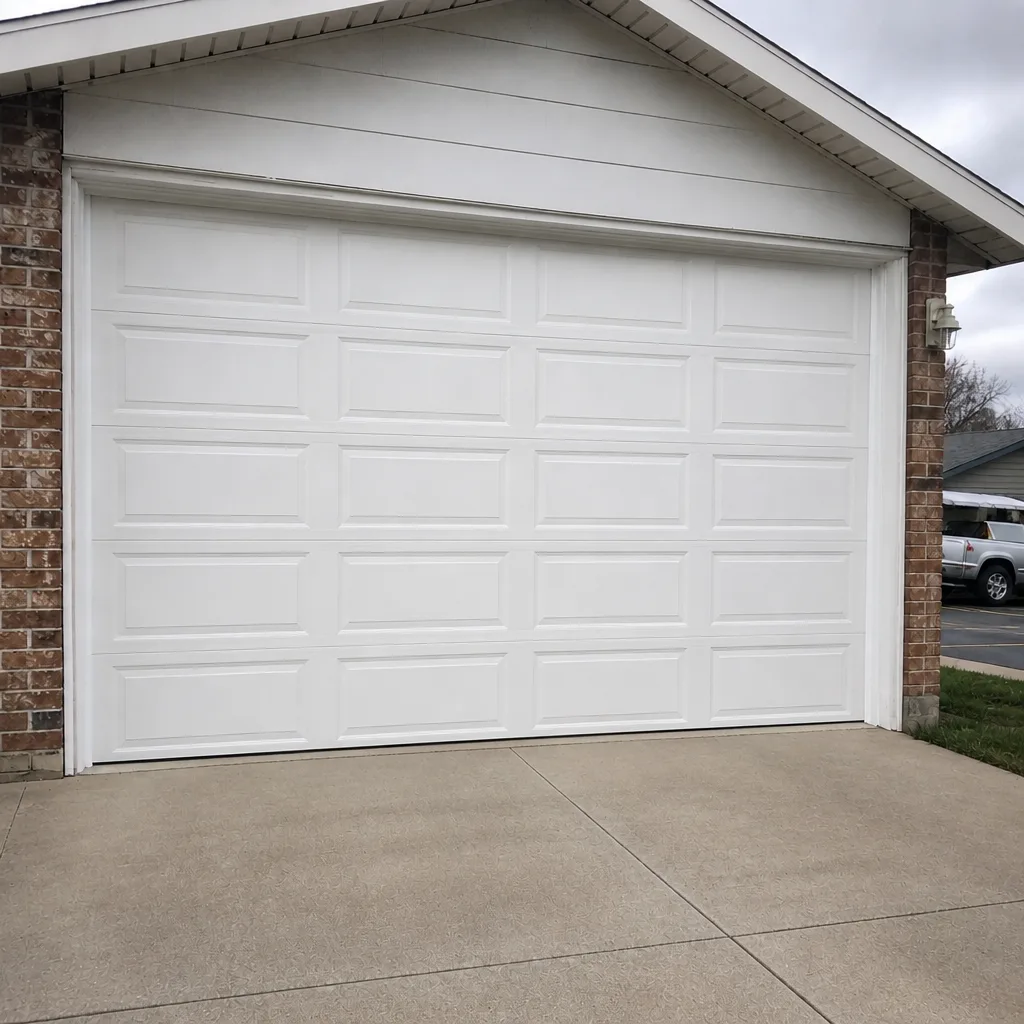 After
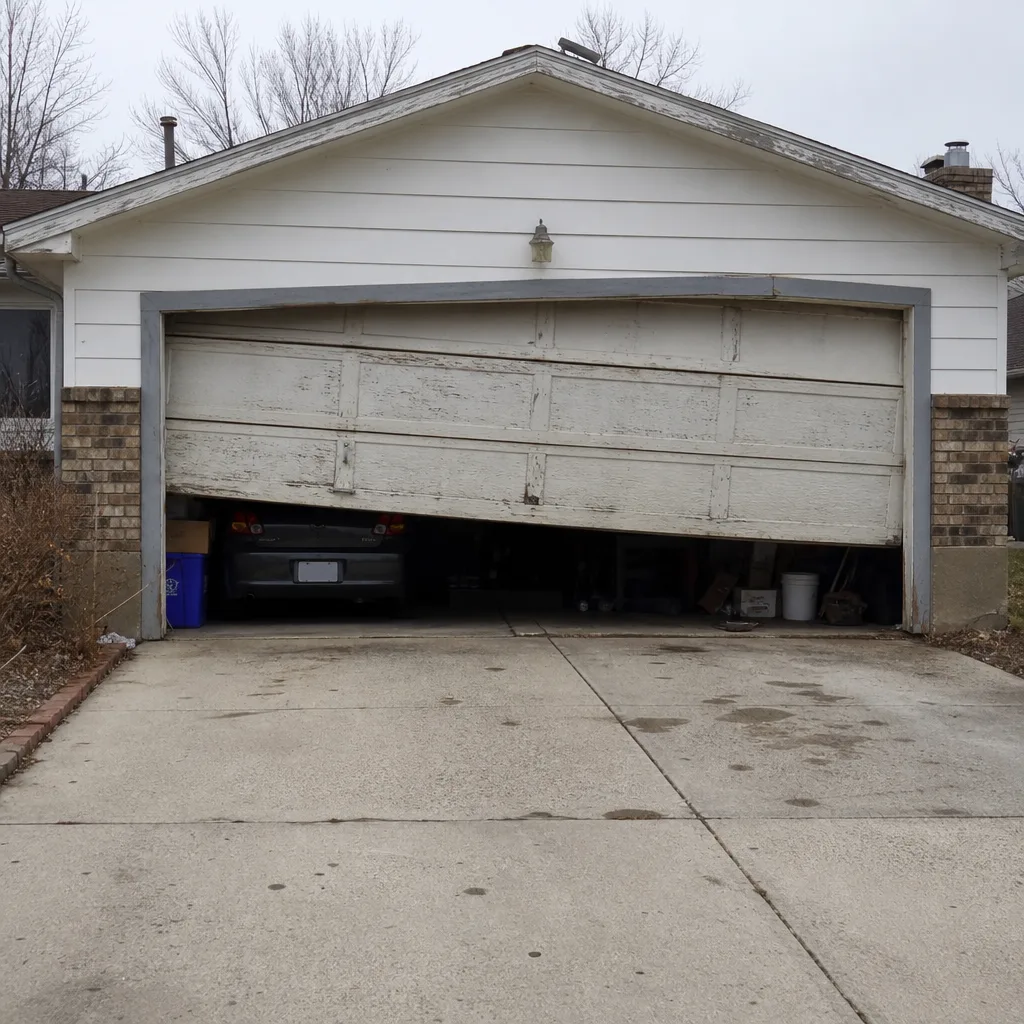 Before
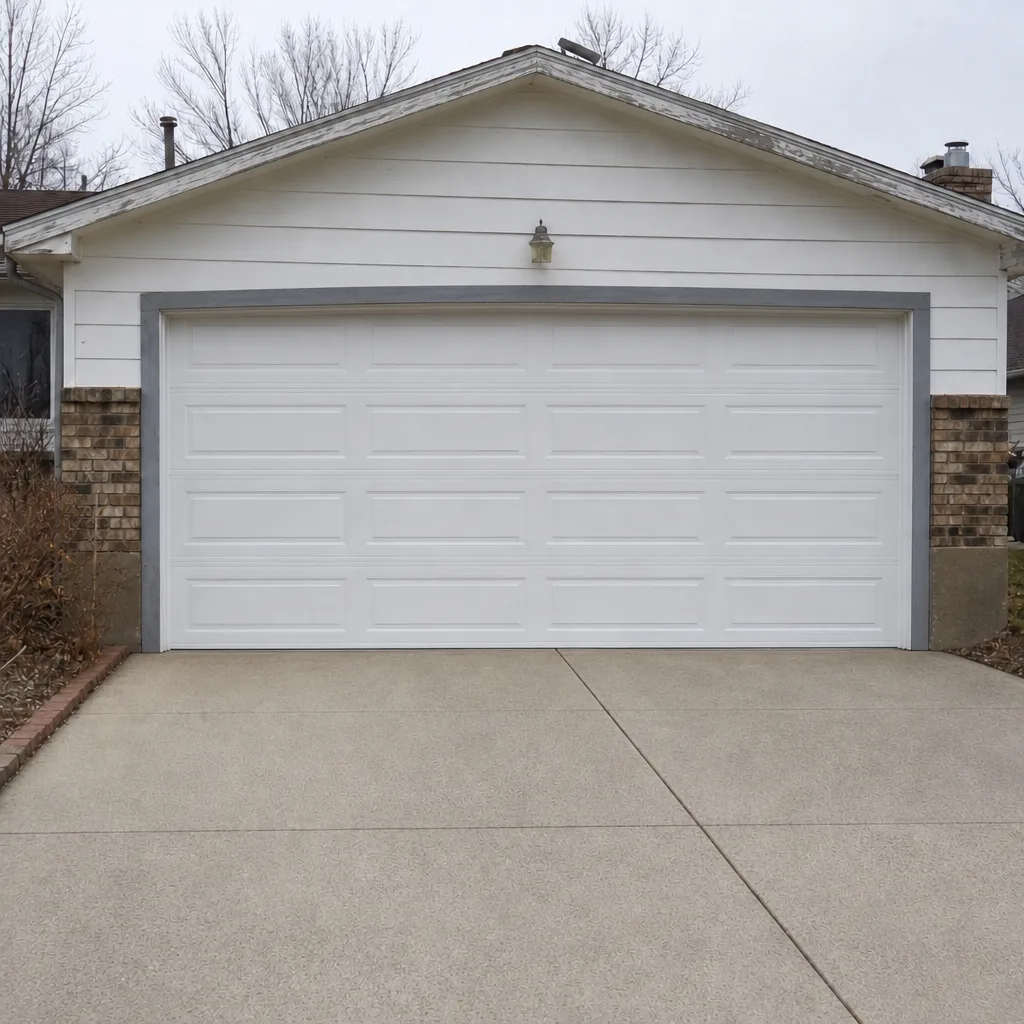 After
When to Call a Professional
Call a professional when any of these is true: the job involves a torsion or extension spring, a cable, or a cable drum; the door is off its track or has been hit; the balance test fails; the opener won’t respond to a known-good remote or wall switch and the safety sensors are clean; or you’ve tried a repair once and it didn’t hold. Those are the jobs where the error cost is high enough that the technician call is the cheaper route. Northbridge Garage Door Repair offers free estimates in West Jordan – call (888) 594-1936. We’ll tell you exactly what’s wrong and what it will cost before we start, and we’ll repair what you have rather than push a replacement you don’t need.
Frequently Asked Questions
You can physically attempt it, but it’s not a DIY-appropriate job and we don’t recommend it. Torsion springs store heavy tension, and a winding bar that slips can swing with serious force. A spring repair is a professional task because of the failure mode, not the difficulty – and the correct spring has to match your door’s weight and wire gauge.
Yes. Lubricating hinges, rollers, and tracks is a genuinely DIY-appropriate task with low error cost. Use a garage-door-rated lubricant on the hinge pivots and roller stems, wipe down the tracks, and avoid over-greasing, which attracts dust. Do it a couple of times a year, and more often in West Jordan’s dry summers.
If a failed repair damages the door, a vehicle, or a person, where the liability and insurance coverage land depends on your homeowner’s policy and the specifics. A professional repair keeps that work on the company’s side of the line. Confirm specifics with your insurer and your city’s building department before a high-error-cost repair, not after.
Run the three-question framework: can you name the failure mode and is it safe, do you have the tools including the specialized ones, and can you verify the parts match your door. Three yeses means DIY. Any no means it’s a professional job. The balance test is a quick way to find out if the door’s load-bearing parts need attention.
Have it diagnosed first. Many opener problems we see across Genie, LiftMaster, and Chamberlain systems are board, sensor, or wiring faults that a repair fixes, not a dead unit that needs replacing. A board swap without diagnosis is a guess; that’s the mistake we correct most often. Call (888) 594-1936 – estimates are free.
We work on the brand you already have, across eight of the most widely installed lines, including Genie, Clopay, Amarr, and Wayne Dalton. Brand-agnostic diagnosis means we recommend the right fix regardless of which brand is on the door, instead of steering you toward one we stock. Repair first, replacement only when it’s the honest answer.
The Bottom Line
The DIY vs. professional decision isn’t about whether you’re capable. It’s about sorting each task by what it costs when it goes wrong. Lubrication, inspection, cleaning the photo-eyes, and the balance test are real DIY wins. Springs, cables, cable drums, and track realignment carry failure modes serious enough that the technician call is the cheaper choice once you add in the second repair and the liability shift. Use the three-question framework, keep the tools test in mind, and know that in West Jordan’s climate the balance check and the pre-winter inspection matter more than a generic guide suggests. For anything on the professional side, we’re a call away.
Call (888) 594-1936 for a free estimate. We answer 24/7, with fast dispatch from 7am to 7pm, Sunday through Friday. Northbridge Garage Door Repair works on the brand you already have, tells you exactly what’s wrong and what it will cost before we start, and repairs what’s fixable before suggesting a replacement.
Written by the team at Northbridge Garage Door Repair, serving West Jordan since 2012.