
Last updated November 14, 2026
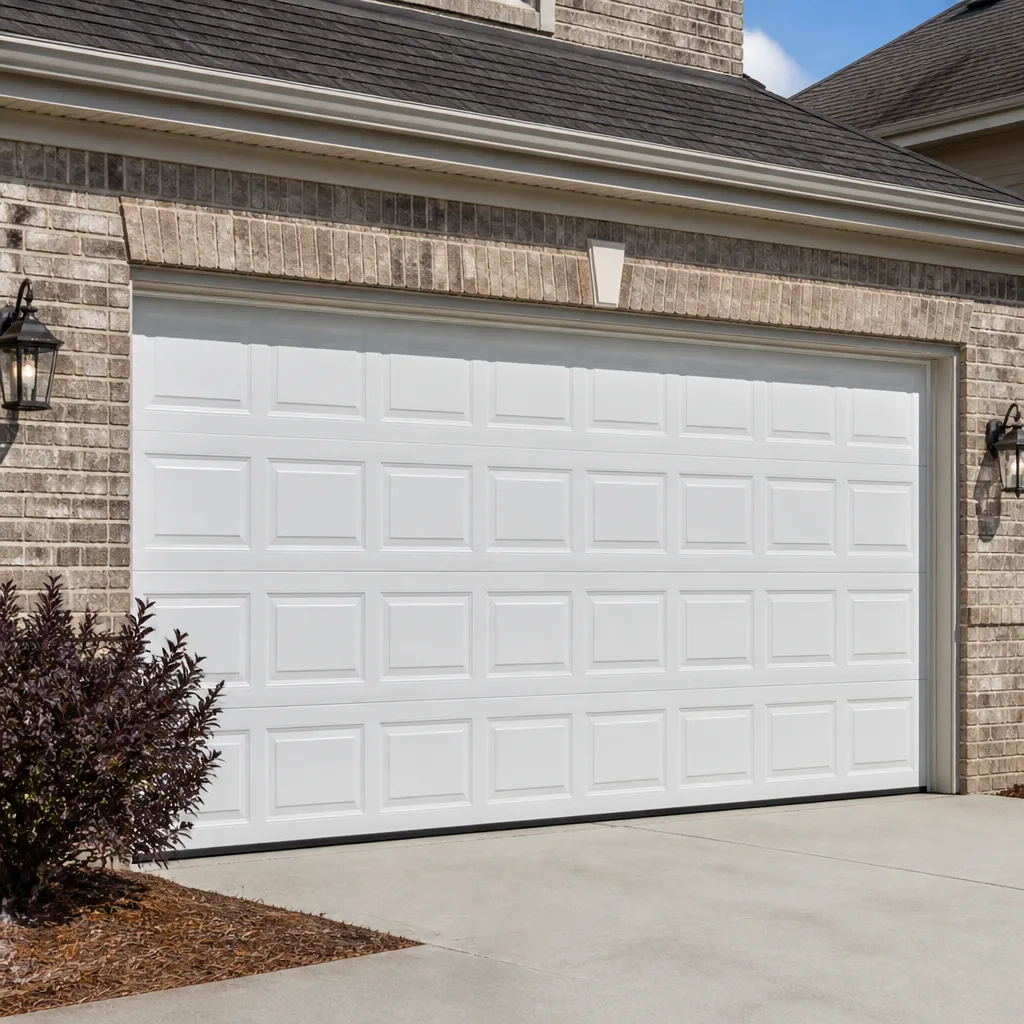 Raised-panel steel
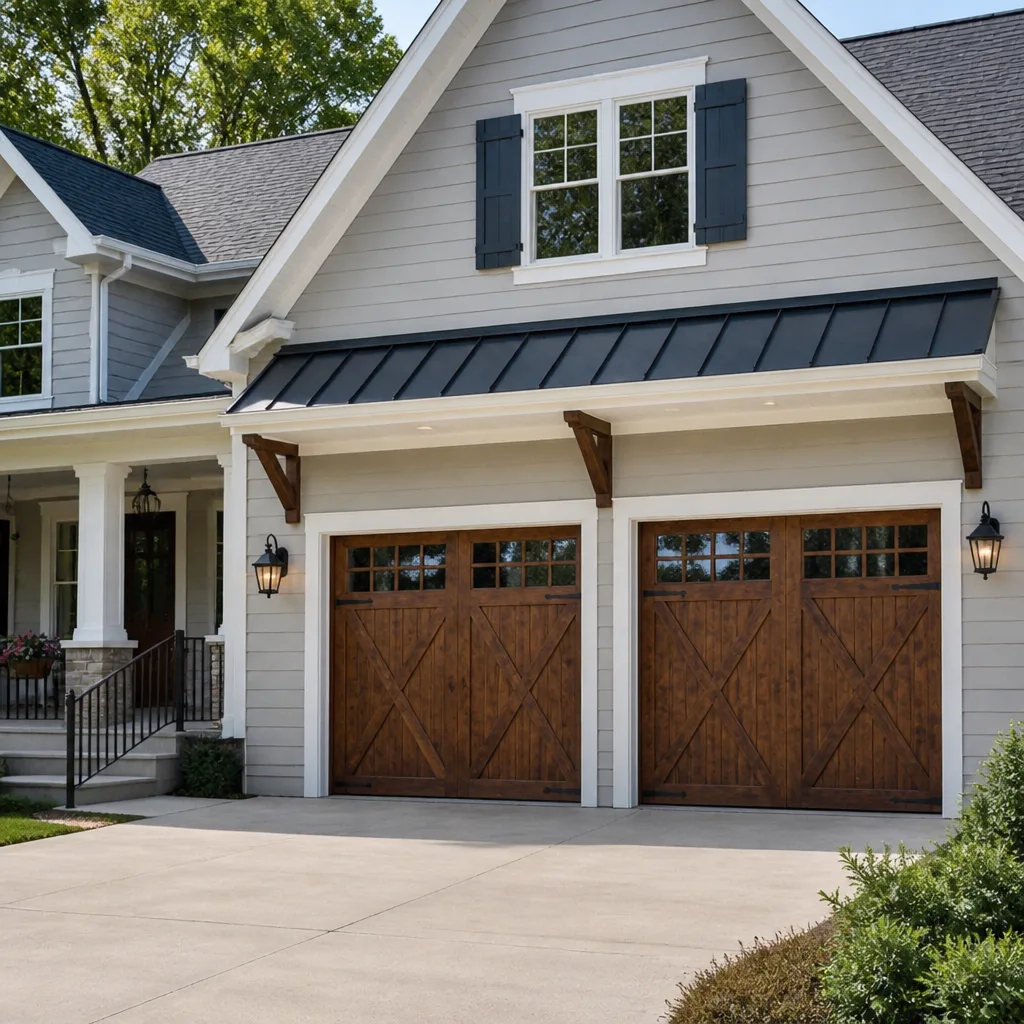 Carriage house
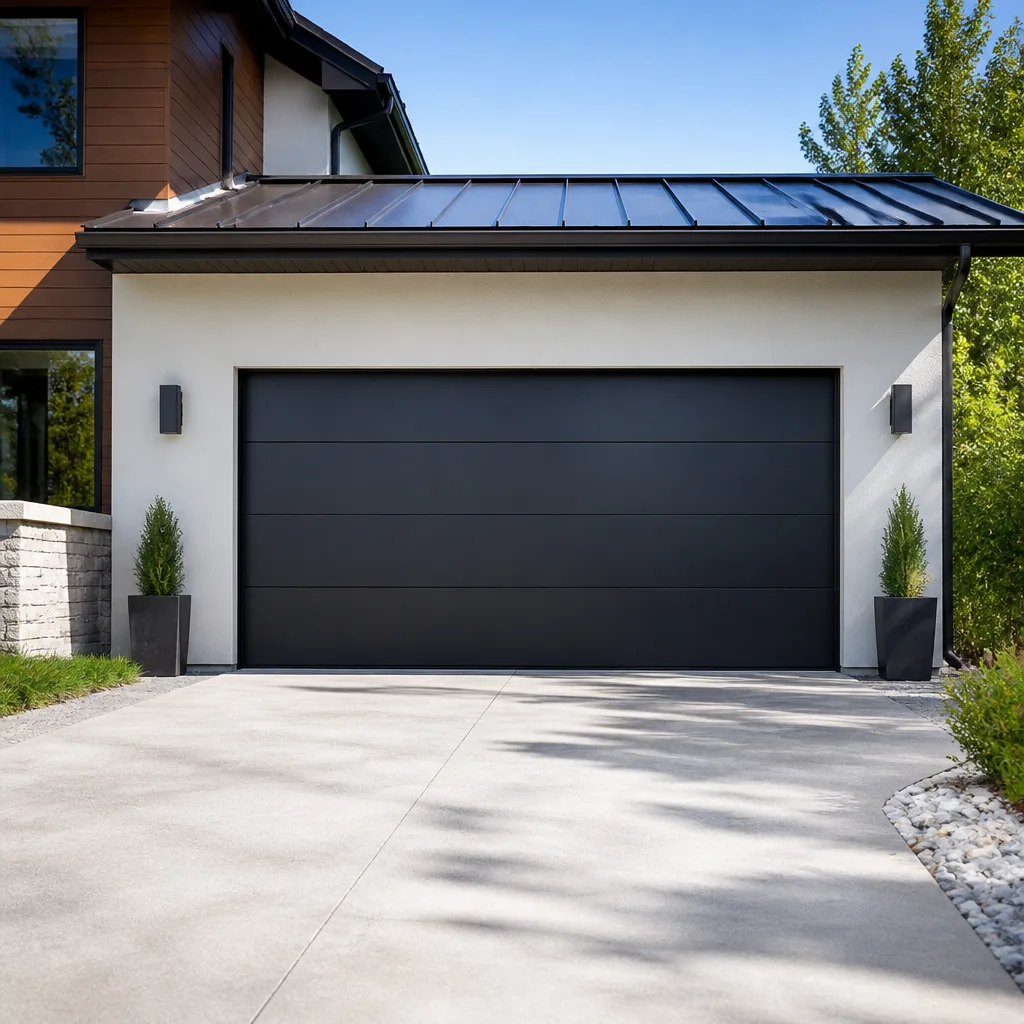 Modern flush
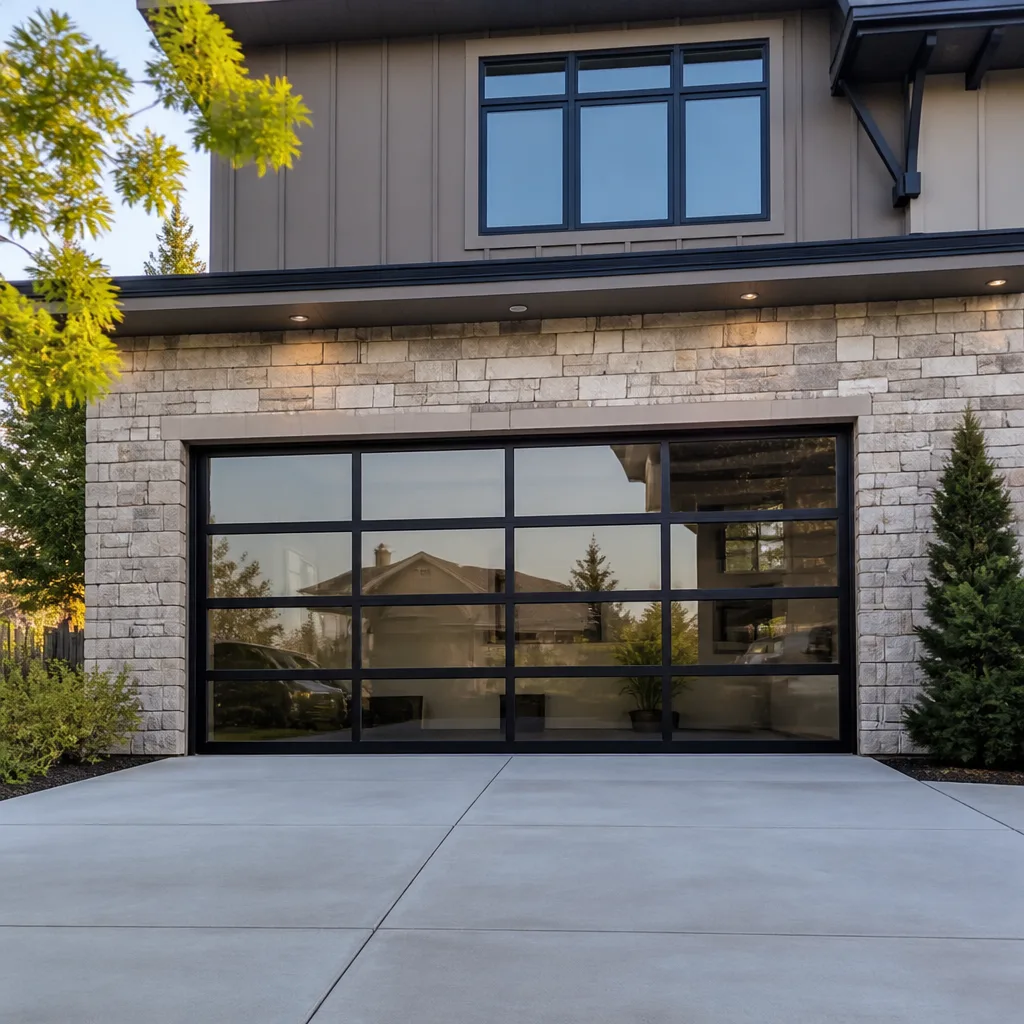 Full-view glass
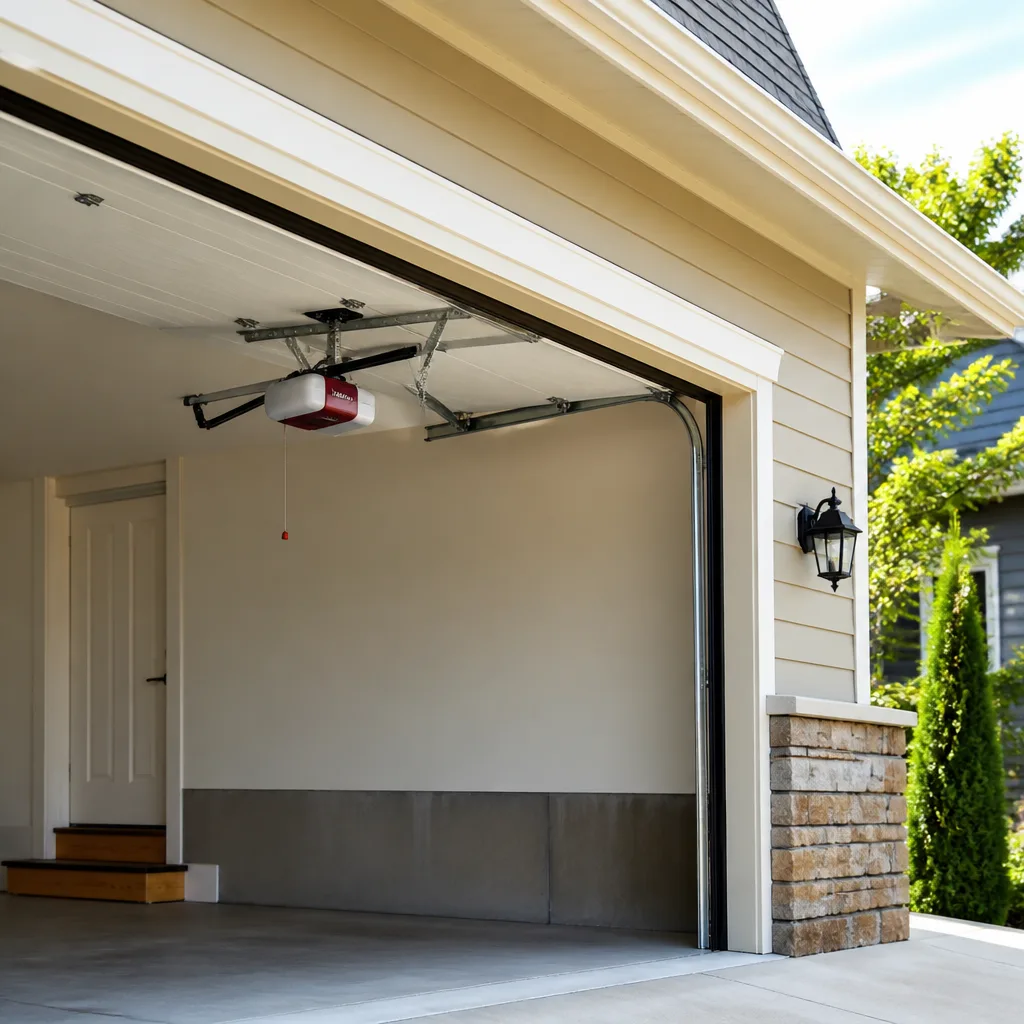 LiftMaster openers
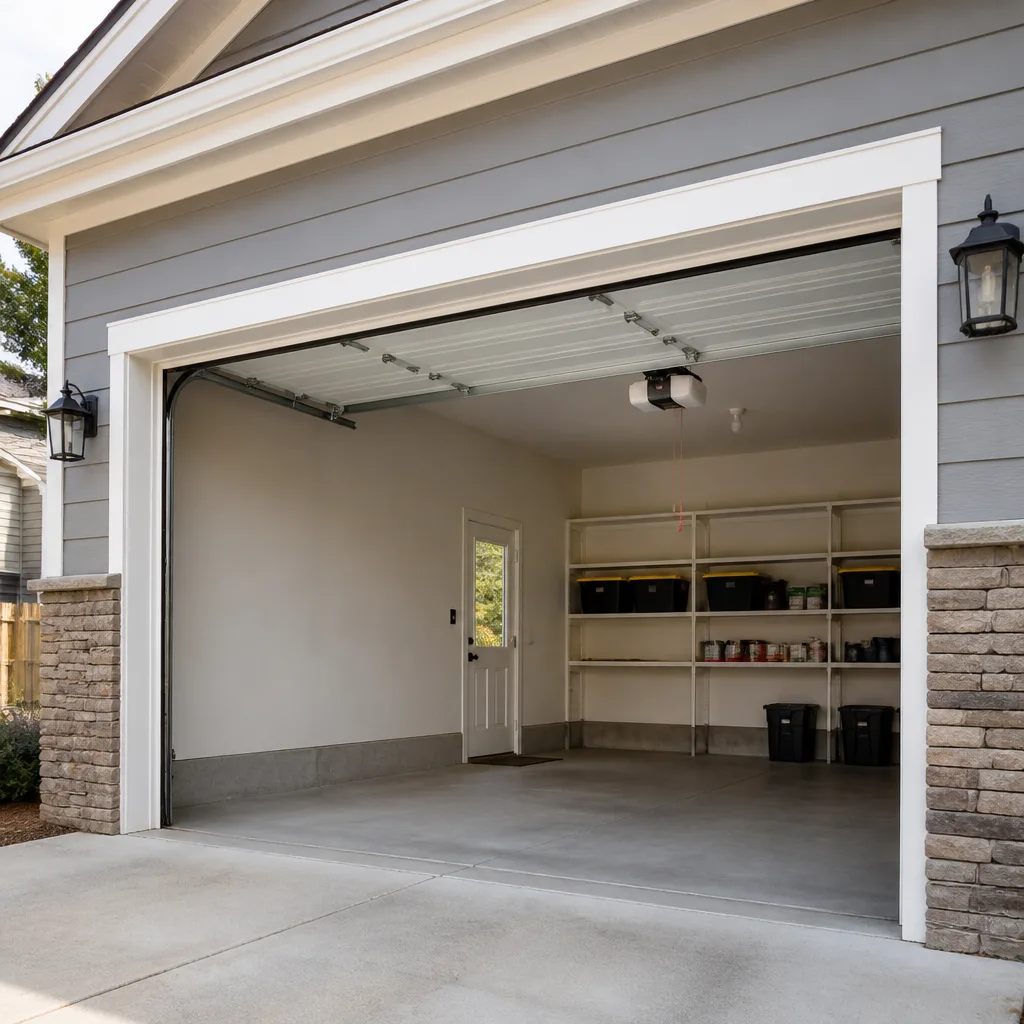 Chamberlain openers
Full 25-point door and opener safety check with every visit - springs, cables, rollers, tracks, and your LiftMaster or Chamberlain opener included
You get a price before we start. It does not change when the truck arrives.
Get your free estimateGarage Door Emergency Preparedness Guide for West Jordan Homes
Most garage door emergencies in West Jordan aren’t really door problems. They start as power problems. Canyon windstorms knock the grid offline, the opener stops dead, and a homeowner who has never touched the manual release cord discovers their car is sealed in the garage. Ten minutes of preparation done once would have reset that entire morning. What follows is not a list of horror stories. It’s a practical walk-through of the specific failures this valley produces, how to recognize them, and exactly what to do when one happens. You’ll learn how to test your manual release the right way, how to secure a door after a spring breaks, which opener brands actually carry battery backup, and what to have ready if you need a technician dispatched.
Quick Answer
Garage door emergencies in West Jordan fall into three predictable categories: opener lockouts during windstorm power outages, spring failures during January cold snaps that freeze seals to the slab, and heat buildup in a closed garage during summer outages. A 10-minute walk-through now – testing your manual release, confirming battery backup, and recording your door and opener model numbers – turns each of these from a stranded day into a short inconvenience. Call (888) 594-1936 when the door itself fails; we answer 24/7 and run fast dispatch from 7am to 7pm, Sunday through Friday.
Styles & brands we work with
- Raised-panel steel
- Carriage house
- Modern flush
- Full-view glass
- LiftMaster openers
- Chamberlain openers
Table of Contents
- How the Manual Release Cord Actually Works
- Canyon Windstorms and Power Outages
- January Cold Snaps and Frozen Seals
- When a Spring Breaks Mid-Cycle
- Summer Outages and Heat Risk
- Battery Backup Openers That Work in Utah Weather
- What to Have Ready Before You Call
- West Jordan Neighborhoods and Home Types
How the Manual Release Cord Actually Works
The manual release cord disconnects the door from the opener so it can be moved by hand. That’s all it does. It does not make the door safe to handle if the springs are compromised, and it does not turn a heavy door into a light one. The most common mistake we see is a homeowner yanking the release while the door is partway up and still carrying spring tension – the door can drop the rest of the way on its own. Never pull the cord while the door is open. Close it fully first, then pull.
Here’s the correct sequence for a West Jordan homeowner who has never tested this:
- Stand clear of the door path and close the door completely using the wall button.
- Locate the red release cord hanging from the trolley carriage on the opener rail.
- Pull straight down once, firmly. You should hear the carriage click free of the drive.
- Lift the door about a foot by the handle. It should feel light and stay where you put it. If it feels heavy or slams down, the springs need attention before you touch it again.
- To reset, re-engage the carriage by running the opener once – the door will reconnect on its next cycle.
Run that test every few months. A cord that’s become frayed, tangled, or hung up on the closet shelf next to the opener is a cord you can’t rely on in the dark. If the door won’t lift easily by hand, or the cord won’t release, that’s a spring or track problem, not a release problem. That’s when you call for garage door repair rather than keep working the door manually.
Canyon Windstorms and Power Outages
West Jordan sits close enough to the canyons that a wind event can drop tree limbs and pull the grid down fast. When it does, every garage in the neighborhood that runs on a standard opener becomes a dead-end. The door stays down and the car stays inside until power returns. Doors on LiftMaster, Chamberlain, Genie, Craftsman, and Raynor openers are all in the same boat here unless they carry a backup battery.
There are three things to think about before a windstorm, not during one:
- Know your release. If you tested the cord this month, you already know how yours behaves. If you haven’t, do it now – not by flashlight in a blackout.
- Check the track for debris. A limb that lands against the door or drops leaves into the track can jam the door even when power returns. Clear the perimeter after any storm before you cycle it.
- Watch the door itself, not just the opener. Panels on an older Clopay or Amarr door can take impact damage that bends the rollers. If the door starts running rough after a wind event, stop cycling it and get it looked at.
A power outage from a canyon windstorm is a good reminder that your garage door is a heavier moving object than it looks. Much of the reason garage door failures are dangerous rather than just annoying is that the springs hold that weight under tension. That’s still true when the power is out.
January Cold Snaps and Frozen Seals
When temperatures drop into the teens, the rubber bottom seal on a garage door can freeze to the concrete slab. The opener runs, the door doesn’t lift, and the opener’s travel limits or force settings take the strain. We see this in West Jordan most often after a January cold snap followed by a snowmelt that refreezes overnight. The door appears stuck to the floor. Sometimes it is. Sometimes it’s a broken spring that happened to fail at the same time.
Here’s how to tell the difference, safely:
- Look for a visible gap under the door. If the seal is frozen, you won’t see daylight; if a spring has failed, the door usually sits slightly uneven or hangs low on one side.
- Try lifting the door a few inches by hand using the handle. If it comes free with a little pressure, the seal was frozen.
- If it won’t budge or lifts far too easily, stop. A door that lifts with almost no resistance after a cold snap usually has a broken spring, and lifting it further can let it drop.
Don’t pour hot water or salt around the door threshold. Hot water refreezes, and salt degrades the concrete and the seal. If a seal is freezing repeatedly, the fix is a new seal and checking that the door’s bottom edge is set to sit evenly on the slab. That’s a call for the technician, not a hair dryer. If a spring has failed in the cold, keep the door down and call.
When a Spring Breaks Mid-Cycle
A spring that breaks mid-cycle usually announces itself with a sharp bang, and the door stops partway or stays down. The most important thing in the first ten minutes is to not force the door. Springs are what hold the weight of the door. Without them, a homeowner lifting a door by hand is lifting the full load, and if the other spring is still intact, the door can come down hard once the assisted side releases.
Here’s what to do:
- Keep everyone clear of the door, especially kids who may want to inspect it.
- Do not pull the manual release with the door open. Close it first if you can do so from the wall button safely.
- If the door is already partly open, don’t wrestle it. Call a technician.
- If the door can be closed normally by the opener, close it, then disconnect the opener or leave it down.
- If the door won’t close, block the area. A door stuck partway open on a failed spring is a winding risk, not just a security gap.
Spring and cable work is where garage door injuries happen. The tension on a torsion spring or extension spring can cause serious injury, and a cable that snaps under load is faster than a person can react. Don’t try to change a spring on a West Jordan door yourself, no matter how straightforward a video makes it look. Call for help and leave the door alone until we get there. We treat spring replacement as one of the standard jobs we handle, and we’ve done it on Clopay, Amarr, Wayne Dalton, and Craftsman doors alike. Our Northbridge Garage Door Repair technicians will tell you exactly which spring and what it will cost before any work begins.
Summer Outages and Heat Risk
When a summer outage cuts power, a closed garage in West Jordan heats up fast. The garage is usually the hottest room on the property on a 100-degree afternoon, and without the door opening, the heat has nowhere to go. This isn’t a garage door failure in the usual sense, but it’s part of the same preparedness picture. If you have pets, chemicals, or a car you’d rather not bake in there, the manual release matters for the same reason it matters in a windstorm: it lets you open the door without power.
Some practical points for a summer outage:
- If you’ve practiced the release sequence, you can open the door by hand in seconds.
- Ventilate the garage by opening the door fully rather than by a crack; a partly open door on an untested release is more likely to drop.
- If your opener has a battery backup, verify it’s charged before summer starts. A backup that died over the winter does nothing in July.
- Don’t run a car or gas equipment in a closed hot garage. The heat risk is real, but the exhaust is the bigger danger.
The good news is UT heat outages tend to be shorter than winter storm outages. Still, being able to move the door manually is the difference between a hot inconvenience and a true emergency.
Battery Backup Openers That Work in Utah Weather
Battery backup is the single most useful upgrade for a home that loses power often. It keeps the opener working for a handful of cycles during an outage, which in most cases is enough to get the car out and the door back down safely. Most modern belt and chain drive openers from the major manufacturers offer either native backup or a compatible add-on battery. The trick is verifying what you actually own.
Here’s the landscape as we see it working on West Jordan homes:
- LiftMaster and Chamberlain: many current models have native battery backup. Older units from the same brands typically need an add-on module or aren’t backup-ready at all.
- Genie: select models carry backup; others don’t. The model number on the opener’s sticker tells you which.
- Craftsman and Raynor: vary widely by model year. A quick check of the opener head is worth more than any general rule.
- Third-party solutions: a portable battery box or inverter setup can run a standard opener for a few cycles, but it must be correctly sized and kept indoors. Left in a cold West Jordan garage through January, most won’t hold a useful charge.
What actually works during a Utah winter outage is a backup battery that’s been kept in a conditioned space or one with a dedicated wall charger that tops it up. If your opener is older and backup isn’t a practical option, your fallback is the manual release. Either way, doing the test once in the early fall tells you what you have before you need it. If a backup battery or an older opener is failing, that’s a diagnosis we handle through garage door opener repair.
What to Have Ready Before You Call
When you’re standing in a dark garage with a door that won’t close, the information a dispatcher needs is the same information that’s printed on the opener and stamped on the door itself. Having it written down in advance is the difference between a call that gets a technician dispatched correctly the first time and a call that turns into a back-and-forth. Here’s the short list to put on a card taped to the inside of the garage door or the wall near the opener.
- Door brand and model. Clopay, Amarr, Wayne Dalton, and Craftsman are the most common we see locally, but write yours down exactly.
- Opener brand and model number. Stamped on the head unit. This tells the technician what drive type and what parts to expect.
- Spring type. Torsion springs run horizontally across the top of the door; extension springs run parallel along the tracks. Note which yours has.
- Door material and size. Steel, aluminum, or wood; single or double car width.
- What happened. Power outage, broken spring, door off track, opener running but door not moving – a clear answer saves time.
Call (888) 594-1936. We answer 24/7. Fast dispatch from 7am to 7pm, Sunday through Friday. If your call comes outside dispatch hours, it’s booked into the next opening. Same-day service is common for repair calls, and we’ll tell you exactly what’s wrong and what it will cost before we start.
West Jordan Neighborhoods and Home Types
Garage door emergencies here vary by neighborhood, partly because the housing stock varies. Out toward the newer subdivisions on the west side, doors tend to be newer steel panels on belt-drive openers – the main risks are spring wear on a door past its tenth year and opener electronics. Closer to the older core of West Jordan, we see more mid-century single-car garages with extension springs, which are the springs that run along the track and can fail differently than torsion springs.
Around the established neighborhoods near the older parts of town, detached and attached garages built before the 1990s often predate modern opener safety features. That means a failing opener on those homes deserves more attention, not less. If you’re in the homes near the light rail corridor or the established streets around the city center, your door may have been cycled more in its lifetime than a newer one across town. Age matters less than maintenance history. A 2015 door that’s been tested and serviced runs better than a 1995 door that hasn’t.
The northeast slopes toward the canyons are where wind exposure matters most: doors facing a prevailing wind are more likely to see panel damage and out-of-alignment tracks after a storm. Homes closer to the valley floor face the cold-snap seal problems in winter and heat in summer. If you want to know how your area of West Jordan compares, call and describe your setup; we can often tell you what to expect.
Common Mistakes to Avoid
- Pulling the manual release while the door is open. This is the single most dangerous mistake we hear about. The door can drop the rest of the way under its own weight. Close it fully before releasing.
- Forcing a door with a broken spring. If the door won’t lift evenly or feels heavy after a cold snap, stop. Lifting it can cause the door to come down or the remaining spring to fail.
- Assuming the opener is broken when the door isn’t moving. A dead opener and a broken spring can look identical from across the garage. Check the spring first, then the opener.
- Letting a manual release cord stay tangled or unused. If you can’t reach the cord or it’s jammed, you have no way to open the door without power. Test it this month.
- Ignoring a new noise after a windstorm. A door that sounds rough after a storm usually has a bent roller or a slightly off track. Running it repeatedly makes it worse.
- Leaving a garage hot in a summer outage without opening the door by hand. If you can safely open it manually, do so; if you can’t, don’t run cars or gas equipment in there.
- Not having the model numbers ready before you call. A dispatcher needs them. Two minutes with a card on the wall saves the first ten minutes of the call.
See the difference
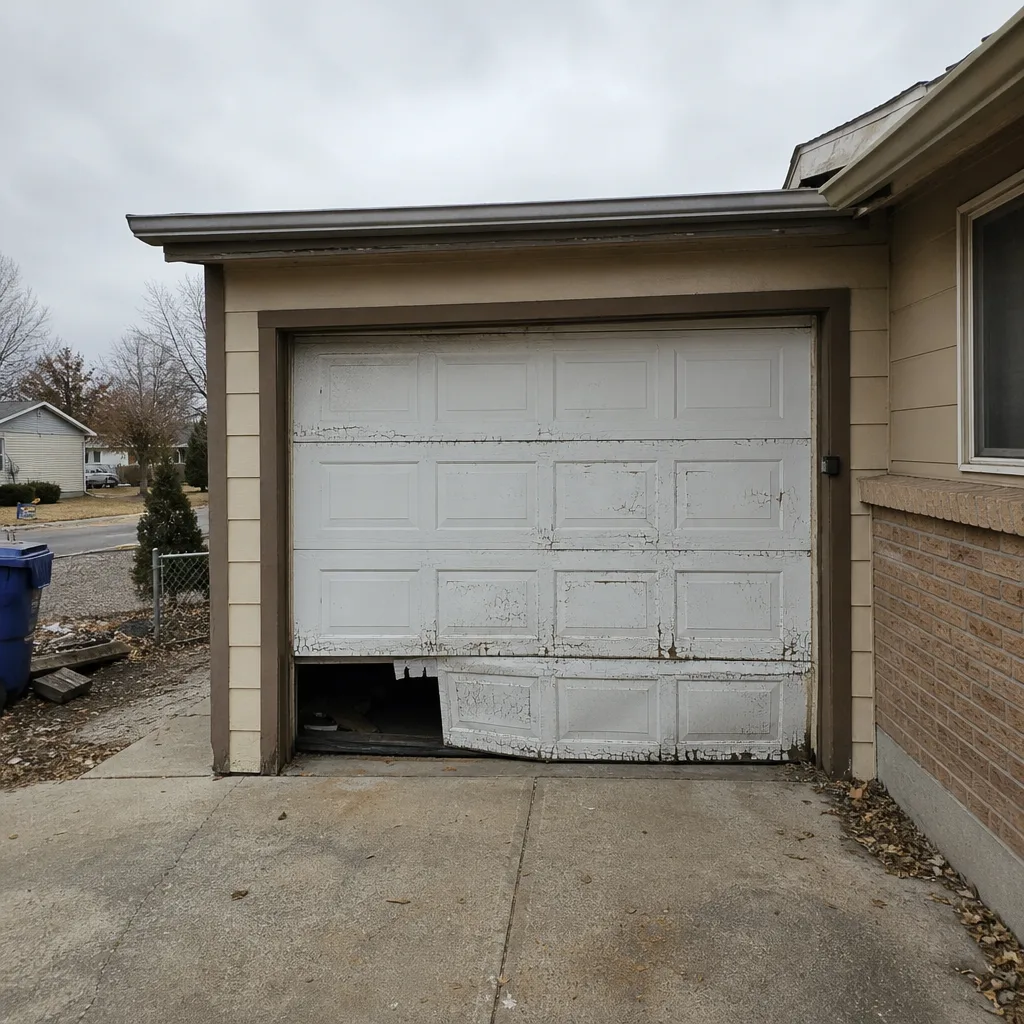 Before
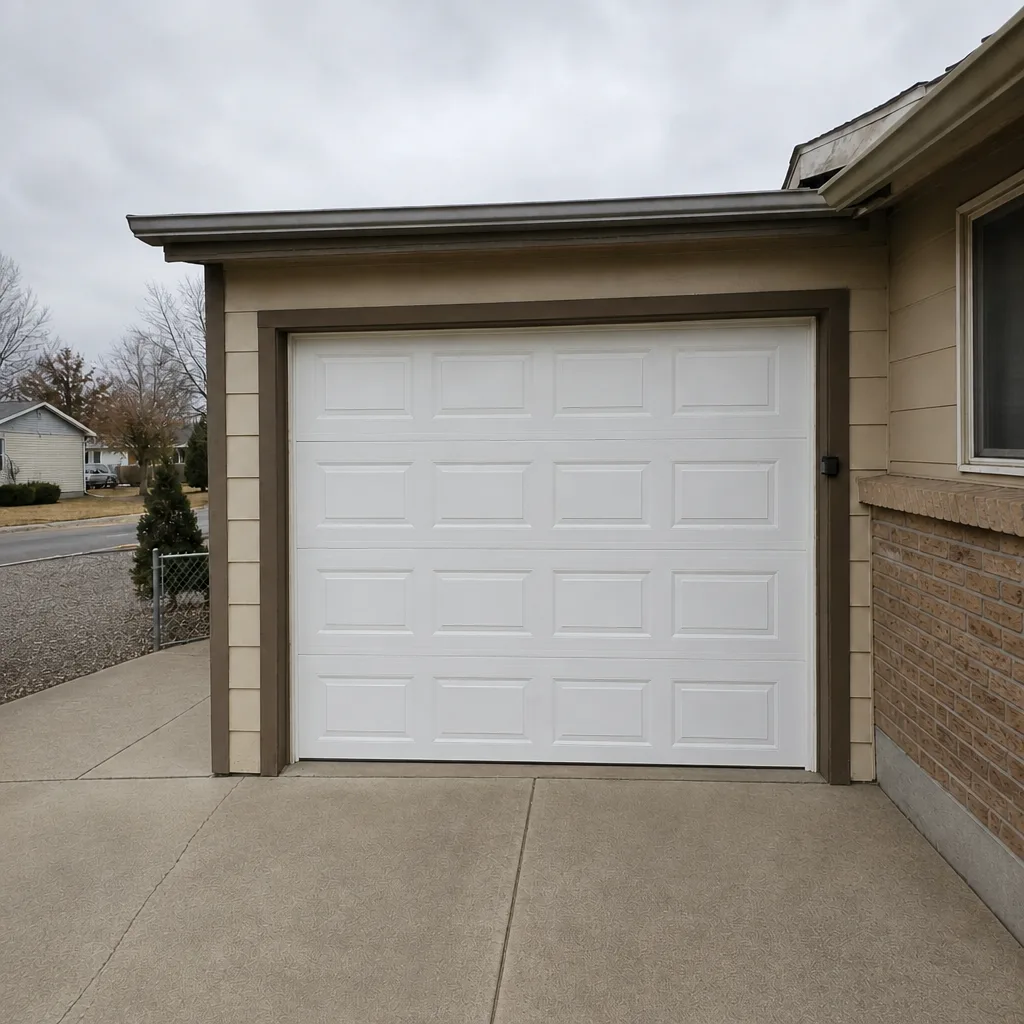 After
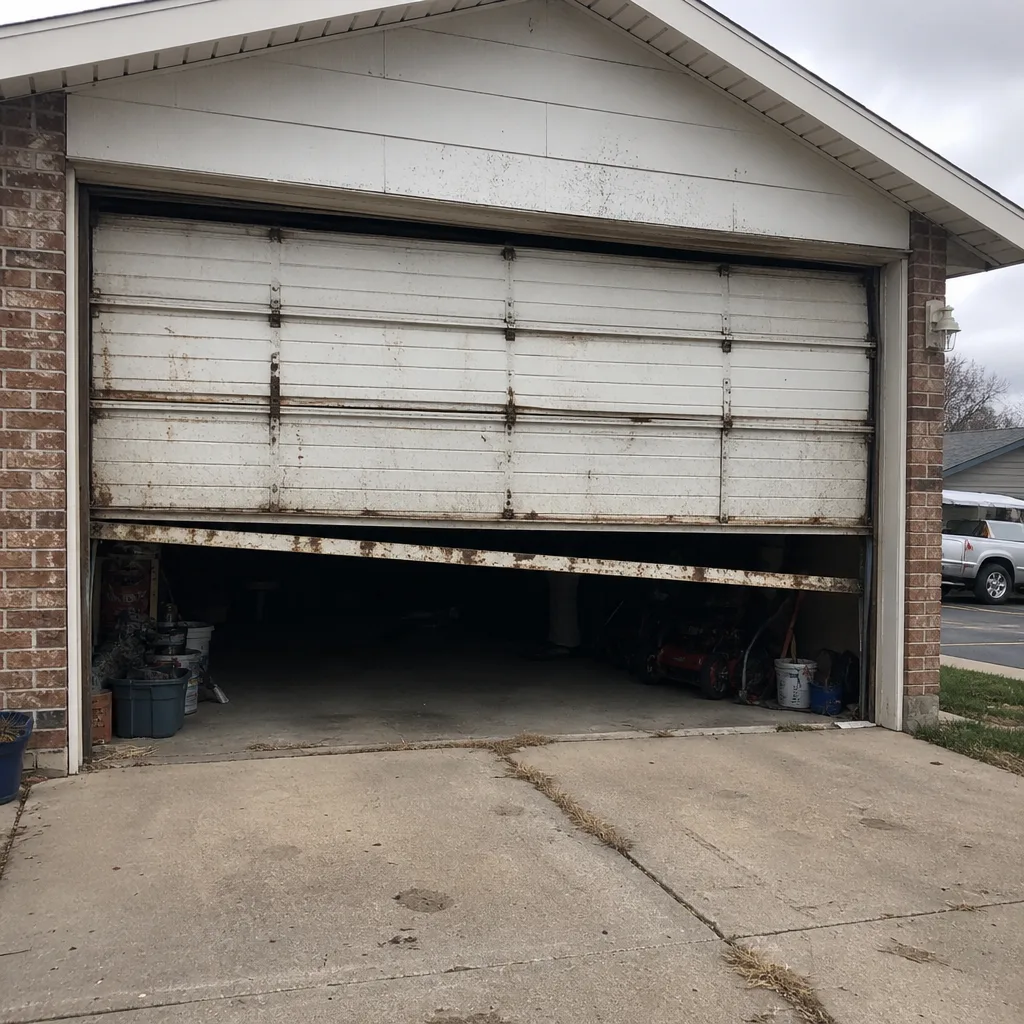 Before
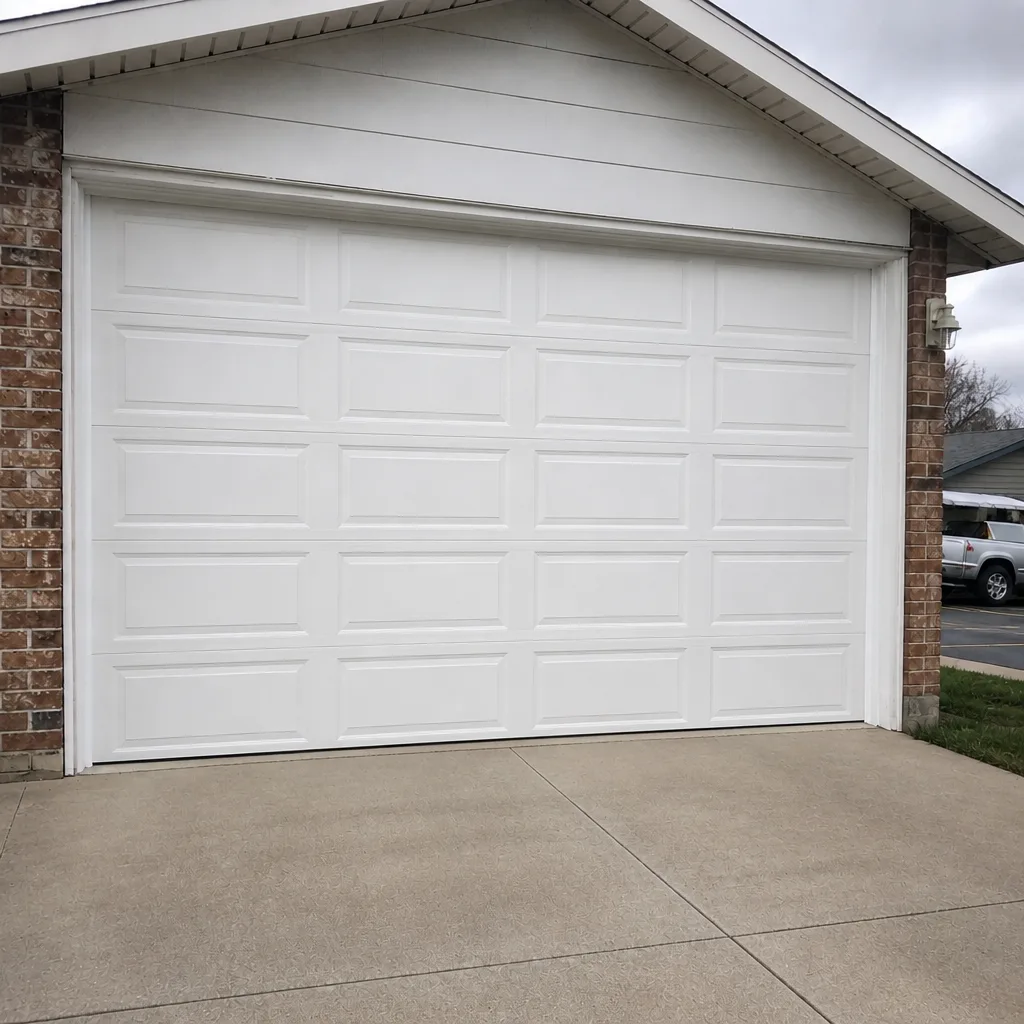 After
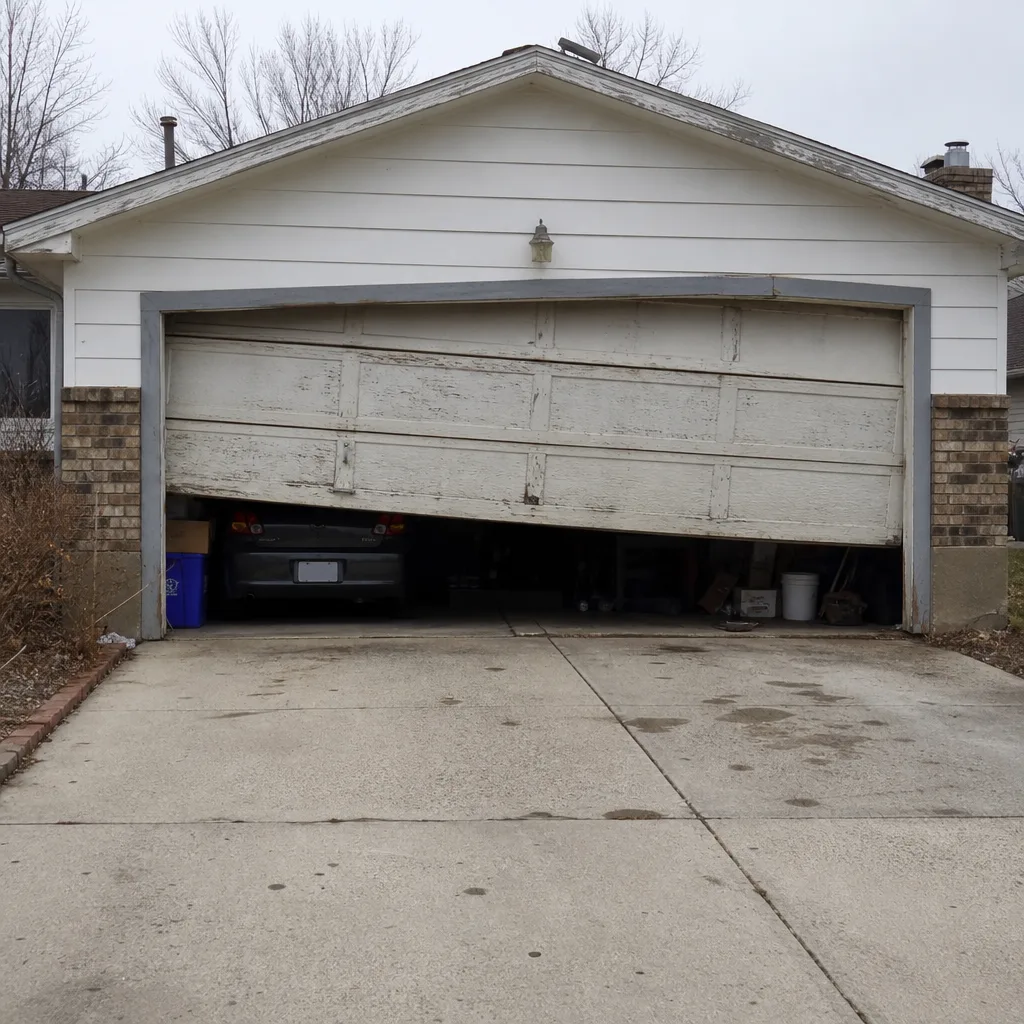 Before
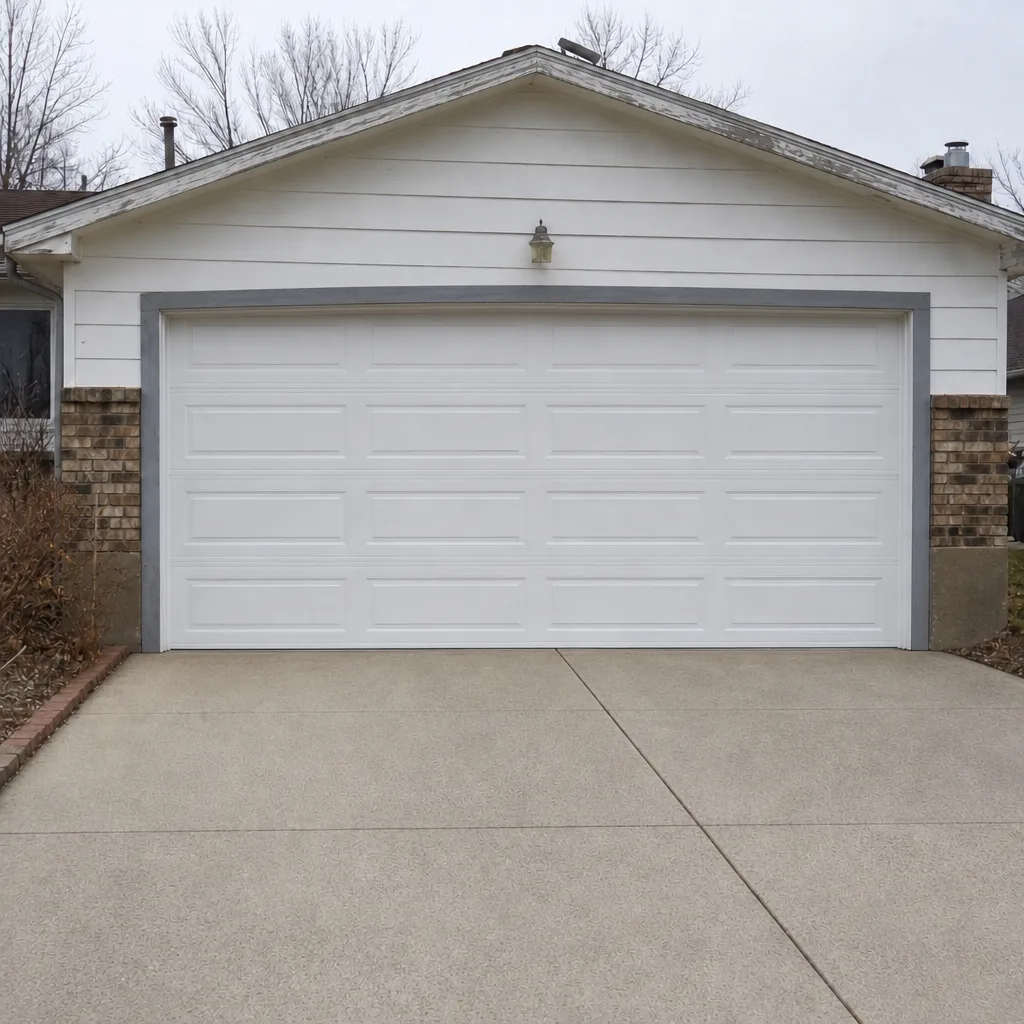 After
When to Call a Professional
Call for a technician if any of these are true: the spring has broken (any visible gap, any loud bang, any door that lifts too easily); the door is off its track or visibly uneven; the cables look frayed or slack; the opener runs but the door doesn’t move and the release is fine; the manual release won’t engage or the door won’t lift by hand. None of these are situations to work on yourself – spring and cable tension is exactly where home garage door injuries come from. The only exception is the release-cord test, which is safe if the door is closed and you’re careful. Northbridge Garage Door Repair offers free estimates in West Jordan – call (888) 594-1936. We work on the brand you already have, and we diagnose before we recommend anything.
Frequently Asked Questions
Close the door fully first, then pull the red manual release cord hanging from the opener carriage, then lift the door by the handle. Never pull the cord while the door is open – that’s the mistake that lets the door drop. Test the release once this month so you’re not learning it in the dark during a canyon windstorm outage. If it doesn’t release or the door won’t lift, call (888) 594-1936.
Keep everyone clear, don’t force the door, and don’t pull the release with the door partway open. If the door can be closed with the wall button, close it and leave it. If it won’t close, block the area – a door stuck on a failed spring can drop or catch. Call us and leave the spring work to a technician. Spring tension is genuinely dangerous.
Many current models from those brands do, and older units usually don’t or need a compatible add-on. The only reliable check is the model number sticker on the opener head. A backup battery has to be kept charged to work in a Utah winter outage – a dead backup is the same as no backup. We can look at yours during a standard service call.
Because the rubber bottom seal is freezing to the concrete slab after a snowmelt refreezes overnight. The opener runs and the door doesn’t move. Don’t pour hot water or salt on it – both cause problems. Check whether the door lifts by hand a few inches. If it comes free, it was the seal; if it won’t budge or lifts oddly, stop and call. A repeated freeze usually means a worn seal or a door sitting unevenly on the slab.
Only if you have a charged battery backup or use the manual release. In a hot West Jordan outage, being able to open the door by hand matters as much as getting the car out. If you have a backup, verify it’s charged in late spring. Don’t run gas equipment or warm up a car in a hot closed garage.
Door brand and model, opener brand and model number, spring type (torsion or extension), and what happened. Have those four ready and the call gets dispatched correctly the first time. Call (888) 594-1936. We answer 24/7, and we’ll tell you exactly what’s wrong and what it will cost before we start.
The Bottom Line
Garage door emergencies in West Jordan come in patterns – windstorm outages, cold-snap seal freezes, summer heat outages, and mid-cycle spring failures. The preparation that makes each one manageable is small: test your manual release with the door closed, know whether you have battery backup, keep a card with your door and opener model numbers near the opener, and don’t touch a spring or cable yourself. Ten minutes now, done once, is the difference between an hour of inconvenience and a day stranded. We’ll tell you exactly what’s wrong and what it will cost before we start. Call (888) 594-1936 for a free estimate. We answer 24/7. Fast dispatch from 7am to 7pm, Sunday through Friday.
Written by the team at Northbridge Garage Door Repair, serving West Jordan since 2012.