
Last updated November 14, 2026
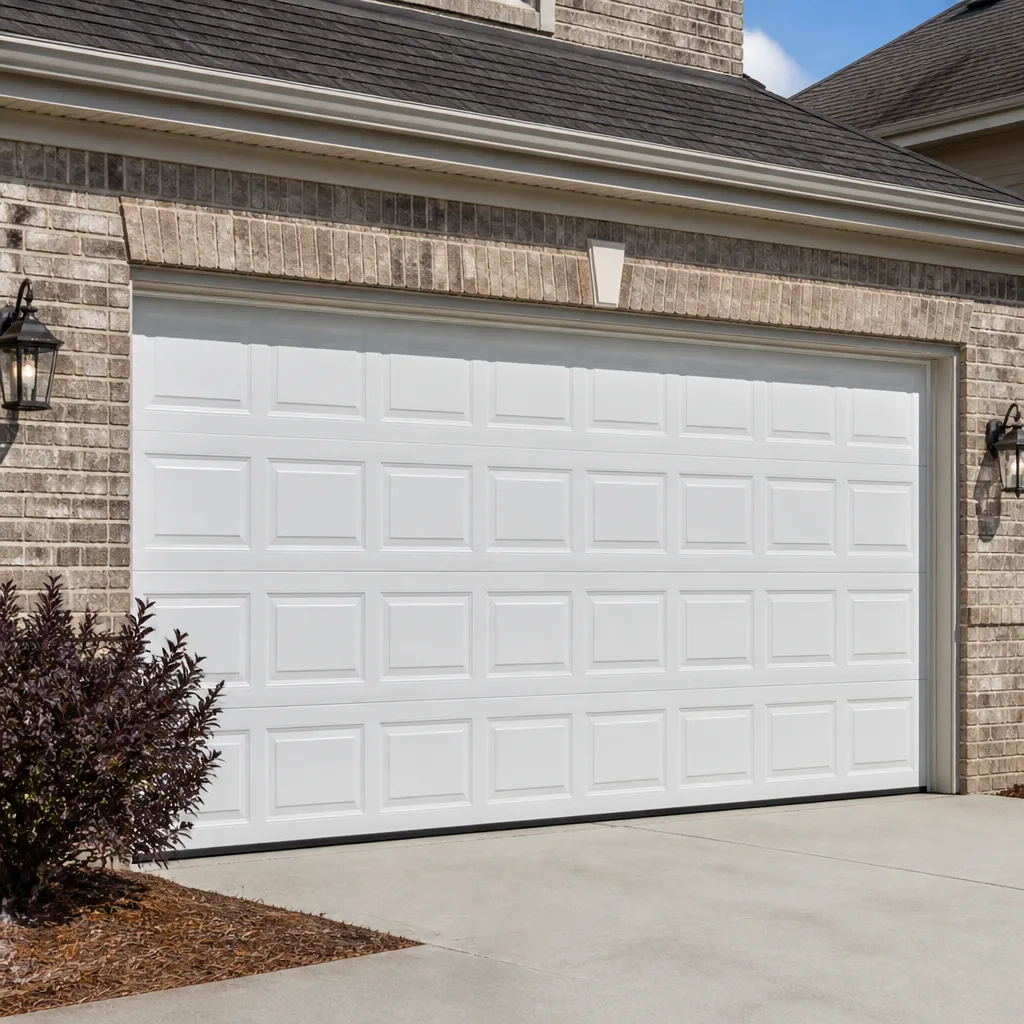 Raised-panel steel
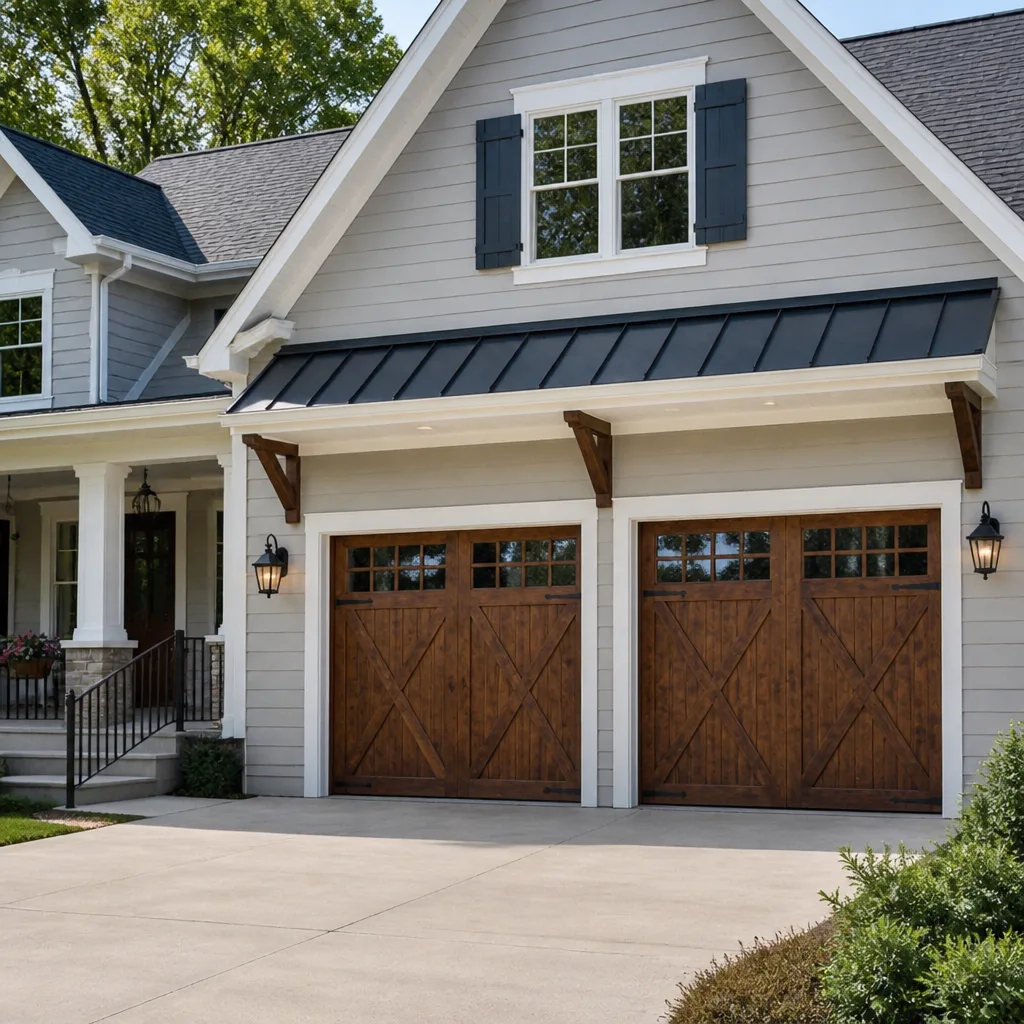 Carriage house
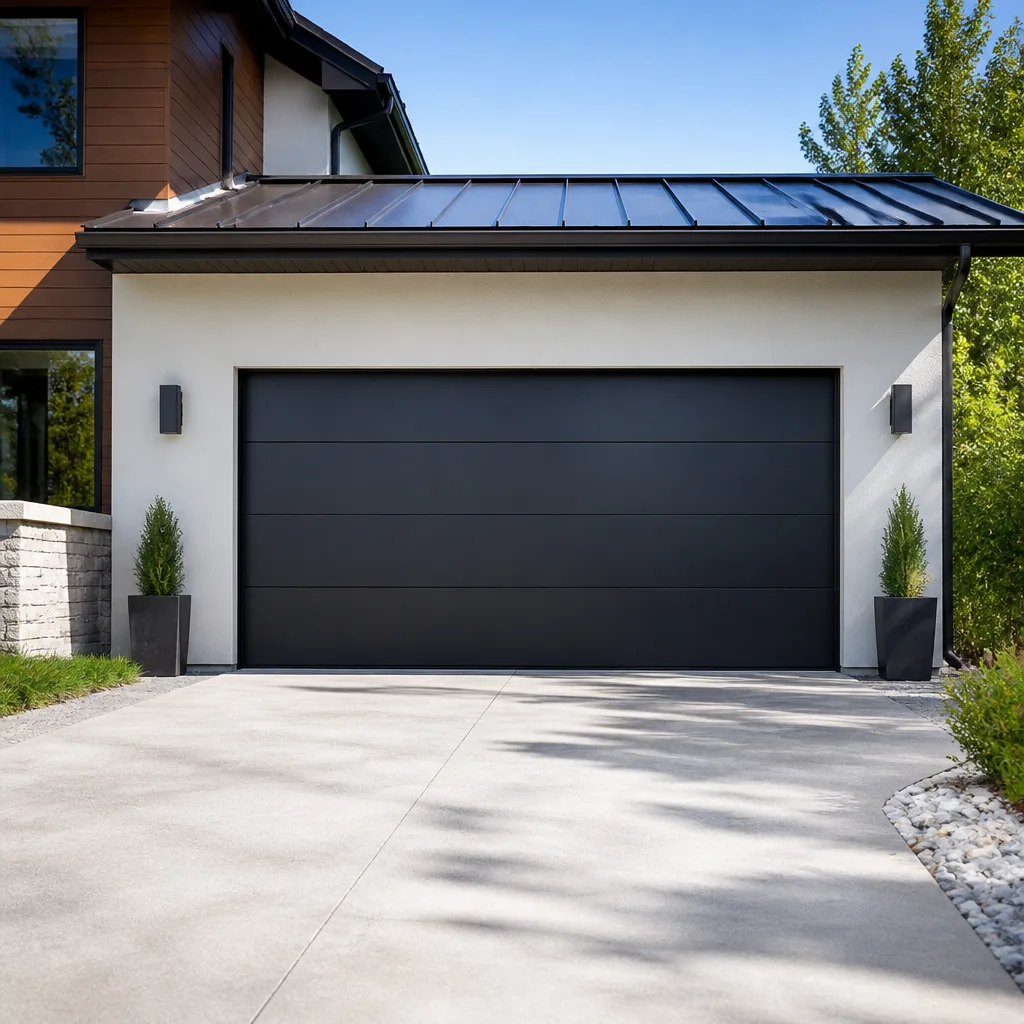 Modern flush
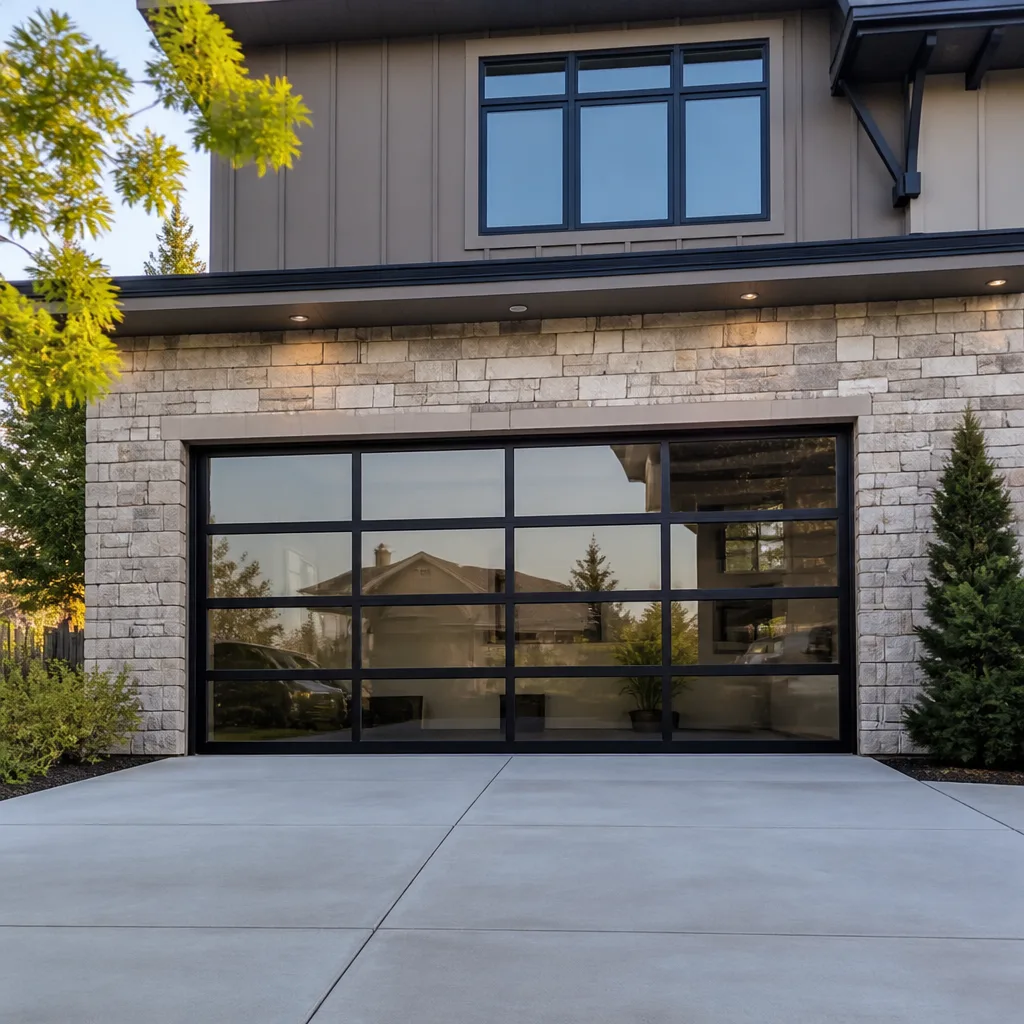 Full-view glass
 LiftMaster openers
 Chamberlain openers
Full 25-point door and opener safety check with every visit - springs, cables, rollers, tracks, and your LiftMaster or Chamberlain opener included
You get a price before we start. It does not change when the truck arrives.
Get your free estimateThe Complete Guide to Garage Doors in West Jordan
Most garage door advice you’ll read online was written somewhere else, by someone who has never watched a spring fail in a West Jordan winter. That matters more than it sounds. The national advice assumes mild seasons and moderate temperature swings. West Jordan sits at roughly 4,300 feet, where the gap between a hot August afternoon and a cold January night can push past 100°F. That range is the single biggest factor in how fast your springs fatigue, how quickly your seals crack, and how often your tracks drift out of alignment. This guide treats West Jordan as the variable, not an afterthought. We’ll walk through what actually wears first on the housing stock here, how HOA rules in the city’s larger communities shape what you can install, which decisions are genuinely local versus universal, and how to decide between a tune-up, a repair, and a replacement. By the end you’ll have a clear decision tree you can use no matter what brand is on your door.
Quick Answer
A garage door in West Jordan needs professional service when it won’t open or close smoothly, when a spring or cable fails, when the opener strains or reverses, or when the door is more than about 15 years old and repairs start stacking up. Routine tuning prevents most of it. The decision between repair, tune-up, and replacement comes down to door age, what’s broken, and whether the parts are still available for your brand. Most systems are back in service on the same visit once we diagnose them.
Styles & brands we work with
- Raised-panel steel
- Carriage house
- Modern flush
- Full-view glass
- LiftMaster openers
- Chamberlain openers
Table of Contents
- Why West Jordan Doors Age Differently
- The Housing Stock and What Wears First
- Springs, Cables, and Seals in the West Jordan Climate
- Door Styles Common in West Jordan Neighborhoods
- HOA Guidelines and How They Constrain Replacement
- What’s Local, What’s Universal
- The Decision Tree: Tune-Up, Repair, or Replace
- Openers: Repair First, Replace Only When Needed
Why West Jordan Doors Age Differently
Elevation and temperature swing are the two forces that shape garage door wear in West Jordan, and neither gets enough attention in generic lifespan charts. A door on the valley floor in St. George or Salt Lake City sees moderate seasonal movement. A door in West Jordan sees the full range from summer highs in the upper 90s to winter lows well below freezing, and that repeated expansion and contraction works on metal and rubber hour after hour. Steel panels flex. Tracks move a fraction of an inch. Springs cycle under load and lose tension faster than their rated cycle count suggests, because each cycle happens across a wider temperature gap.
Seals feel it too. The rubber astragal at the bottom of the door and the weather seals along the sides are designed to compress and bounce back. In West Jordan, summer heat softens them and winter cold hardens them, and the flex between the two cracks them earlier than most national estimates account for. We’ve seen seals in this city go brittle in half the time an owner expects.
There’s also the dry air and the dust that comes with it. In a valley at this elevation, dust settles into tracks and hinges faster than in wetter climates, and dry air pulls natural oils out of rollers and moving joints. That’s why a lubrication routine here matters more than it does on the coast, where humidity keeps things from drying out. It’s not a dramatic difference. It’s a steady one that shows up in the small failures first: a roller that won’t roll clean, a hinge that squeaks, a door that starts catching halfway up.
What all this means for a West Jordan homeowner: treat service as preventive rather than reactive. A door that gets tuned before the season swings has a much better chance of staying balanced through the year. And every component has a lifespan here that’s measured against West Jordan conditions, not a national average.
The Housing Stock and What Wears First
Most of West Jordan’s homes were built between the 1990s and the 2010s, and the garage doors that came with those houses share a profile. A 1990s build usually has a steel raised-panel door on a standard torsion spring system with an older chain-drive opener. A 2000s build often steps up to a slightly heavier insulated door with a belt-drive opener. The 2010s brought sectionals with higher R-value insulation and smarter openers with battery backup and Wi-Fi connectivity.
What wears first on each vintage is fairly predictable:
- 1990s builds: torsion springs are the first thing to fail, often in the 12 to 18 year range. Cables and rollers follow. The original opener often keeps running long after the door it lifts has gotten heavier from worn parts.
- 2000s builds: the belt-drive openers of this era hold up well, but belt tension and the drive gear are the common wear points. Bottom seals and side weatherstripping crack in our climate before the door itself shows any problem.
- 2010s builds: smart openers with battery backup need occasional battery replacement and firmware resets, and the gear and sprocket assemblies are the wear items. Insulated doors of this era are usually worth repairing long before they’re worth replacing.
The pattern is worth knowing because it tells you where to look first. If your West Jordan home was built in the 1990s and the door still has original parts, springs and cables are the ones to watch. If you’re in a 2010s build, the door panels are almost certainly fine and the opener or seals are the likely culprit. Matching the symptom to the vintage saves you from buying a new door when you need a spring, or replacing an opener when the door itself is out of balance.
Springs, Cables, and Seals in the West Jordan Climate
Torsion springs, which sit above the door on a metal shaft, carry the door’s weight so the opener only has to nudge it. They’re rated in cycles, and every open-and-close is a cycle. In a climate with this much temperature swing, springs work harder than their rating suggests because the metal has to handle the load across a wider thermal range. That’s the honest reason West Jordan springs tend to fail earlier than the same spring would somewhere milder.
Here’s the safety point that matters most: torsion springs and the cables under tension are dangerous. Do not try to replace them yourself. A wound spring stores an enormous amount of energy, and a mis-step can cause serious injury. Call a trained technician. What you can safely do is observe. If you see a visible gap in a spring, if the door feels much heavier than usual when you lift it by hand (carefully, and only with the opener disconnected), if you hear a loud bang from the garage, or if the door rises a few inches and stops, the spring is the likely cause.
Seals are the other climate casualty. The bottom astragal seal and the side weatherstrips are cheap parts that do disproportionate work: they keep out water, dust, and cold air. In West Jordan, they’re also the first thing to crack from the summer-to-winter flex. Inspect them once a year by running your hand along the bottom edge with the door closed. If the rubber is stiff, cracked, or missing chunks, replacement is a quick job that protects the door behind it.
Lubrication is the third piece. A light application of garage door lubricant on hinges, rollers, and the torsion shaft (never on the tracks themselves) keeps dry-air wear from building up. It’s the cheapest service you’ll ever do for the door. If you’d rather have it done as part of a full tune-up, garage door repair visits usually include lubrication, balance checks, and safety-reverse testing.
Door Styles Common in West Jordan Neighborhoods
West Jordan’s housing tracts have a fairly consistent look, and the doors reflect it. The dominant styles are steel raised-panel doors in short and long panel profiles, most in white, almond, or sandstone. Carriage-house style doors with decorative hardware show up in newer communities and HOA-heavy subdivisions. Full-view aluminum-and-glass doors are less common here than in the custom-build market, but they appear on modern builds and remodels.
Brand matters less than people think when it comes to what’s repairable. The doors you’ll find across West Jordan come from the major manufacturers, and the parts ecosystem is broad. Clopay and Amarr doors, for instance, have panel and hardware compatibility that’s easy to source. Wayne Dalton doors have their own spring and hardware systems that require the right parts. A Genie opener paired with a Clopay door is a perfectly normal setup, and it’s not a problem for a technician who works across brands.
What this means if you’re replacing: don’t let a single-brand dealer tell you the only option is their door. You have choices, and the door that fits your home’s style and your HOA is more important than the badge on the front. What you want is a door that matches your existing trim, fits the opening without custom framing, and uses hardware that a technician in West Jordan can service if something fails in ten years’ time.
For a full walkthrough of options by style and insulation level, our Northbridge Garage Door Repair team can show you the range and measure your opening. That’s usually the point where an owner realizes the choice isn’t five brands; it’s a shortlist of three or four that actually fit the frame.
HOA Guidelines and How They Constrain Replacement
Many of West Jordan’s larger communities have architectural review requirements that apply to garage door replacement. The rules vary by association, but the common themes are color matching, style matching, and prohibiting visible changes to the front elevation without written approval. That means you can’t put a carriage-house door on a tract home whose HOA restricts decorative hardware, and you can’t change the color from a matched neutral to something bolder without a review.
The practical steps for anyone replacing a door in an HOA community are simple:
- Ask your HOA for the current architectural guidelines in writing before you order anything.
- Get the exact color and style names your association approves. Not generic “white” or “almond” – specific product references.
- Submit the request with the door manufacturer’s spec sheet and a rendering or photograph of the same style.
- Keep the approval in writing until the install is done and inspected.
This is one genuinely local step that a national door retailer won’t handle for you. It’s also a step that catches a lot of homeowners after the door has already arrived and can’t be installed. Ask first. If you’re not sure whether your community has architectural review, check your closing documents or call your management company before you place an order. The installation crew can’t sort out the HOA for you, but knowing the rules in advance saves weeks of delay.
What’s Local, What’s Universal
Some garage door decisions are genuinely specific to West Jordan. Others are the same everywhere. Knowing the difference tells you where to spend your diligence.
Local to West Jordan:
- Climate-driven lifespan. Springs and seals wear on a West Jordan timeline that’s shorter than a mild-climate estimate. Plan replacement intervals accordingly.
- HOA architectural review. The rules differ by community, and they can block a door that’s technically fine.
- Permits. Most cities require a permit for garage door replacement or structural changes, and rules vary. Ask West Jordan’s building department directly about your specific job before you schedule work. It’s a quick call and avoids a problem later.
- Housing vintage as a diagnostic shortcut. The 1990s to 2010s build profile here tells you which parts are most likely to fail first.
Universal:
- Springs and cables are dangerous. That’s true in every city and it doesn’t change here.
- Opener brands interop. A Genie opener can run a Clopay door. Brand matching is not required.
- Repair-first logic. If the door itself is sound, repair the failing part. It’s cheaper than replacement in any market.
- Safety-reverse testing. Every automatic opener should reverse when it meets an obstruction. That’s a national safety standard, not a local option.
The value of separating these is simple. You spend time on the local factors because they’re the ones no generic guide will tell you. You trust the universal factors to be true wherever you live. That combination is what makes a West Jordan decision actually work.
The Decision Tree: Tune-Up, Repair, or Replace
Here’s the practical decision structure we use when a West Jordan homeowner calls. It works for any door, any brand, any age.
Step 1: What’s the symptom?
- Loud noise, door won’t move, snapped spring, hanging cable: repair.
- Squeaking, slow response, door catches on the way up: tune-up.
- Door reversed for no reason, opener strains but the door moves by hand: opener diagnosis.
- Door bent, panel dented through, or multiple failures at once: replacement evaluation.
Step 2: What’s the door’s age and history?
- Under 10 years: repair the specific part. Panels and structure are usually sound.
- 10 to 15 years: repair if only one system (springs or opener) has failed. Consider a full tune-up after the repair.
- Over 15 years: if you’ve had two or more repairs in the last three years, replacement starts to make economic sense.
Step 3: What’s the cost of the alternative?
A repair is usually a fraction of the cost of a new door, and a tune-up is a fraction of a repair. The only time replacement genuinely makes sense is when the door itself is failing structurally (bent tracks, rotted wood, multiple panels damaged) or when the cost of keeping an old door working over the next five years approaches the cost of a new one. A technician can walk you through that comparison honestly. A dealer pushing a new door won’t.
Step 4: Check the parts supply.
If your door is an older model from a brand that’s still in production, parts are almost always available. The rare exception is a discontinued model or an aftermarket part that’s no longer made. That’s a genuine reason to replace. It isn’t a reason when parts exist. Most of the time they do.
Openers: Repair First, Replace Only When Needed
Garage door openers get treated as disposable far too often. When an opener stops working, the automatic assumption in a lot of homes is “time for a new one.” That’s rarely true. An opener is a mechanical system with wear parts, and most opener failures are fixable.
Common opener problems and their usual causes:
- Door reverses a few inches up: travel limit or force setting out of adjustment, or a safety sensor issue. Usually a five-minute fix.
- Opener hums but door doesn’t move: stripped drive gear, worn sprocket, or a dead capacitor. Common on older units and worth repairing.
- Remote or keypad doesn’t work: battery, remote pairing, or a logic board issue. Not a reason to replace the opener.
- Door moves unevenly or shudders: often not the opener at all, but a door that needs balancing or new rollers.
The key point is that opener repair is its own discipline. Diagnosing an opener means understanding the door it drives, the force and travel settings, the safety sensors, and the drive system. That’s different from diagnosing the door itself. We treat garage door opener repair as a core service, not a sales prompt. If your Genie, Chamberlain, or LiftMaster unit is repairable, it gets repaired. If it’s actually failed, we’ll tell you why before suggesting a replacement.
Smart openers with Wi-Fi and battery backup from the 2010s are worth repairing too. Firmware issues, battery wear, and gear failures are all fixable. A modern opener whose only problem is a dead battery backup doesn’t need to be replaced.
Common Mistakes to Avoid
- Forcing a door that won’t move. If the door barely opens or jams, the opener is straining against a mechanical problem. Pulling on it or repeatedly pressing the remote can damage the opener’s drive train. Stop and get it inspected.
- Replacing the opener when the door is the problem. A door that binds, shudders, or reverses is often a balance or roller issue. A new opener won’t fix a door that isn’t running smoothly.
- Ignoring the seals for years. The bottom and side seals are cheap to replace and they protect the door’s interior. In West Jordan’s temperature swings, they crack faster than you’d expect. A small replacement now beats water and dust intrusion later.
- Using the wrong lubricant track-side. Garage door tracks should stay clean and dry. Lubricant on the track attracts dust and turns into a sticky mess. Lubricate the hinges, rollers, and torsion shaft – leave the tracks alone.
- Ordering a replacement door before checking HOA rules. In many West Jordan communities, the door needs architectural review approval before installation. Ordering first and asking later can leave you with a door that can’t go on the house.
- DIY on torsion springs. This is the one mistake that’s genuinely dangerous. Springs store enough energy to cause serious injury. Trained technicians only.
- Assuming one brand is the only answer. A single-brand dealer will steer you toward their own product because that’s what they stock and know. You can choose across brands. The right door for your West Jordan home depends on fit, style, insulation, and HOA rules, not on the label on the box.
See the difference
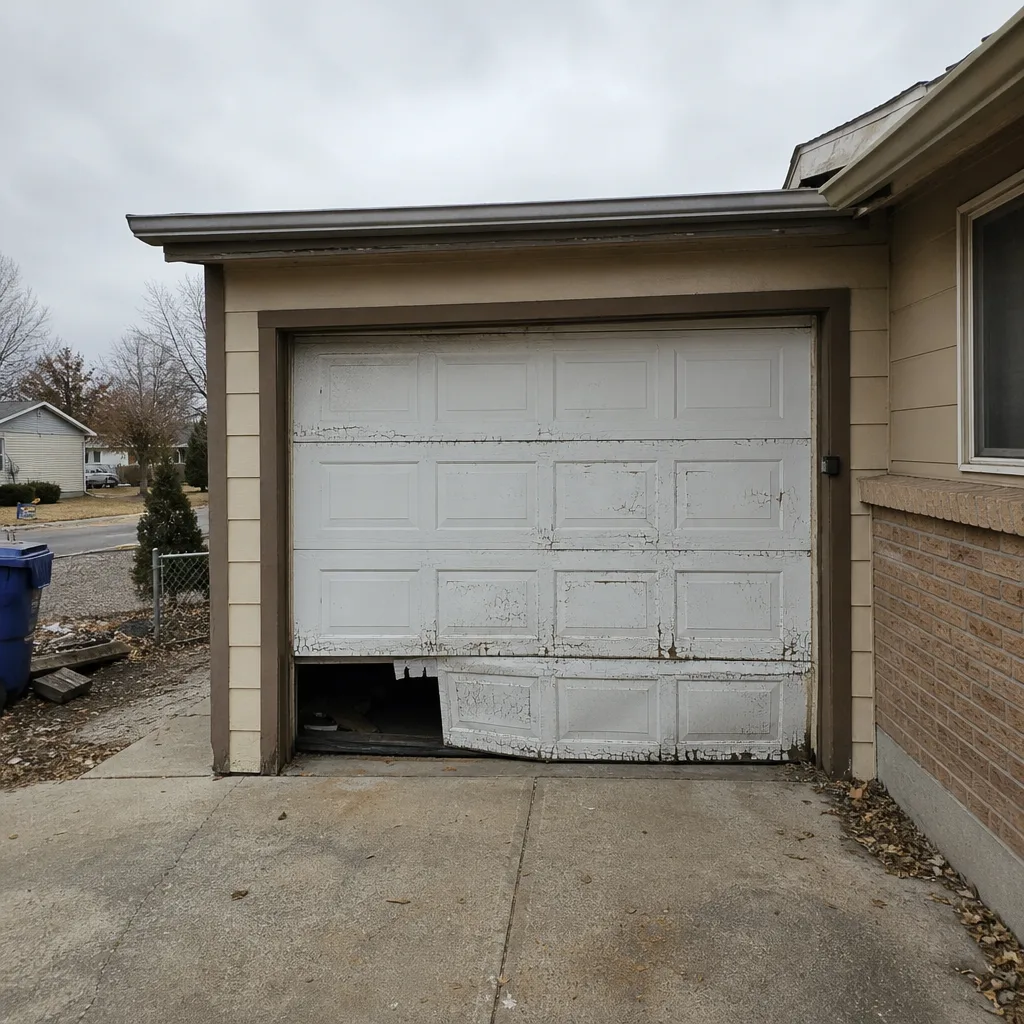 Before
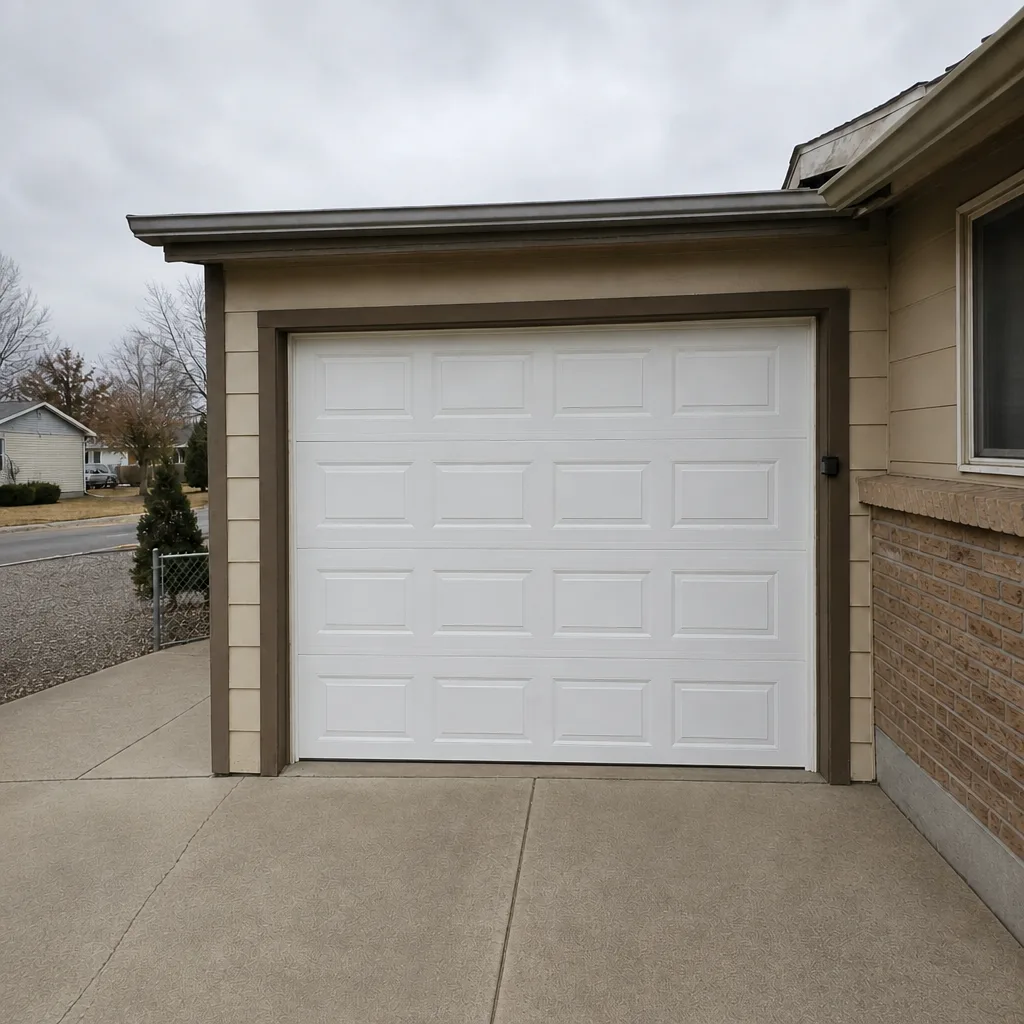 After
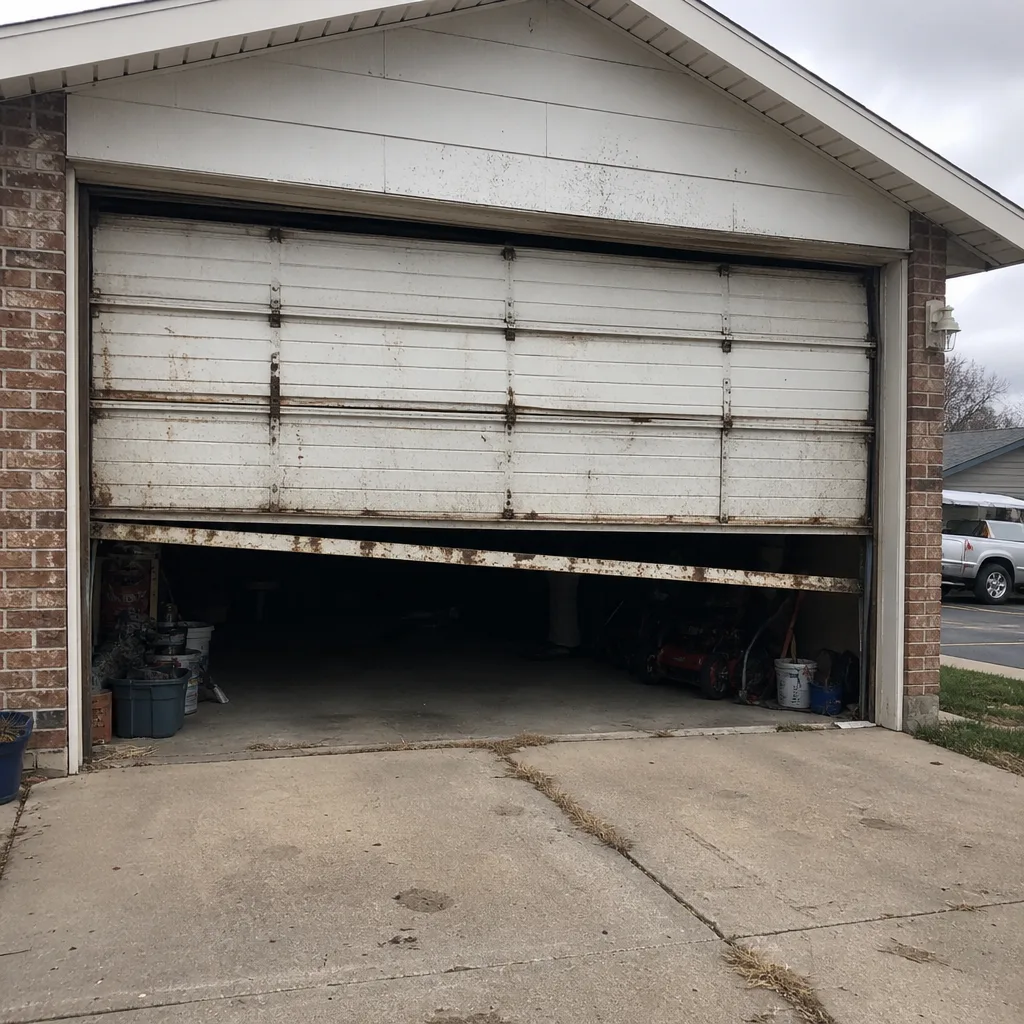 Before
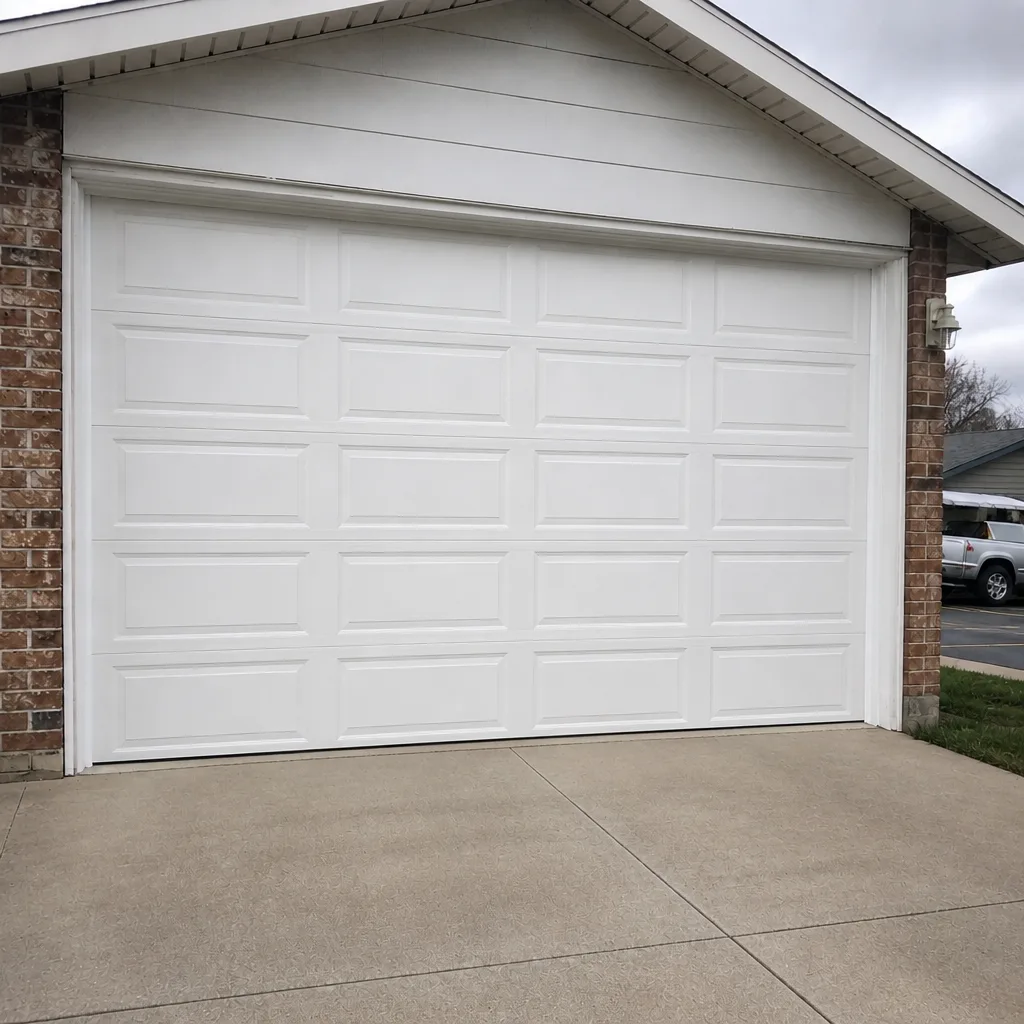 After
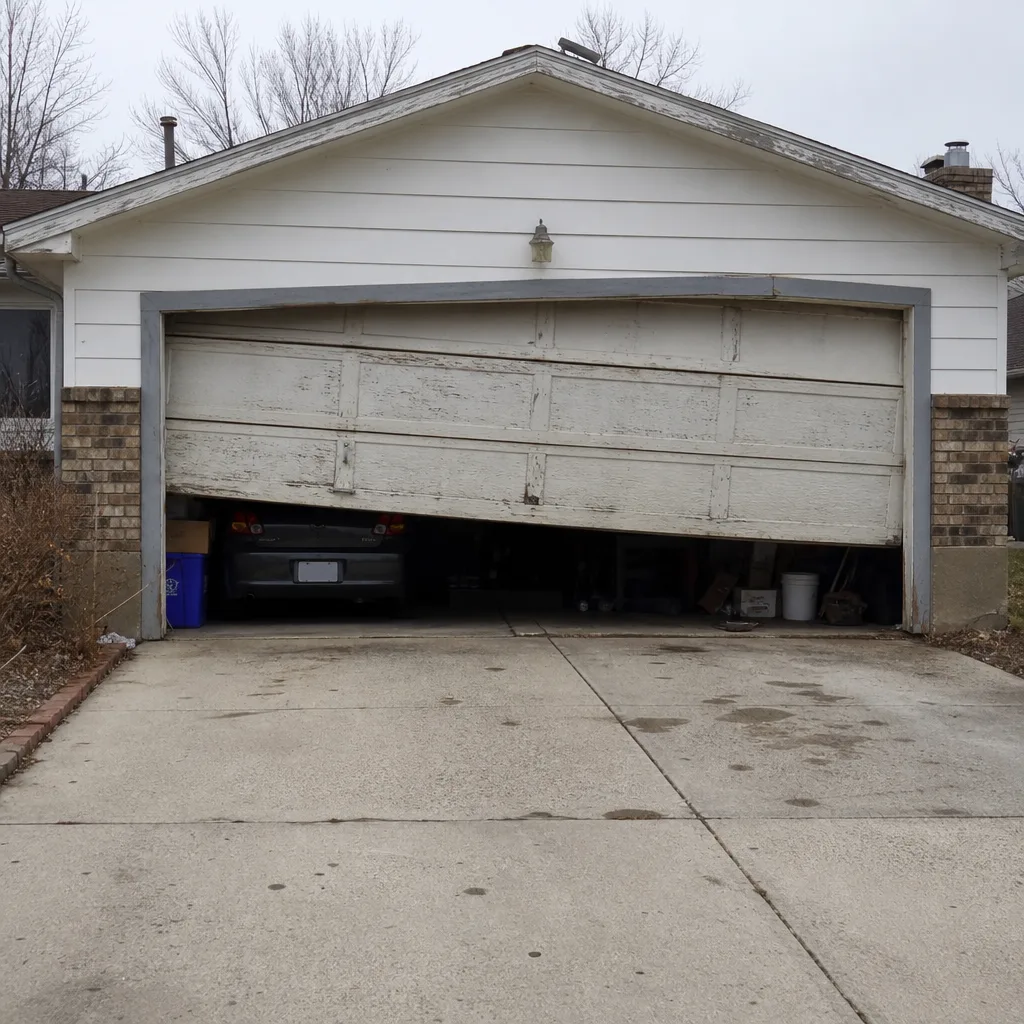 Before
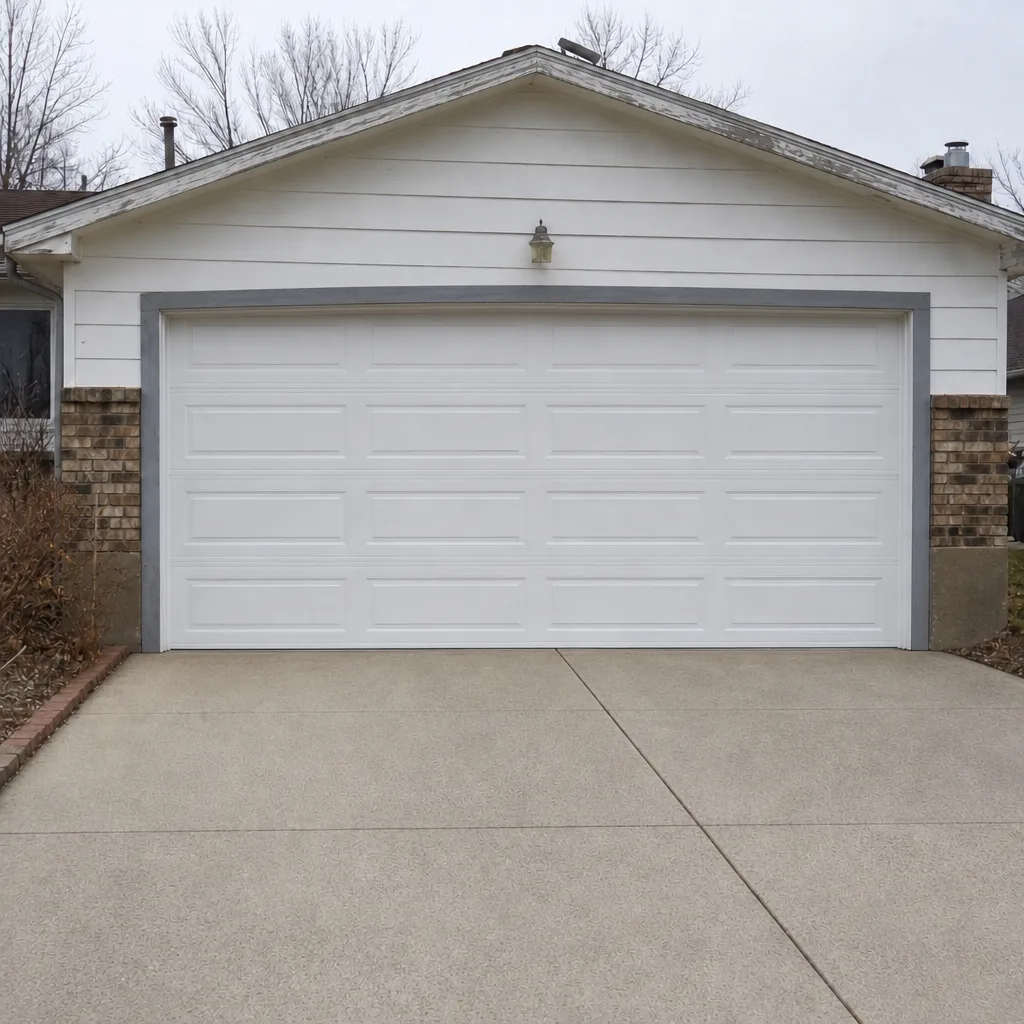 After
When to Call a Professional
Some garage door fixes are safe to handle yourself: lubricating hinges and rollers, replacing remote batteries, and gently testing the door balance by hand. Others need a trained technician. Call us when a spring has failed, when a cable is hanging or slack, when the door reverses unexpectedly, when the opener hums without moving the door, when you hear grinding or scraping, when panels or tracks are visibly bent, or when the door is more than 15 years old and problems are starting to stack up. Those are the situations where a wrong guess costs more than a service call.
Northbridge Garage Door Repair offers free estimates in West Jordan. Call (888) 594-1936. We work on the brand you already have, across LiftMaster, Chamberlain, Genie, Clopay, Amarr, Wayne Dalton, Craftsman, and Raynor. We’ll tell you exactly what’s wrong and what it will cost before we start, so there’s no surprise invoice at the end.
Frequently Asked Questions
A well-maintained steel garage door in West Jordan typically lasts 20 to 30 years, but the springs and seals inside it wear on a shorter cycle because of the wide temperature swing here. Most homeowners replace springs once before the door itself needs replacing, and seals once every few years. The door panels usually outlast the parts that lift them.
Replacing a garage door is not a typical DIY project because of the weight of the panels, the tension of the springs, and the electrical connection to the opener. Most cities require a permit for the job, so it’s worth calling West Jordan’s building department to confirm the rules for your address. A licensed technician handles the permit question, the measure, and the installation safely.
Many of West Jordan’s larger communities require architectural review approval before a garage door is replaced. The rules vary by association, so the safe approach is to ask your HOA or management company for the current guidelines in writing before ordering anything. Confirm the approved color and style names, submit your request with the manufacturer’s spec sheet, and keep the approval on file.
A door that reverses a few inches after starting to close is usually a safety sensor or travel limit issue, not a failing door. The opener’s safety sensors may be misaligned, blocked by dust, or knocked out of position, and the travel limit may need adjustment. That’s a quick diagnosis, and opener repair is a core service for us.
A tune-up is preventive: lubrication, balance check, hardware tightening, and safety-reverse testing. A repair fixes a specific failed part, like a spring, cable, or opener gear. Tune-ups reduce the chance of a repair; repairs fix what’s already failed. If your door is under 10 years old and only squeaking, a tune-up is usually all it needs.
Yes, most of the time. Openers from LiftMaster, Chamberlain, Genie, and other major brands are designed to lift doors of the same general weight and size, regardless of who made the door. A Genie opener paired with a Clopay door is a normal setup. What matters is that the opener is matched to the door’s weight and that the door itself is balanced.
Once a year is a good baseline in this climate, and twice a year if the door is older or you use it heavily. We answer 24/7. Fast dispatch from 7am to 7pm, Sunday through Friday, so you can book a service visit around your schedule. A call outside dispatch hours is booked into the next opening.
The Bottom Line
Garage doors in West Jordan age on their own clock. The elevation, the temperature swing, and the 1990s-to-2010s housing stock combine to wear springs, seals, and openers faster than a national lifespan chart would suggest. Knowing your build vintage tells you what to watch first. Knowing your HOA rules tells you what you can install. Knowing the decision tree – tune-up, repair, or replace – tells you when to stop putting money into a door. Repair first whenever the door itself is sound. Replace only when the structure or repair math actually says so. For the parts and the diagnosis, trust a technician who works across brands, not one who only stocks their own. If you’re in West Jordan and want a straight answer on what your door needs, call (888) 594-1936 for a free estimate. We answer 24/7, with fast dispatch from 7am to 7pm, Sunday through Friday.
Written by the team at Northbridge Garage Door Repair, serving West Jordan since 2012.