
Last updated November 14, 2026
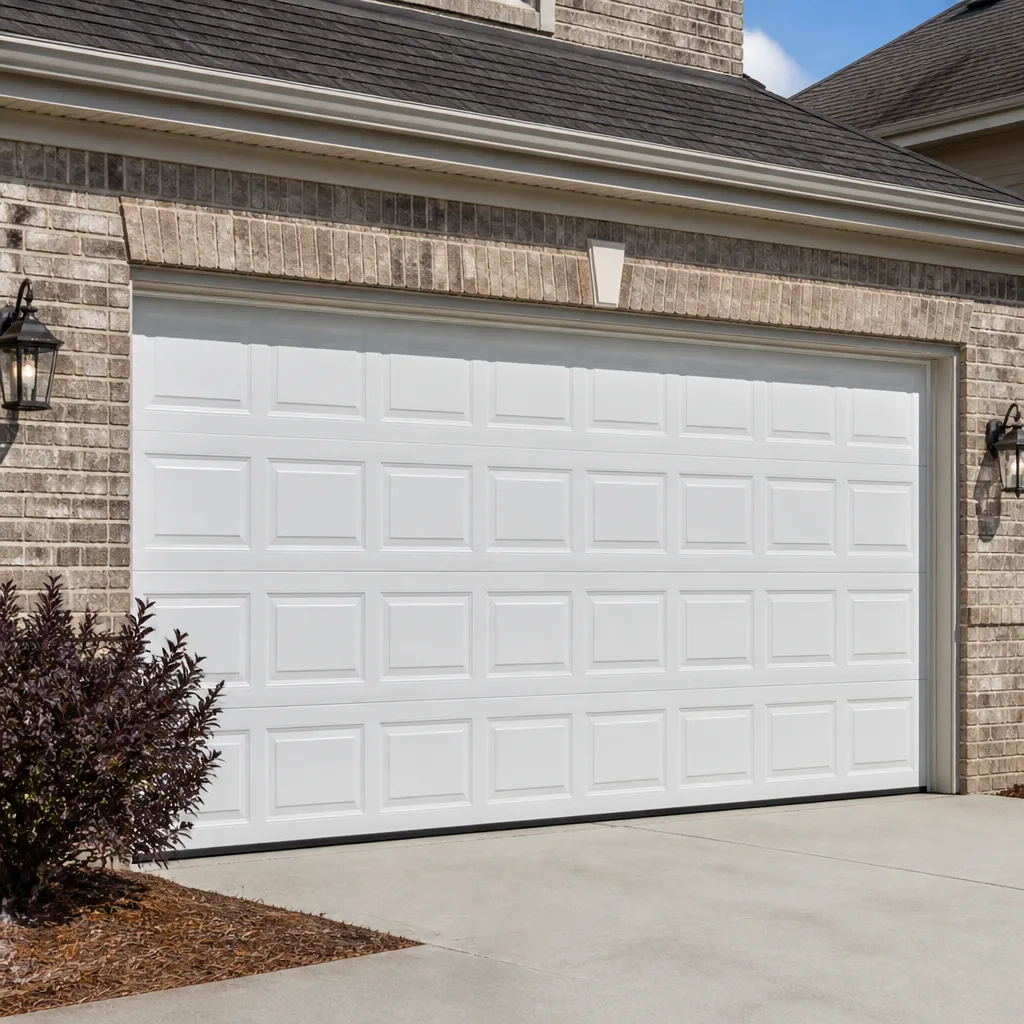 Raised-panel steel
 Carriage house
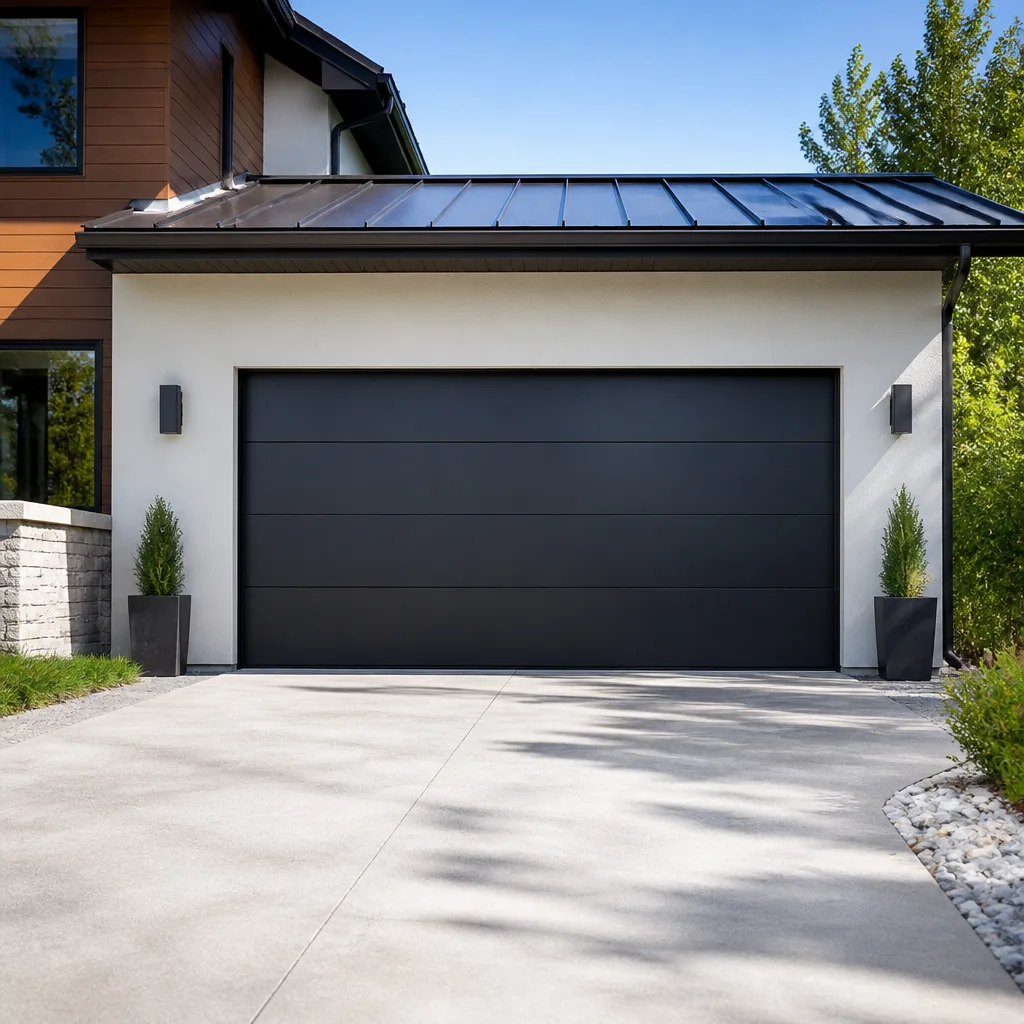 Modern flush
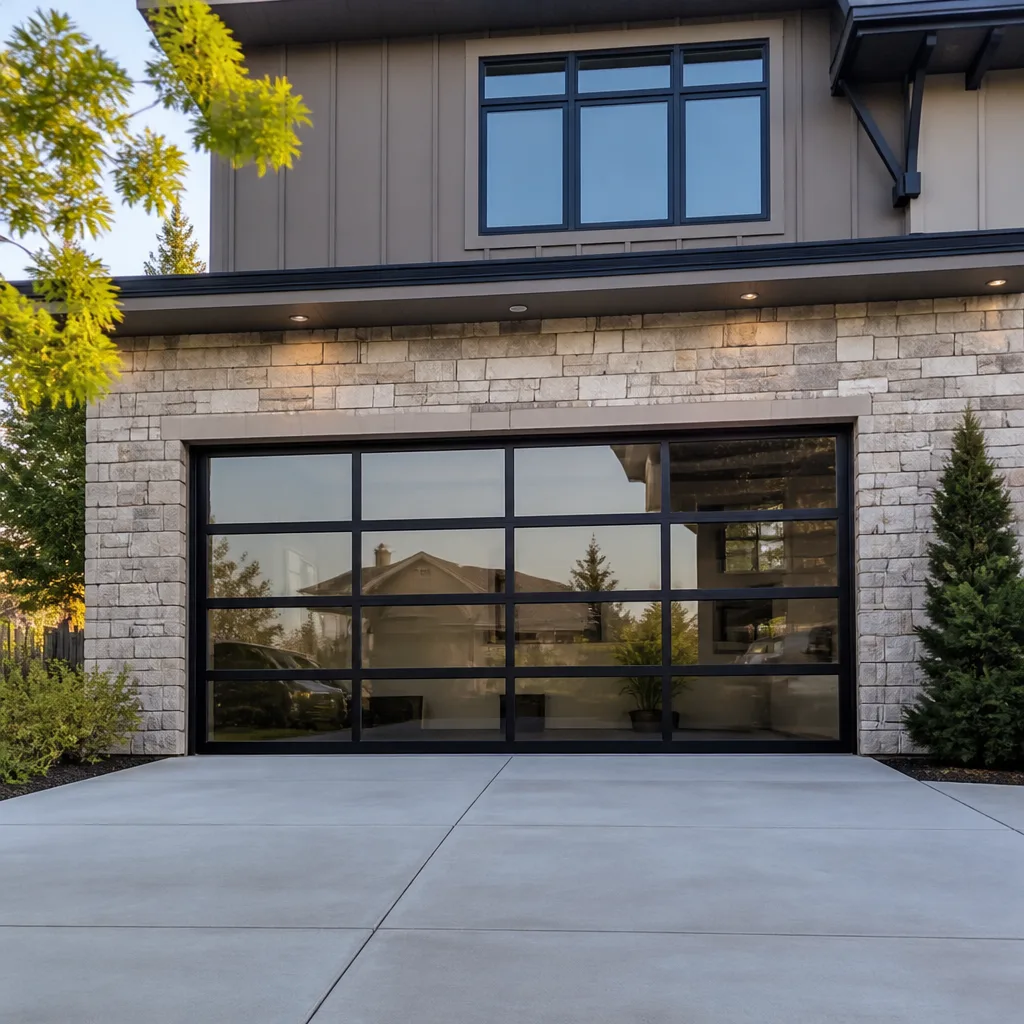 Full-view glass
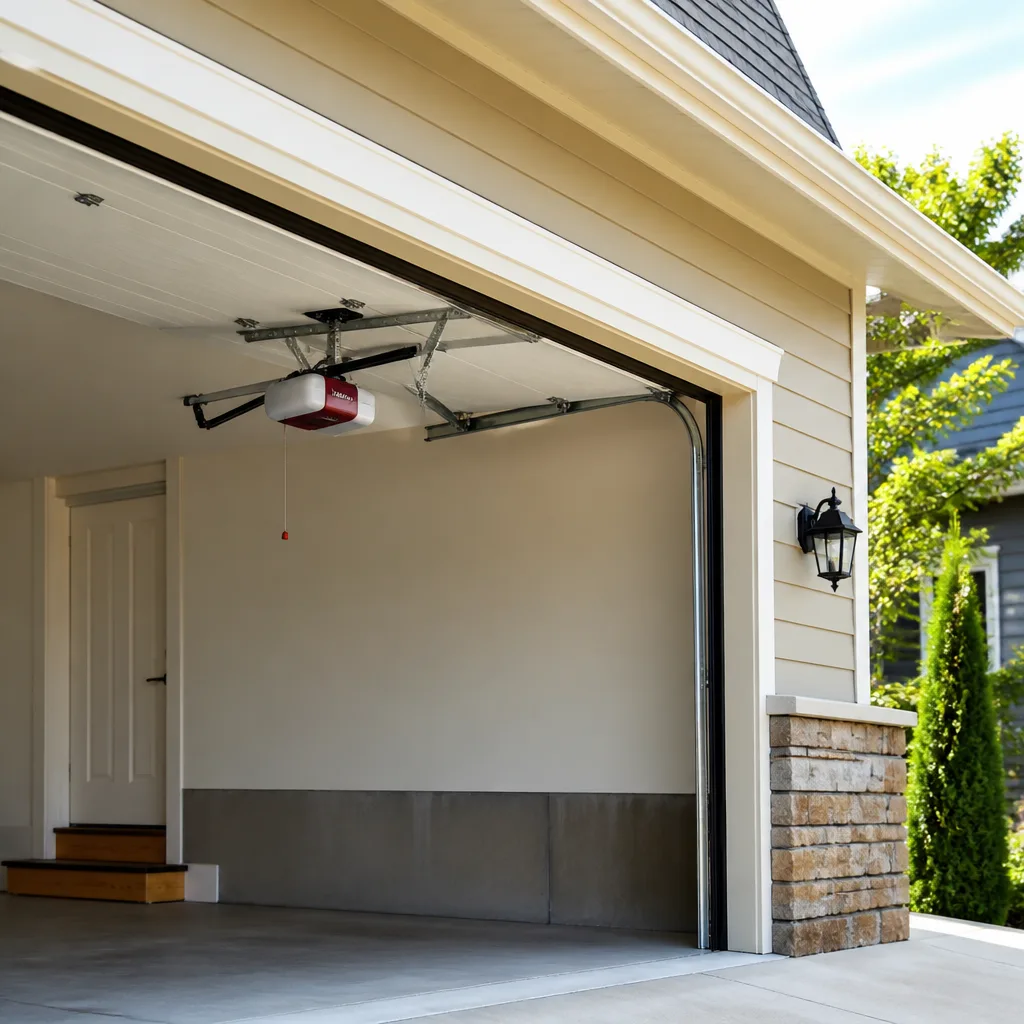 LiftMaster openers
 Chamberlain openers
Full 25-point door and opener safety check with every visit - springs, cables, rollers, tracks, and your LiftMaster or Chamberlain opener included
You get a price before we start. It does not change when the truck arrives.
Get your free estimateGarage Door Repair Maintenance Checklist for West Jordan Homeowners
Most garage door maintenance advice you’ll find online is padded with the obvious: listen for strange noises, keep the tracks clean, call someone if it breaks. That’s not a checklist, it’s a shrug. The failures our technicians actually find on West Jordan doors follow patterns, and those patterns are tied to this valley’s specific conditions – the hard freeze that arrives in late fall, the dry summer heat that bakes lubricant off metal, the freeze-thaw cycle along the Wasatch Front that works on weather seals all winter. A checklist only earns its keep if it’s timed to the conditions that cause failure here. Below is the one we’d hand a neighbor: what to check, when to check it, what lubricant actually holds up in Utah’s dry air, and the exact point where a homeowner should stop and call a trained technician.
Quick Answer
A working maintenance checklist for a West Jordan garage door has four parts: lubricate moving metal twice a year (before the first hard freeze and after summer heat), test the balance and safety reverse once a month, inspect the weather seal at both seasonal changeovers, and log every task with the date so you have a real service history. Most of this takes ten minutes and a can of lithium- or silicone-based lubricant. Springs, cables, and opener wiring are not homeowner jobs – those need a trained technician.
Styles & brands we work with
- Raised-panel steel
- Carriage house
- Modern flush
- Full-view glass
- LiftMaster openers
- Chamberlain openers
Table of Contents
- Why West Jordan Garage Doors Fail Differently
- The Seasonal Inspection Calendar for West Jordan
- Lubrication: What to Use in Utah’s Dry Climate
- Testing Balance and Spring Tension Safely
- Weather Seals and the Freeze-Thaw Cycle
- Monthly Opener and Safety Reverse Check
- Building a Service Log a Technician Can Use
- Common Mistakes to Avoid
Why West Jordan Garage Doors Fail Differently
Garage doors in West Jordan live a harder life than the generic maintenance advice accounts for. The Salt Lake Valley sits at roughly 4,300 feet, and the swing between a July afternoon and a January morning is wide enough to move metal. Steel panels expand in the heat and contract in the cold. Lubricant applied in mild weather thins out and migrates off the hinges by the time the first freeze hits. Seals that flex easily in October turn rigid in December, and once they’re rigid they crack instead of bending.
Homes here also tend to face west or south, which means a west-facing garage door in the Jordan Landing area takes direct afternoon sun for months. That heat isn’t cosmetic. It cooks the lubricant film off torsion springs faster than any other factor, and it can warp a cheap bottom panel enough that the door drags on the frame. In our experience, the doors that fail earliest aren’t the oldest ones – they’re the ones facing the sun with no maintenance history at all.
The other thing that shapes failure here is the freeze-thaw cycle. West Jordan sees repeated cycles of daytime melt and overnight refreeze through the winter months. Water that works into a gap in the bottom seal freezes, expands, and pries the seal open a little wider. Repeat that twenty or thirty times over a winter and a small crack becomes a gap that lets cold air, dust, and eventually water into the garage. That’s why the seal inspection on this checklist is timed to the seasonal changeovers rather than once a year.
If you’re sorting out a door that’s already misbehaving, our garage door repair team handles the diagnosis. The checklist below is about preventing that call, or catching a problem early enough that it stays a small one.
The Seasonal Inspection Calendar for West Jordan
Twice a year is the internet’s default answer, and it’s roughly right for the Midwest. For a West Jordan home, the right intervals are tied to two hard dates: the first sustained freeze of late fall, and the peak of summer heat in July and August. Set your calendar to those, not to a generic “spring and fall.”
Here’s the calendar we use when we explain maintenance to a homeowner:
- Late October, before the first hard freeze. Lubricate all hinges, rollers, and the torsion spring. Inspect the bottom seal and side seals for cracks. Test the balance and safety reverse. This is the most important pass of the year here – a door that’s stiff going into winter puts extra strain on the opener and springs through the coldest months.
- Every month in winter. Quick visual check of the seal and a listen for new noises. Cold snaps reveal seal failures fast. Five minutes, no tools.
- Late April, after the last freeze. Lubricate again. Inspect for any winter damage to the seal or bottom panel. Test balance and safety reverse. Check that the opener’s chain or belt doesn’t have excess slack.
- July or August, mid-summer. The heat pass. Lubricate a third time if the door faces west or gets direct afternoon sun, because the sun cooks the lubricant off faster. Check panel alignment for heat warp. Look at the threshold seal for sun cracking.
- Any time the door sounds different. A new squeak, a grinding note, a pop – treat it as a flag and check within a week, not at the next scheduled pass.
Three lubrication passes a year sounds like more than the internet suggests, and for a shaded north-facing door it is. For a sun-baked west-facing door in West Jordan, it’s the minimum that keeps metal from binding. We’d rather explain why the interval is what it is than hand out a one-size-fits-all schedule that fails here.
Lubrication: What to Use in Utah’s Dry Climate
Most maintenance checklists are written for humid climates, and the advice doesn’t transfer cleanly. In humid air, a light oil hangs around longer because there’s moisture in the air keeping things from drying out. In West Jordan’s dry summer air, thin oils evaporate and migrate off metal in weeks. Grease attracts dust and grit from the valley floor, and once grit works its way into a hinge or roller bearing it grinds the parts down faster than dry metal would.
The right lubricant for this climate is a lithium-based grease or a silicone-based spray, applied lightly at the specific friction points. Not WD-40, which is a solvent and displaces lubricant rather than providing lasting film. Not motor oil, which migrates. Here’s where it goes and what to do:
- Hinges: one short spray or a dab of grease at each hinge pivot. There are usually four to six hinges on a standard door. Wipe off excess – grease that sits on the surface collects dust.
- Rollers: a drop on the bearing of each roller, not on the roller face. Metal rollers have a small bearing that needs lubrication; nylon rollers usually don’t and can be left alone.
- Torsion spring: a light coat along the coil with a silicone spray. This is lubrication only – never try to adjust tension. The spring is under extreme tension and is the most dangerous component on the entire door.
- Track: none. Tracks should stay dry. Lubricant in the track collects grit and causes the rollers to bind. Wipe the track clean with a dry rag instead.
- Opener rail and chain or belt: a very light coat on the chain, or none on a belt. Check your opener’s manual – LiftMaster and Chamberlain models, for example, often specify a light grease on the rail and none on the belt.
Two things to never lubricate: the photo-eye lenses on the safety reverse system (they need to stay clean and clear, not coated), and the bottom seal (lubricant degrades the rubber). If you’re unsure what your specific opener calls for, our garage door opener repair team can tell you what the manufacturer specifies for your model – Genie, LiftMaster, Chamberlain, and the rest of the major brands all have slightly different recommendations.
Testing Balance and Spring Tension Safely
This is the section where most checklists either skip the details or give dangerous instructions. We’ll give you the version that’s actually safe to do at home, and the exact point where you should stop and call a technician. The balance test tells you whether your springs are doing their job. If they’re not, the opener is doing work it wasn’t designed for, and it will fail early.
How to test balance – the safe version:
- Close the door fully and disconnect the opener using the manual release cord (usually a red handle hanging from the rail). Pull it toward the door to disengage.
- Lift the door by hand about halfway, to roughly waist height. It should lift with moderate effort – maybe ten to fifteen pounds of force. If it feels much heavier than that, stop here: the springs are losing tension and need a technician.
- Let go at the halfway point. A balanced door stays where you put it, or drifts very slowly. A door that drops fast or rises on its own is out of balance.
- If it’s balanced, lower it back down slowly and re-engage the opener. You’re done.
- If it’s not balanced, do not try to adjust the springs yourself. Stop and call a technician.
Where to stop: anything involving the torsion spring, the cables, or the drums. Those parts are under extreme tension, and a mistake can cause serious injury – the springs and cables are the most dangerous parts of a garage door, and they’re the reason we recommend a trained technician for any adjustment. You can safely test balance, listen for noise, and visually inspect for cable fraying. You should not touch the spring winding, the cable attachment points, or the drums. Ever. If you see a frayed cable or a spring with a visible gap, stop using the door and call for service. A trained technician has the tools and the training to work on those parts safely.
Weather Seals and the Freeze-Thaw Cycle
The bottom seal is the cheapest part on your door and the one most affected by a West Jordan winter. It’s the rubber strip along the bottom of the door that presses against the floor when closed. Its job is to keep cold air, dust, water, and pests out. When it fails, you feel it as a cold draft near the floor, hear wind whistle under the door, or notice water in the garage after a storm.
The freeze-thaw cycle is what does the damage. Here’s what to look for at the late-October and late-April inspections:
- Cracks or splits in the rubber. Small cracks at first, often on the bottom edge. Once they widen, they let air through.
- Compression set. The seal flattens over time and stops making contact with the floor. Check by closing the door and looking for daylight underneath from inside a dark garage.
- Gaps at the corners. The bottom seal often pulls away from the side seals at the corners, which is where water and cold air get in first.
- Side seal gaps. The vertical seals along the door frame also crack with repeated freeze-thaw. Run a hand along them – if you feel a draft, the seal has failed.
- Lifting at the threshold. The threshold seal on the floor can lift where water has frozen under it. Look for cracks or lifting at the edges.
Replacing a bottom seal is a straightforward job and one of the few maintenance tasks a reasonably handy homeowner can do themselves. Side seal replacement is a bit more involved. If you’re not sure whether a seal is failing or just dirty, our team can take a look during a Northbridge Garage Door Repair visit and tell you plainly whether it’s a replacement or a cleaning.
Monthly Opener and Safety Reverse Check
The safety reverse system is the most important safety feature on your door, and it’s the one most homeowners never test. It has two parts: the mechanical force setting, which reverses the door if it hits something while closing, and the photo-eye system, which reverses the door if something crosses the beam while it’s closing. Both need to work. Here’s the monthly test:
- Test the photo-eye. With the door open, wave a hand or a box across the beam at the bottom of the door. The door should not close, or if it starts, it should reverse immediately. If nothing happens, the photo-eye is misaligned or faulty.
- Clean the photo-eye lenses. Dust and cobwebs collect on them. Wipe with a dry cloth. Don’t spray lubricant on them.
- Test the force reverse. Place a roll of paper towels or a piece of wood flat on the floor in the door’s path. Close the door. It should reverse when it contacts the object. If it presses down on the object and keeps going, the force setting is too high and needs adjustment – call a technician.
- Listen to the opener. A grinding, scraping, or rhythmic click is a sign something in the drive system is wearing. LiftMaster and Chamberlain openers, for example, have a distinctive chain or belt note that changes when the rail is loose or the gear is wearing.
- Check the manual release. Pull it once a month and re-engage it to make sure it works. In a power outage, you need that cord to work.
If the safety reverse fails, don’t use the door until it’s fixed. It’s the one opener problem that’s genuinely urgent, because it’s the one that can injure a child or a pet. Same-day service on opener problems is standard for us – call and we’ll schedule a visit, and a technician diagnoses the issue and quotes the repair before any work starts.
Building a Service Log a Technician Can Use
The single most useful thing you can do for your door’s long-term health is keep a log. Not a formal document – a sheet of paper taped inside the garage door opener’s wall control, or a note on your phone. What matters is that each entry has a date, a task, and a note. Here’s the format we recommend:
- Column 1: Date of the task
- Column 2: What was done – “lubricated hinges and rollers”, “tested balance, door stayed at halfway”, “replaced bottom seal”, “opener chain adjusted”
- Column 3: Anything that seemed off – “slight squeak at top hinge”, “door felt heavier than last time”, “noticed small crack in side seal”
- Column 4 (optional): Who did the work – “self” or the technician’s name and company
This log does three things. First, it gives a technician a real service history when you call – they know whether the door has been maintained or neglected, which changes the diagnosis. Second, it helps you spot a trend, like a door that’s felt progressively heavier over six months, which points to spring wear. Third, when you sell the house, a maintenance log is proof the door was cared for, and it’s the kind of thing a buyer’s inspector notices. A door with a log and a door without one tell very different stories to a buyer.
Monthly, Seasonal, and Annual Task Summary
Here’s the whole checklist distilled into a single reference. Print it, tape it in the garage, and check items off as you go.
- Monthly: test photo-eye, test force reverse, test manual release, listen for new noises, glance at the bottom seal
- Late October: full lubrication (hinges, rollers, spring), bottom and side seal inspection, balance test, opener function check
- Late April: full lubrication, seal inspection for winter damage, balance test, opener chain or belt slack check
- Mid-summer: extra lubrication on sun-facing doors, panel warp check, threshold seal check
- Annually: full inspection by a technician if the door is more than ten years old, or any time the door has had a repair
For a West Jordan home, that’s the schedule that actually holds up to the local conditions. It’s more passes than the generic advice suggests, but the passes are short, the parts are cheap, and the failures it prevents are the expensive kind.
Common Mistakes to Avoid
- Lubricating the tracks. It feels like the right thing to do, and it’s the fastest way to make the door worse. Lubricant in the tracks collects grit, and grit wears the rollers. Keep the tracks dry and wipe them clean with a rag.
- Using WD-40 as a lubricant. It’s a solvent, not a lasting film. In West Jordan’s dry air it evaporates in weeks, leaving the hinges drier than before. Use a lithium or silicone lubricant instead.
- Adjusting the springs yourself. This is the one mistake that can cause serious injury. Springs are under extreme tension, and the tools required aren’t the ones in a typical home toolbox. If a balance test shows the door is out of balance, stop and call a technician.
- Ignoring a small crack in the bottom seal. In this climate, a small crack widens over a winter of freeze-thaw cycles. By spring it’s a gap that lets water and cold air in. Fix the seal in October, not in March.
- Skipping the safety reverse test. It’s the single most important test on the door, and it takes two minutes. A door that won’t reverse when it hits something is a hazard to anything in its path.
- Replacing the door when a repair will do. A door that’s loud, slow, or out of balance usually needs a repair, not a replacement. Get a diagnosis before you get a sales pitch – we’ve seen plenty of doors get replaced for a problem that was a roller and hinge job.
- Not keeping a log. A door that’s been maintained and a door that hasn’t can look identical on the outside. The log is the difference when you call a technician or sell the house.
See the difference
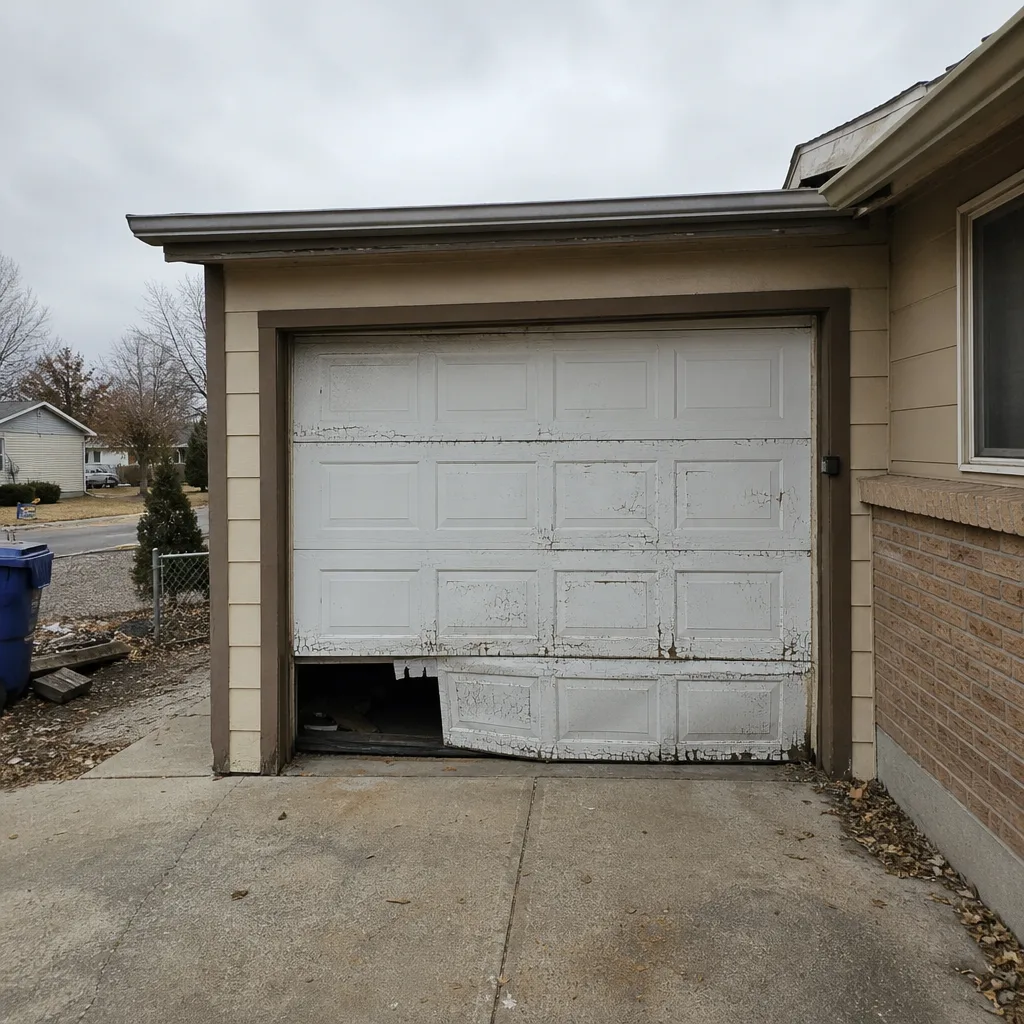 Before
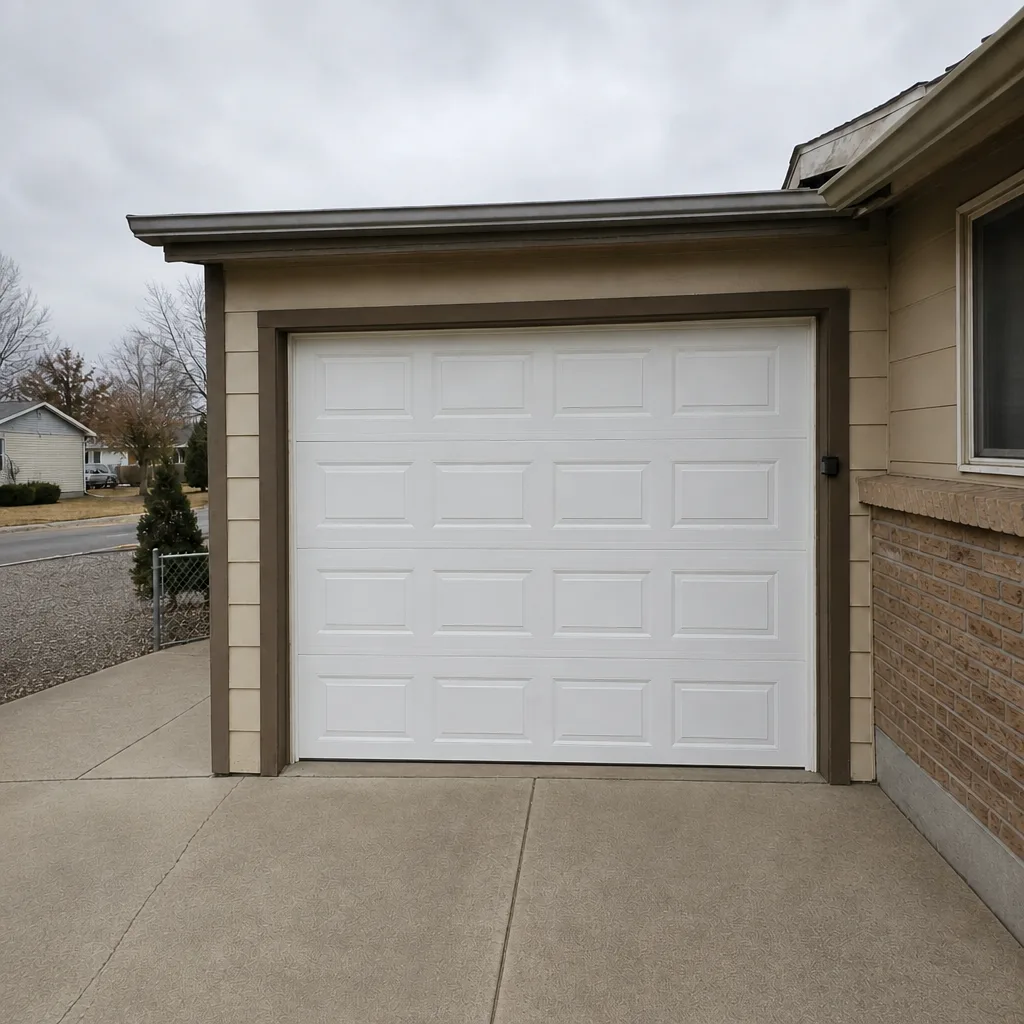 After
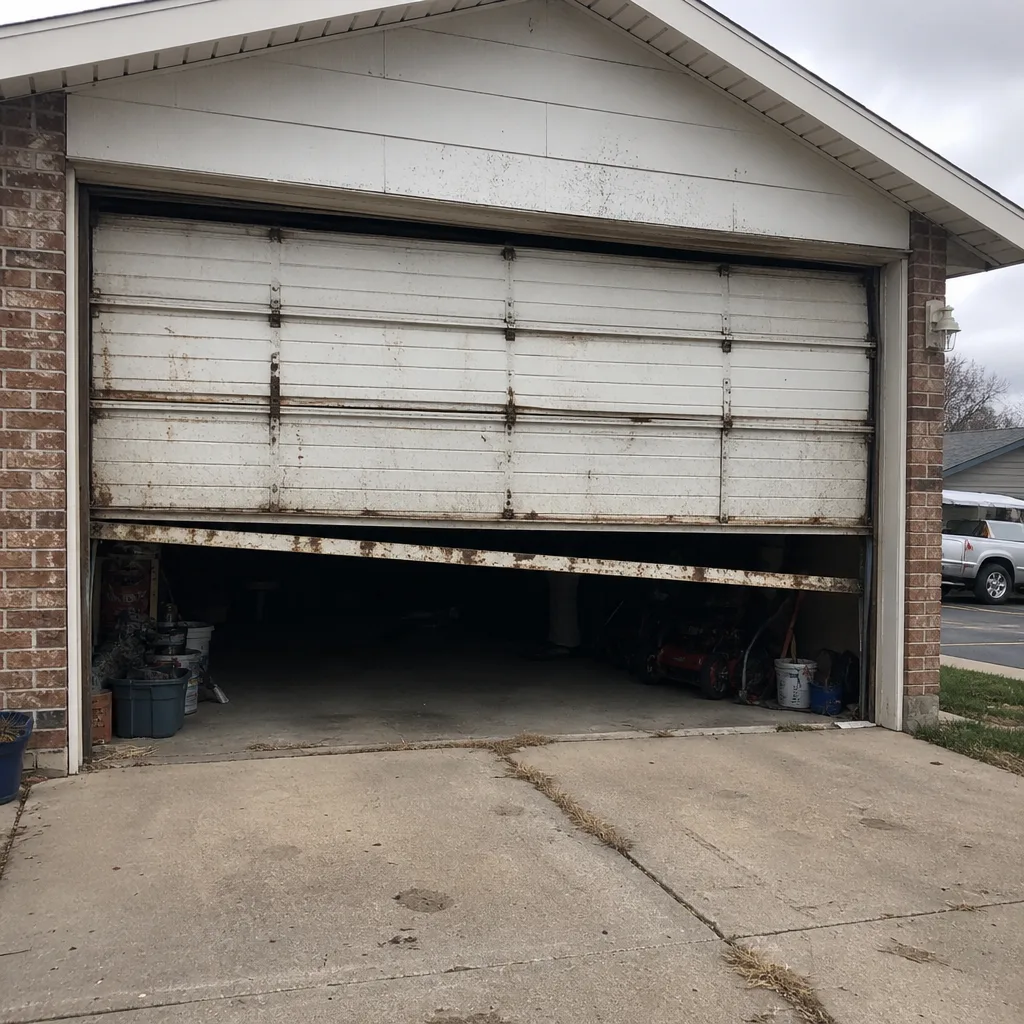 Before
 After
 Before
 After
When to Call a Professional
Most of this checklist is homeowner work. Four situations should get a trained technician to your door. If you see a frayed or kinked cable, stop using the door – cables are under tension and a failure can cause serious injury. If a spring has broken (you’ll hear a loud bang and the door won’t lift), don’t try to open it, and don’t try to replace the spring. If the balance test shows the door is out of balance, or the safety reverse fails after you’ve cleaned the photo-eye lenses, call for service. And if the door is more than ten years old and has never been serviced, an annual inspection is worth scheduling even if it seems to be working fine.
Northbridge Garage Door Repair offers free estimates in West Jordan – call (888) 594-1936. We answer 24/7, with fast dispatch from 7am to 7pm, Sunday through Friday. We work on the brand you already have – LiftMaster, Chamberlain, Genie, Clopay, and the rest of the major brands – with a repair-first approach. We’ll tell you exactly what’s wrong and what it will cost before we start, and the written estimate sets the final price.
Frequently Asked Questions
Twice a year at minimum, and three times a year if the door faces west or south and gets direct afternoon sun. The dry summer air here evaporates thin lubricants faster than in humid climates, and sun-baked doors lose their lubricant film even faster. Use a lithium or silicone lubricant on the hinges, rollers, and spring, and leave the tracks dry.
A door that feels heavier than it used to, or a door that won’t stay at the halfway point during a balance test. Springs lose tension gradually before they break, and the change is easy to miss unless you’re testing. If your door is noticeably harder to lift by hand than it was a year ago, have a technician check the springs before something fails. Call (888) 594-1936 to schedule a free estimate.
Before. Replace a failing bottom or side seal in late October, before the first hard freeze. A seal replaced in October holds through the freeze-thaw cycles of winter, when the seal takes the most abuse. A seal replaced in spring has to survive summer heat before it ever sees the cold.
No. Garage door springs are under extreme tension, and adjusting or replacing them requires specialized tools and training. A mistake can cause serious injury. You can safely test balance, lubricate the spring, and visually inspect for gaps or breaks – but any adjustment or replacement is a trained technician’s job. If the balance test shows the door is out of balance, stop using it and call for service.
It depends on what else is happening. A grinding noise alone usually means a wearing gear, a loose rail, or a chain that needs adjustment – not urgent, but worth fixing before it gets worse. If the grinding comes with a door that won’t close completely, or a safety reverse that stops working, treat it as urgent and stop using the door. Our garage door opener repair team diagnoses the problem and quotes the fix before starting work.
Three markers: the door stays at the halfway point during a monthly balance test, it opens and closes quietly without new noises, and the bottom seal makes contact with the floor with no daylight showing. If all three hold through a full year of seasonal passes, your maintenance is doing its job. If the door feels progressively heavier over six months, that’s a spring issue, and it’s worth a technician visit. For an exact quote on any repair, call (888) 594-1936 – estimates are free.
The Bottom Line
A West Jordan garage door needs maintenance timed to this valley’s conditions: a lubrication pass before the first hard freeze, another after the last spring freeze, and a third in mid-summer for sun-facing doors. Use a lubricant that holds up to dry air, not a solvent. Test the balance and safety reverse every month. Inspect the weather seal at the seasonal changeovers. Stop at the springs, the cables, and the opener’s force setting and hand those to a technician. Keep a dated log of everything – it’s the difference between a door that lasts and a door that fails early.
Call (888) 594-1936 for a free estimate on any repair or inspection. We answer 24/7. Fast dispatch from 7am to 7pm, Sunday through Friday.
Written by the team at Northbridge Garage Door Repair, serving West Jordan since 2012.