
Last updated November 14, 2026
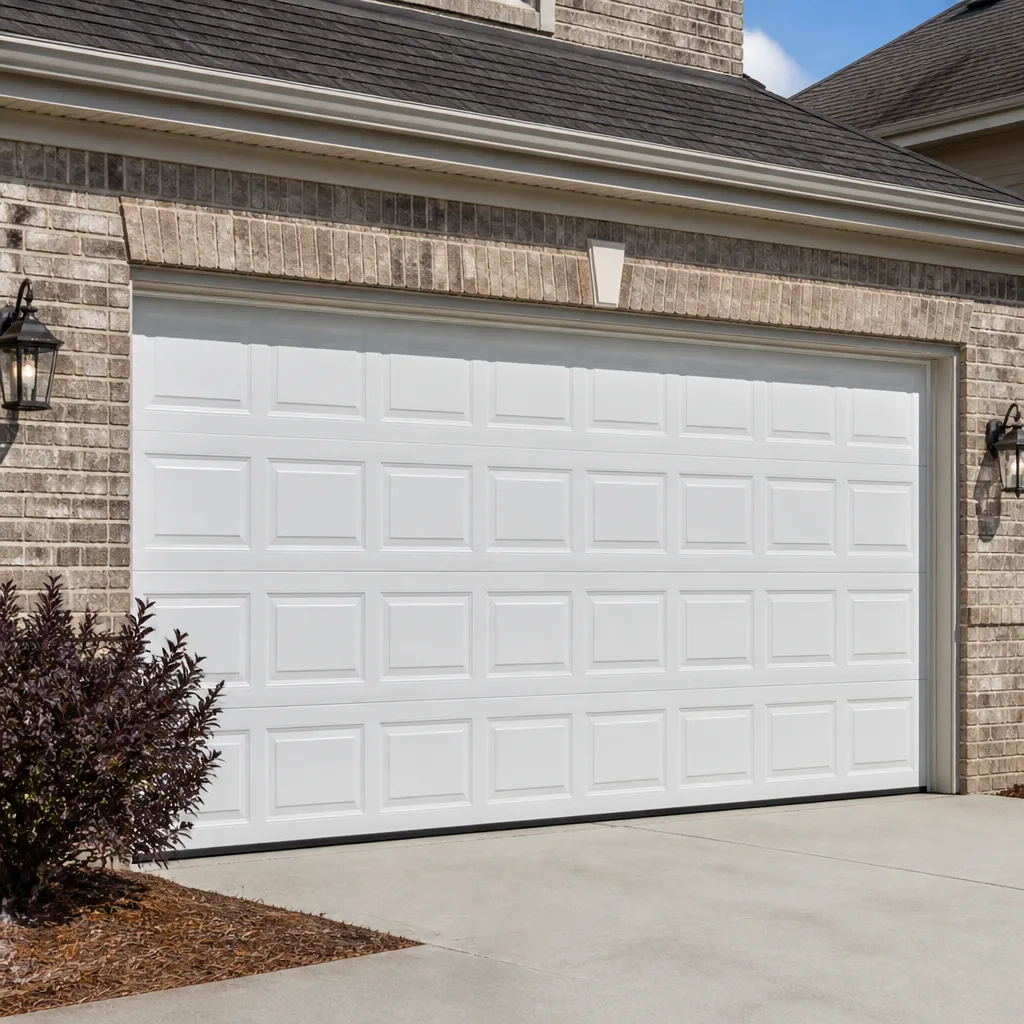 Raised-panel steel
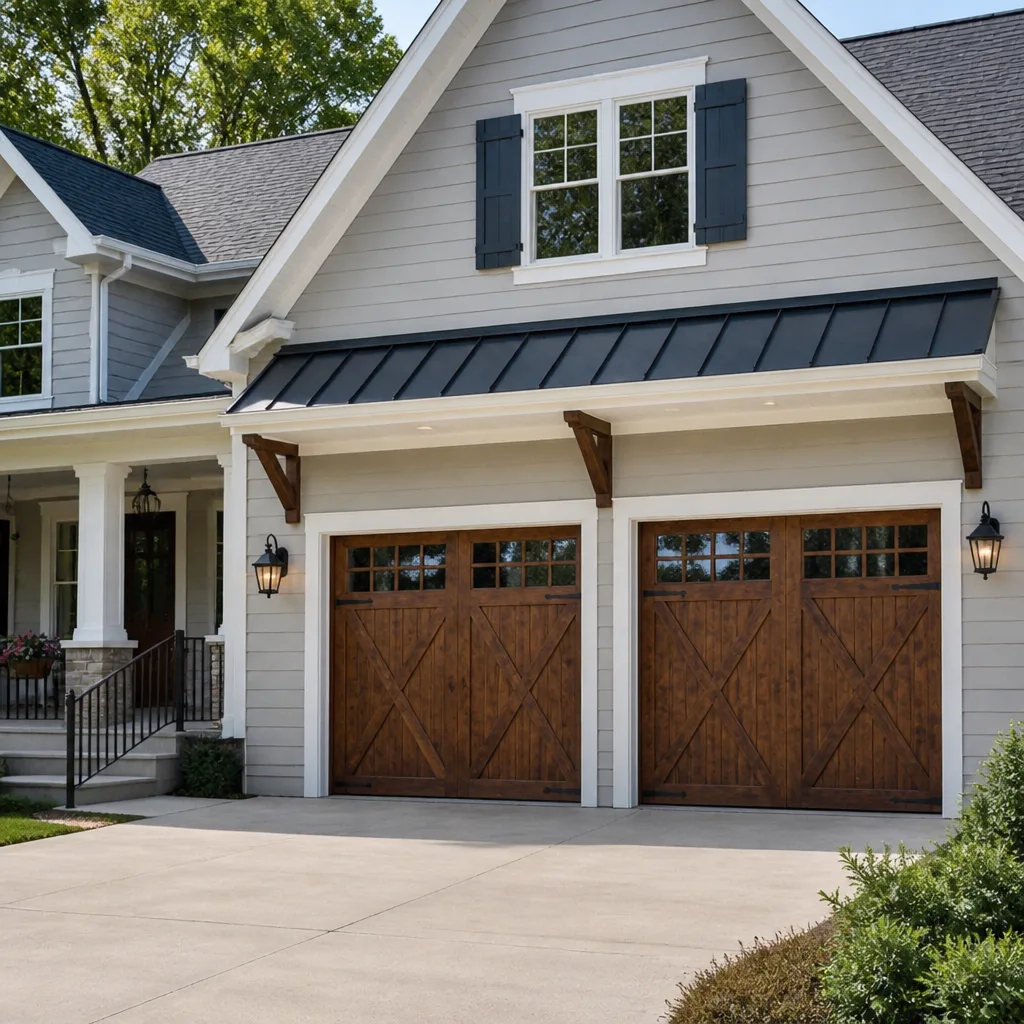 Carriage house
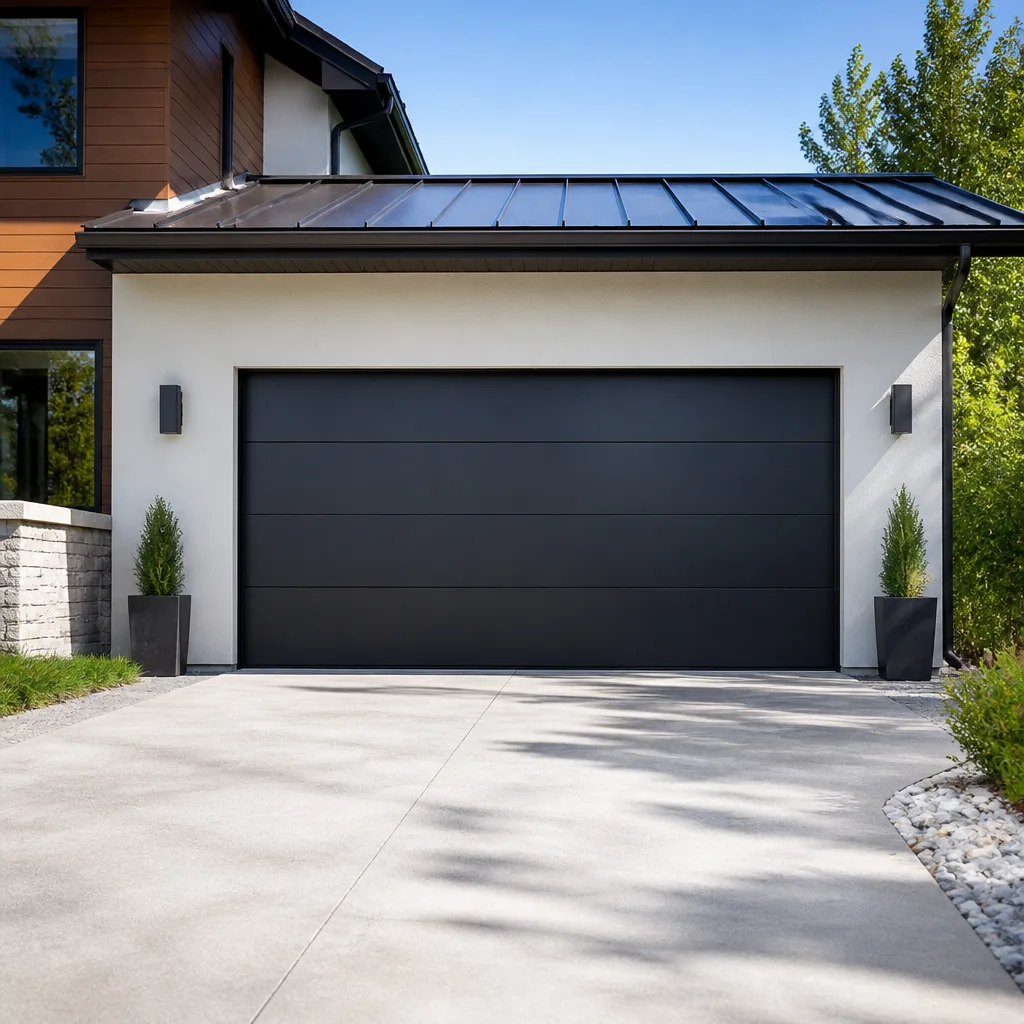 Modern flush
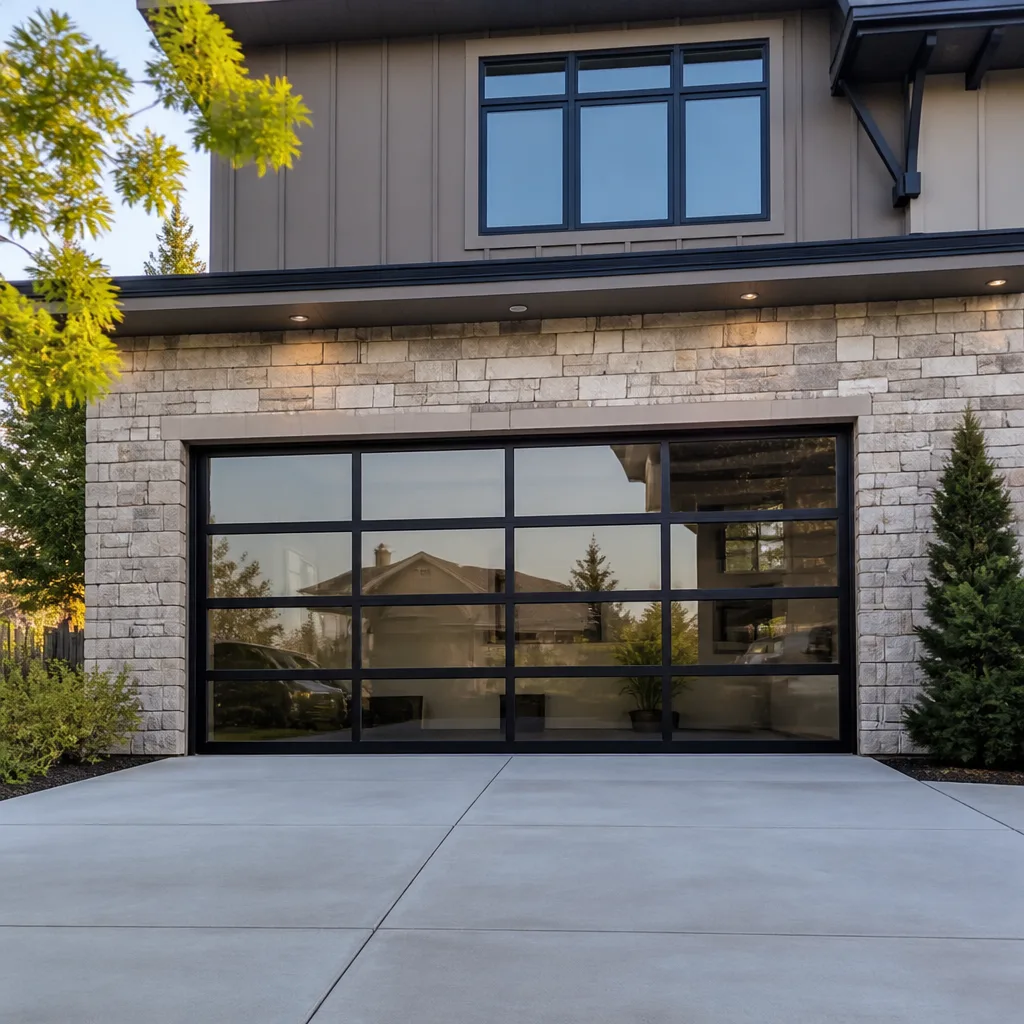 Full-view glass
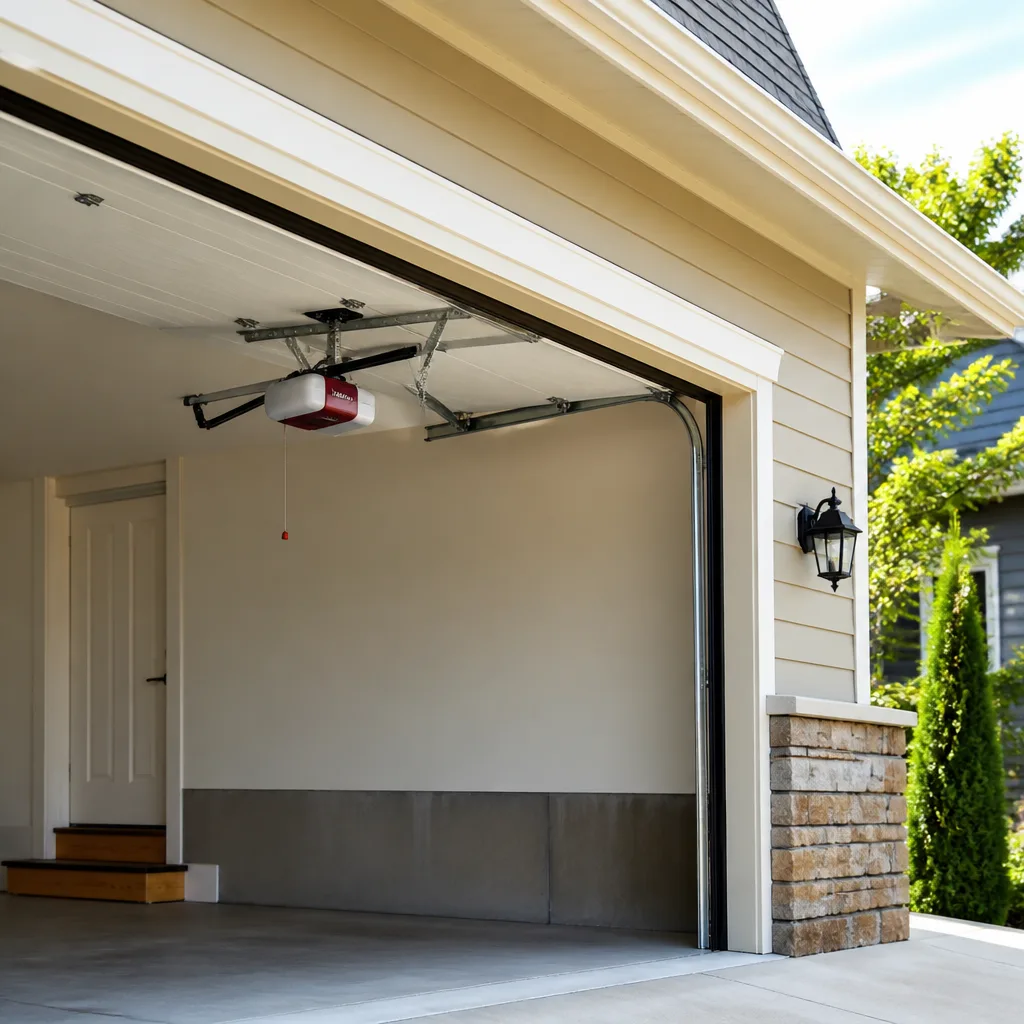 LiftMaster openers
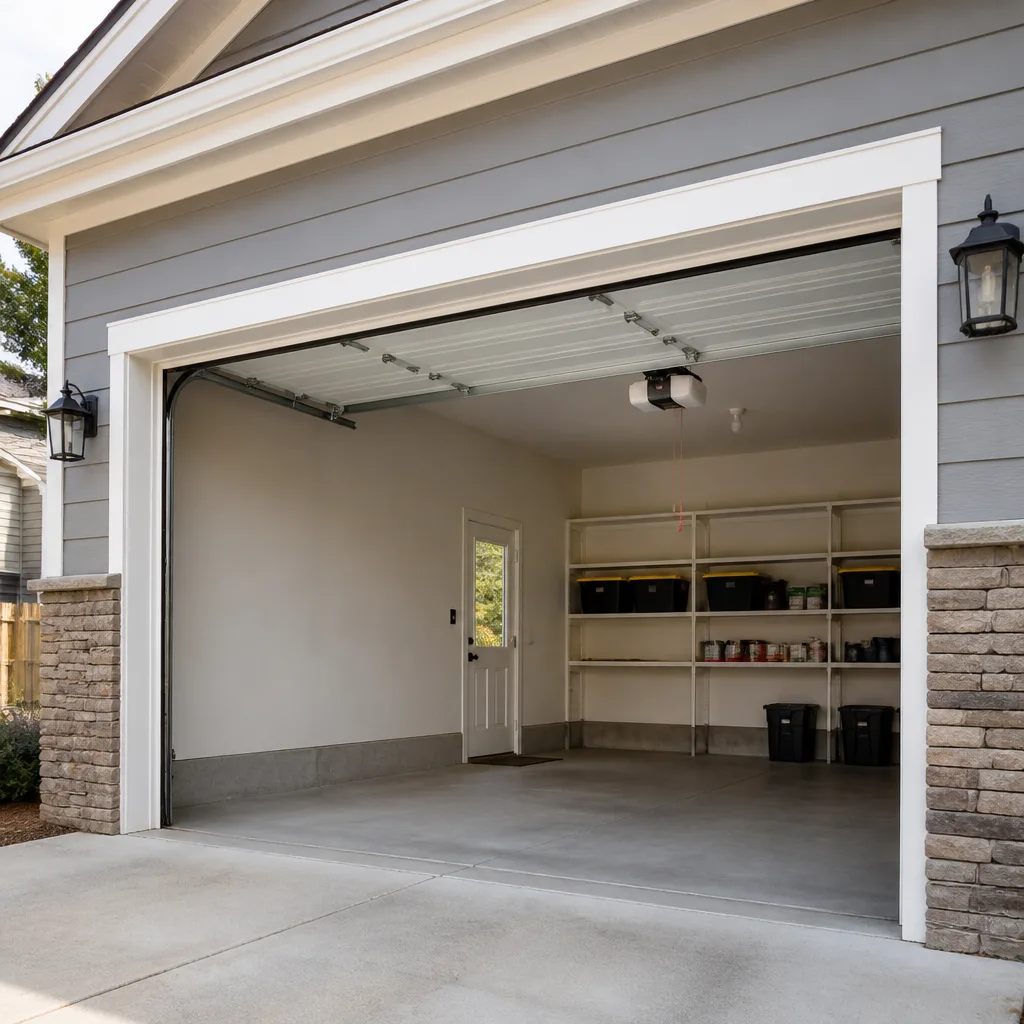 Chamberlain openers
Full 25-point door and opener safety check with every visit - springs, cables, rollers, tracks, and your LiftMaster or Chamberlain opener included
You get a price before we start. It does not change when the truck arrives.
Get your free estimateGarage Door Repair Troubleshooting in West Jordan: Common Problems and How to Fix Them
The wrong diagnosis is why garage door repair bills often run twice what they should. A door that “won’t open” has at least nine distinct causes, and six of them have nothing to do with the opener at all. Most homeowners assume the motor is the culprit, buy a new one, and discover the door still won’t budge. In this guide, we map symptoms to the five mechanical systems that actually fail, show you which checks resolve roughly 40% of “opener failure” calls without a single part, and mark the exact point where continuing to troubleshoot costs you more than calling. That includes the West Jordan temperature swings that make spring season harder on torsion hardware than most people realize.
Quick Answer
Garage door troubleshooting in West Jordan starts by matching the symptom to the right system before touching anything. A door that reverses immediately is almost always a photo-eye or limit-switch issue, not a failed opener. A door that opens a foot and stops is usually a broken torsion spring or a stripped cable drum. Fix the alignment and sensor issues yourself; stop and call a trained professional the moment you suspect springs, cables, or drums.
Styles & brands we work with
- Raised-panel steel
- Carriage house
- Modern flush
- Full-view glass
- LiftMaster openers
- Chamberlain openers
Table of Contents
- The Symptom-to-System Matrix
- The Photo-Eye and Limit-Switch Checks That Solve 40% of Calls
- Broken Torsion Spring vs. Stripped Cable Drum
- Why Utah’s Temperature Swings Make Winter Peak Snap Season
- When the Opener Really Is the Problem
- Three Scenarios Where You Should Stop Troubleshooting
- What to Tell Us When You Call
The Symptom-to-System Matrix
Before you touch a screwdriver, identify the behavior. A garage door system has five mechanical parts that fail: the springs, the cables, the rollers and tracks, the opener and its sensors, and the door panels themselves. Each failure announces itself with a distinct symptom. Reading the symptom correctly is the whole game.
Match what your door is doing to the system below. In our experience across the West Jordan area, this one step prevents more unnecessary part purchases than any other.
- Door reverses right after starting down: Photo-eye or sensor logic issue. Not a spring, not a motor.
- Door opens about six to twelve inches and stops: Broken torsion spring or a limit switch set wrong.
- Loud grinding or scraping during travel: Rollers, hinges, or a door off its track. Rarely the opener.
- Door won’t move at all, motor hums: Stripped gear inside the opener, or a disconnected trolley.
- Door won’t move and there’s no sound: Power, wall control, safety sensor wiring, or a dead operator logic board.
- Door comes down crooked or hangs on one side: Broken cable, worn cable drum, or a bent track.
- Door slams down instead of easing closed: Spring tension lost or the door is out of balance.
- Remote works intermittently: Battery, antenna, or interference. Occasionally a failing logic board.
- Door opens on its own: Miswired wall control, stuck button, or a short in the low-voltage wiring.
Notice how many of those nine are mechanical rather than electronic. That’s the point. Most “the opener is broken” calls we handle across West Jordan turn out to be a door problem the opener is faithfully trying to solve. You can read more about our approach to garage door repair if you’d rather skip the diagnosis and have a technician walk you through it.
The Photo-Eye and Limit-Switch Checks That Solve 40% of Calls
Two adjustments resolve roughly 40% of the “my opener is dead” calls we see. Neither requires a part, and both take under five minutes. Check these before anything else: align your photo-eyes and confirm your limit switch.
The photo-eye is the small lens on each side of the door, near the floor, about six inches up. One sends an invisible beam, the other receives it. If anything blocks that beam, the opener reads “obstruction” and reverses the door on the way down. A spider web, a leaf, a trash can, even morning sun hitting the receiver at the wrong angle can trigger it. The fix is alignment, not replacement.
- Look at each photo-eye. Most have a small LED. If one is solid and the other is blinking or dark, the beam is broken or the eyes are misaligned.
- Wipe both lenses with a dry cloth. Spiders love the housing, and a web across the lens is a common false trigger.
- Loosen the wing nut or bracket screw on the misaligned eye and aim it at its partner. Tighten when both LEDs are solid.
- Check that the eyes are the same height. A bump from a bicycle or a snow shovel knocks them out of alignment often enough that it’s worth a glance.
- Clear anything within a couple of feet of the beam path, then test the door through a full cycle.
The limit switch is a separate adjustment, usually a screw on the side or back of the opener housing. It tells the motor when to stop at the top and bottom of travel. If the door stops short on the way up but the spring looks intact, the up-limit is set too low. If it reverses before hitting the floor, the down-limit or the force setting is off. Adjust a quarter turn at a time and test. These two checks are genuinely yours to handle.
If both are correct and the door still fails, the opener itself may need attention. That’s the point where our garage door opener repair technicians start tracing the logic board and motor, because guessing gets expensive.
Broken Torsion Spring vs. Stripped Cable Drum
A broken torsion spring and a stripped cable drum feel similar from the driver’s seat. Both stop the door partway up, both make the door feel impossibly heavy by hand, and both usually come with a loud noise at the moment of failure. The two need completely different responses, and mixing them up is how a $180 repair becomes a $600 repair.
Here’s how to tell them apart without touching either.
- Look at the torsion bar above the door. The spring is the coil wrapped around it. A torsion spring that has snapped shows a clean gap in the coil, usually about a hand’s width. That gap is the diagnosis.
- Look at the cable drums at each end of the torsion bar. The cable should be wound neatly in the grooves. If a cable is loose, kinked, or spilling off the drum sideways, the drum or cable has failed.
- Listen to the failure. A spring snap is a single sharp bang, loud enough to rattle the house. A cable drum failure is often a series of metallic pops as the cable slips through the grooves.
- Try the door by hand, carefully. A broken spring means the door won’t lift at all beyond a few inches. A cable issue often lets the door come up on one side while the other side hangs, creating a visible tilt.
Here’s the safety part, and it’s not negotiable. Both the torsion spring and the cables are under extreme tension. A wound torsion spring stores enough force to break a wrist or worse if it’s released at the wrong moment. Never attempt to unbolt a torsion spring, cut a cable, or “help” a spring along by hand. This is the exact line where troubleshooting ends and a trained professional begins. Our technicians carry the right winding bars and the training to bring that tension down safely. If you’re in West Jordan and one of these two failures has happened, close the door if you can and call.
Why Utah’s Temperature Swings Make Winter Peak Snap Season
Torsion springs are made of steel under constant tension. Steel behaves predictably: it expands in warmth and contracts in cold. In West Jordan we get dry, cold winters with hard overnight drops and summers that push into triple digits, and that spread is exactly what fatigues spring steel. Each cold snap contracts the coil a fraction and each warm spell relaxes it, and after thousands of cycles those small movements add up. Old metal loses its elasticity in small increments until one cold morning it snaps.
That’s why spring failures cluster at the start of winter and again at the end of summer, more than any other time of year. It’s not the cold itself. It’s the swing.
A few local realities we’ve learned to expect in the West Jordan area:
- Doors on west-facing walls get more afternoon heat in July and more overnight cold in January, which is a wider swing than a shaded door sees.
- Unheated garages track the outside temperature closely. A garage that sits below freezing overnight and warms up during the day is a harder environment on springs than one that stays mild.
- Dry air is easier on steel than wet air, which is a small mercy. It’s harder on the wood panels and paint on some doors, though, which is a separate maintenance point.
- Snow load on the opener housing doesn’t happen often, but keep your eyes on the opener mount if your garage roof gets heavy snow. Loose ceiling brackets are a quiet, slow failure.
The practical takeaway: if your door is more than a handful of years old and the spring has never been inspected, think of the first hard freeze of the year as a good reminder to look at the torsion bar and give the door a listen. A door that sounds louder than it did last year is telling you something.
When the Opener Really Is the Problem
Openers do fail. Modern units are built around a logic board, a motor, a gear assembly, and a set of safety sensors, and any one of those can go. The trick is knowing which symptoms actually belong to the opener and which belong to the rest of the system.
Here are the real opener symptoms:
- The motor runs but the door doesn’t move. The drive gear or trolley is stripped. This is common in older Raynor and Chamberlain units that have driven a heavy door for years.
- Clicking but no motor movement, solid power confirmed. Logic board relay failure. Get someone to look at the board before you keep buying batteries for the remote.
- One remote works, one doesn’t, and the wall button works. Remote pairing or interference. Re-pairing solves this more often than replacement.
- Door reverses without any obstruction and the photo-eyes are confirmed clear. Force settings, limit switches, or a failing logic board. Test the limit switch first.
- Operator runs but no light, no response, no sound at all. Check power at the outlet with a plugin device before assuming the operator. A tripped breaker looks exactly like a dead opener.
The brand matters more than people think, but not in the way sales calls imply. If you have a LiftMaster, a Genie, or a Chamberlain, the parts are widely available and any competent technician can diagnose the board, gear, or sensor problem quickly. If you have a Raynor or another brand with a smaller install base, generic advice often misfires because the internals differ. We work across eight major brands, so the brand on your door doesn’t narrow our options. It just tells us which schematic to open.
Most openers can be repaired. That’s the point of treating opener diagnosis as its own discipline, rather than a first step toward a new unit. If the technician diagnoses a repair that fits, we recommend the repair. If the repair won’t hold up, we’ll say so, and we’ll give you the option of a new system with a written price before we start.
Three Scenarios Where You Should Stop Troubleshooting
Some problems are hands-on. Three scenarios are not. Continuing to poke at these makes the final repair more expensive, and in two of them, it can cause injury.
- You’ve found a broken torsion spring or a snapped cable. Stop. That’s the end of the road. A torsion spring under load can kill you, and no video, no forum post, and no “carefully holding it” technique changes that. Close the door, keep everyone out of the garage, and call.
- The door is visibly crooked, hanging on one track, or grinding hard against the floor. A crooked door means one side is holding more load than the other. Forcing it up or down can bend the panels, bend the tracks, and snap the very cable you’re trying to inspect. One bent panel turns a repair into a partial replacement.
- You’ve adjusted the limit switch twice and the door still overshoots or short-cycles. If two careful adjustments haven’t fixed the travel, the issue is beyond the switch. It’s the board, the encoder, or something the diagnostics will catch in minutes. Let a technician finish the check before you keep turning screws.
Here’s the pattern. In each of these, the part you’re troubleshooting is either dangerous to touch or so deeply intertwined with a second system that a simple adjustment won’t find the cause. Guessing at that point doesn’t save money. It usually costs more, because the failed part takes a neighboring part down with it. If you’ve made it this far in the guide, those are exactly the cases where a professional visit pays for itself.
What to Tell Us When You Call
A good phone call gets you a faster fix. Here’s what helps us diagnose before we roll a truck.
- The brand and approximate age of the door and opener. LiftMaster, Chamberlain, Genie, Clopay, Amarr, Wayne Dalton, Craftsman, and Raynor are all in our rotation. Knowing the brand tells us which failure patterns are common.
- What you saw and heard at the moment of failure. A bang, a pop, a hum, nothing at all. Those words tell us which subsystem to start on.
- What you’ve already tried. Alignment checked, limits adjusted, breaker checked. No judgment. It just skips a step.
- Whether the door will close and stay closed. If it won’t, we treat it as a priority call.
- Your street and neighborhood. Every West Jordan address has its own house-specific realities: door width, ceiling height, garage orientation. It’s a small detail that saves a trip.
Then we give you a free estimate with a written price before any work starts. That written price is the price. If the inspection turns up something we couldn’t hear over the phone, we tell you what we found and give you a new number before we pick up a tool.
Common Mistakes to Avoid
- Assuming the opener is the problem. Six of nine failure symptoms belong to the door, the springs, or the sensors. Buying an opener before diagnosing wastes money and leaves the actual problem in place. Always trace the symptom to the system first, the way you would with a wiring fault before assuming the breaker panel.
- Cutting a torsion spring or a cable “just to release it.” That’s the single most dangerous thing a homeowner can attempt on a garage door. The spring holds the door’s full weight in stored energy. Call a trained professional with the right tooling.
- Spraying lubricant on the spring coil to quiet a loud door. The sound isn’t coming from the spring unless it’s already failing. It’s coming from the rollers, hinges, and track joints. Lubricate those. The spring is not a lubrication point.
- Forcing a crooked door up or down. A door on one track isn’t just stuck. It’s bending metal every time you push. On newer Clopay and Amarr panels, a bent edge can cost more to undo than the original repair.
- Assuming the sensor problem is an opener failure. Misaligned photo-eyes cause the door to reverse. Align and clean before assuming electronics. This one step resolves most of the “dead opener” calls we take in West Jordan.
- Buying a replacement opener before checking the breaker. A tripped GFCI outlet looks exactly like a dead opener. Step one is always power at the outlet, not a new unit.
- Ignoring the seasonal warning signs. A door that got louder, heavier, or slower over the fall is tired. If a spring is going to snap, it’ll usually do it in the first cold spell. Address the signs before the failure.
See the difference
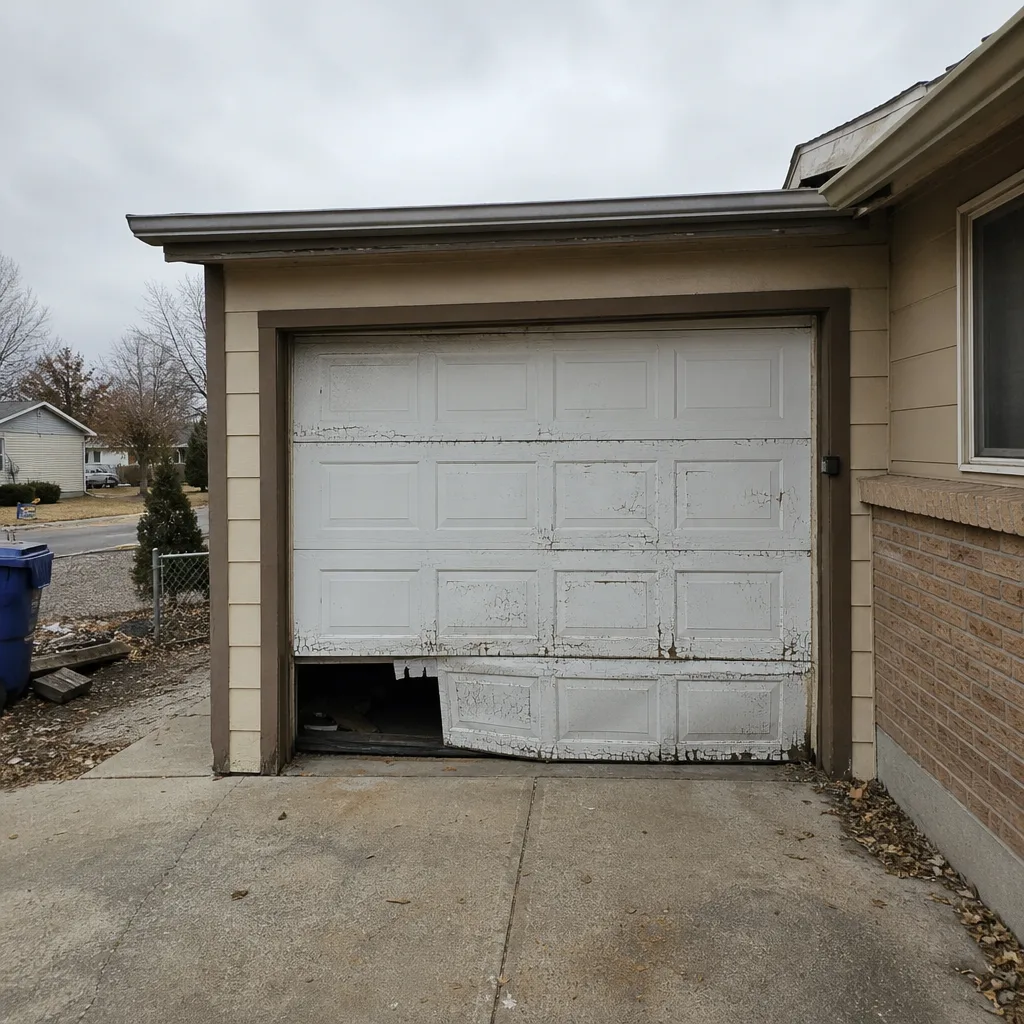 Before
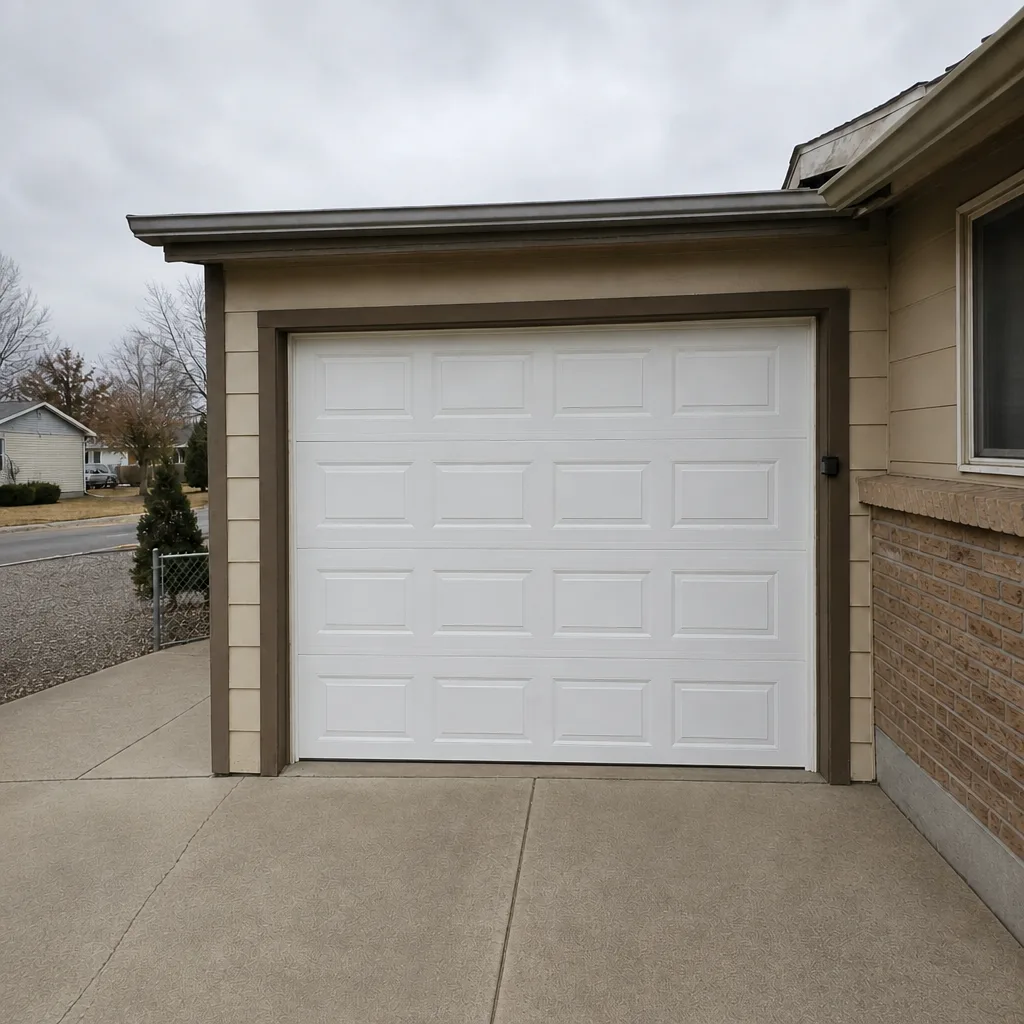 After
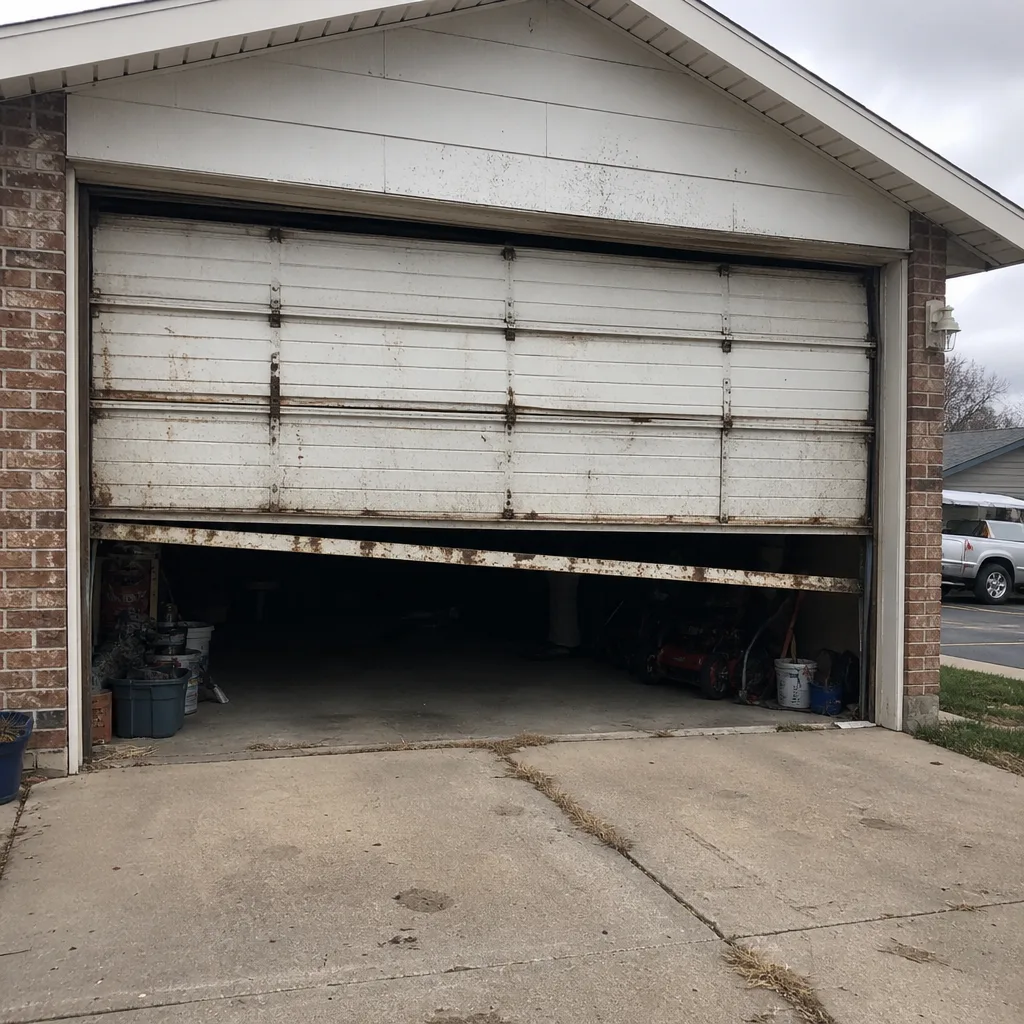 Before
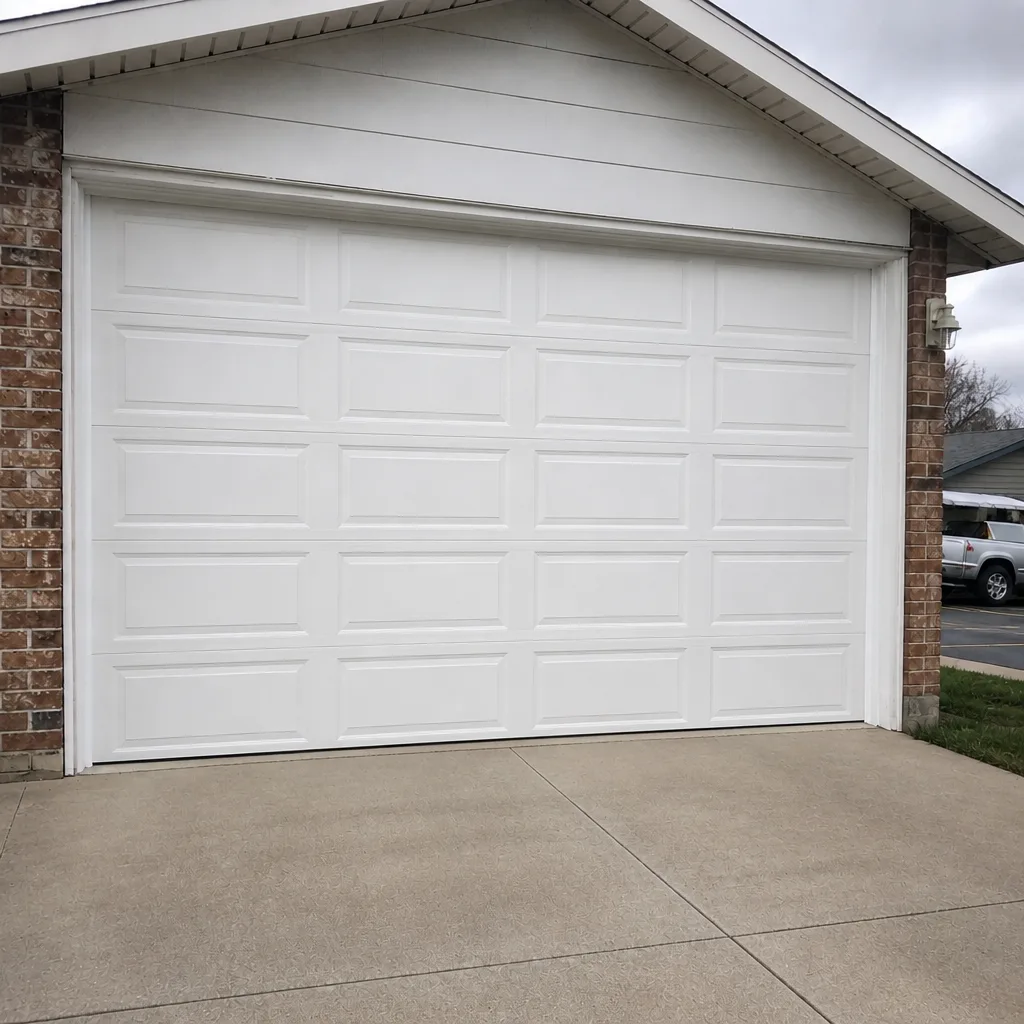 After
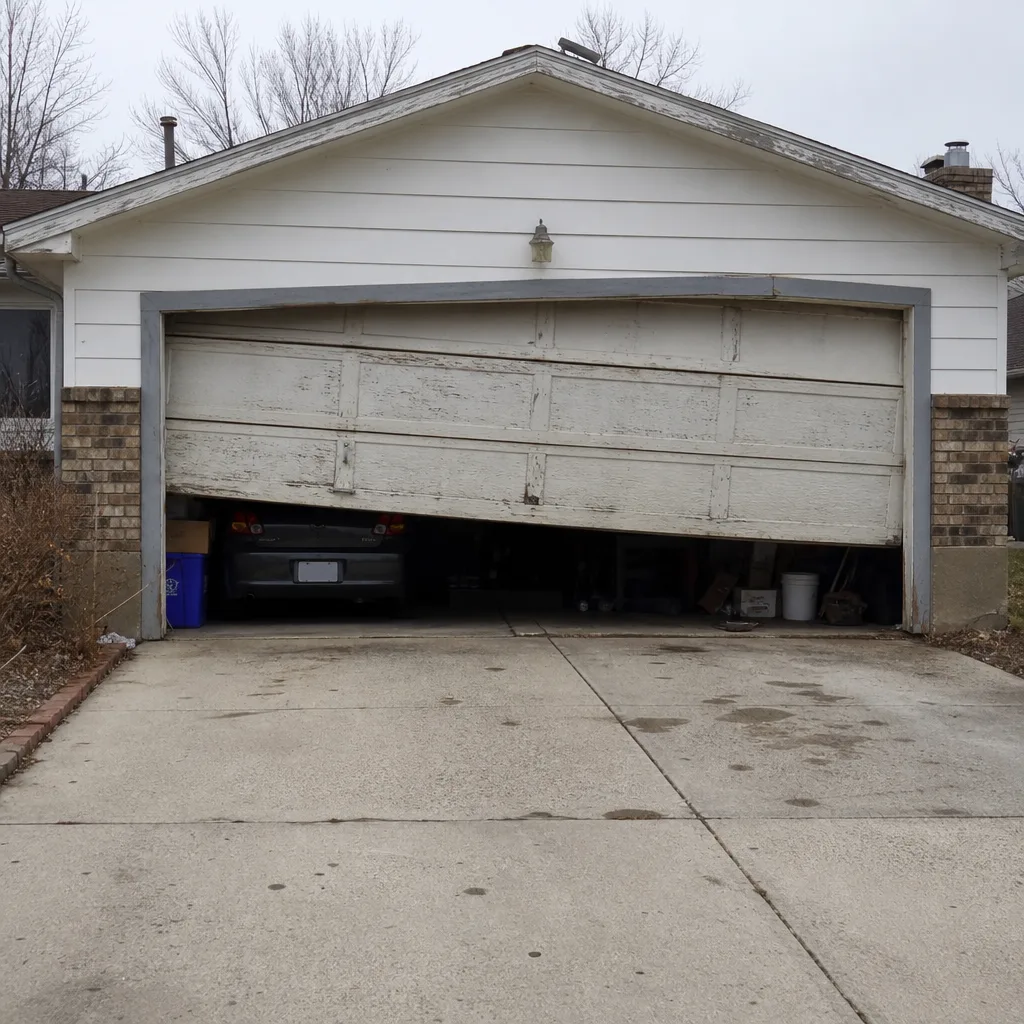 Before
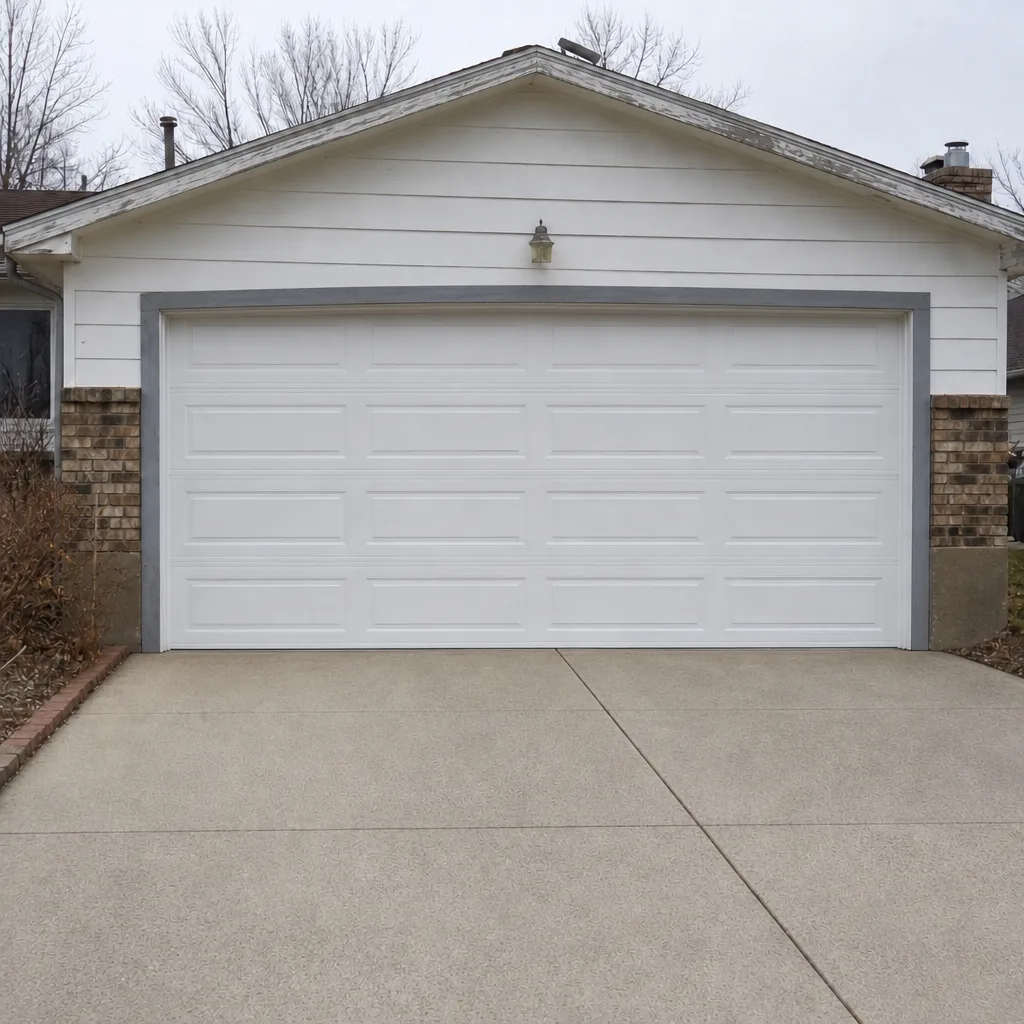 After
When to Call a Professional
Call a professional the moment you suspect a spring, a cable, or a door panel is failing. Those are the failures that injure people and cascade into bigger repairs. Also call if the door reverses without obstruction after you’ve confirmed the photo-eyes are aligned and clean, if the opener runs but doesn’t move the door, if the door travels crooked, or if you’ve adjusted a limit switch twice and the travel is still wrong. Those are the points where the diagnosis outgrows the toolkit and the right call is phone first, screwdriver second.
Our technicians cover the full range of brands, so the brand on your door isn’t a limit. Northbridge Garage Door Repair offers free estimates in West Jordan. Call (888) 594-1936. We answer 24/7. Fast dispatch from 7am to 7pm, Sunday through Friday.
Frequently Asked Questions
Garage door repair in West Jordan depends on the part: a spring or a photo-eye adjustment sits very differently on the bill from a full opener rebuild or a track replacement. The written estimate sets the final price, and it’s quoted before we start any work. Call (888) 594-1936 for an exact quote. Estimates are free.
Yes, same-day service is possible when a technician is available. We answer 24/7, and repair calls get dispatched through the day. If you have a broken spring, a snapped cable, or a door that won’t close, call now. The free estimate is confirmed before any work begins, so there are no surprises on the invoice.
The written estimate we agree to before work starts is the price you pay. If the on-site inspection turns up something the phone didn’t reveal, we tell you what we found and give you a new number before we touch a tool. No work happens at a different price than what you approved.
We carry common wear parts for the major brands, including springs, rollers, hinges, photo-eyes, and standard opener components. That covers most repairs on the same visit. If your door or opener needs a specific part for a smaller brand or an uncommon model, we order it and schedule the return. We’ll tell you which case you’re in before we leave.
We’re closed on Saturday. Call us and we’ll book you into the next opening, Sunday through Friday, 7am to 7pm. If the door is stuck open or partially down, keep everyone clear of the door and don’t force it. A trained technician handles the repair, not a neighbor with a ladder.
Yes. The wide seasonal temperature swings in the West Jordan area put extra cycles on torsion springs, and failures cluster at the first cold snap and again at the end of summer. If your door is older and getting louder, treat the first hard freeze of the year as a good time for an inspection. Our approach to West Jordan repair is to fix what’s failing and leave the rest alone. Call (888) 594-1936 to book a check.
The Bottom Line
Most garage door problems belong to one of five mechanical systems, and the symptom you see points directly to the one that failed. Match the behavior before you touch a part. The photo-eye and limit-switch checks are yours to handle, and they solve roughly 40% of “opener failure” calls on the spot. A broken torsion spring or a snapped cable is never yours to handle, no matter how confident you feel. West Jordan’s dry seasons and hard temperature swings make spring failure more common here than people expect, especially around the first freeze. Get the diagnosis right, stop at the dangerous line, and let a trained technician take it from there.
If you’re in West Jordan and you’ve reached the point where guessing costs more than calling, we’re ready. Call (888) 594-1936 for a free estimate. We answer 24/7. Fast dispatch from 7am to 7pm, Sunday through Friday. Northbridge Garage Door Repair works on eight major brands, values repair first, and tells you the price before any work starts.
Written by the team at Northbridge Garage Door Repair, serving West Jordan since 2012.