
Last updated November 14, 2026
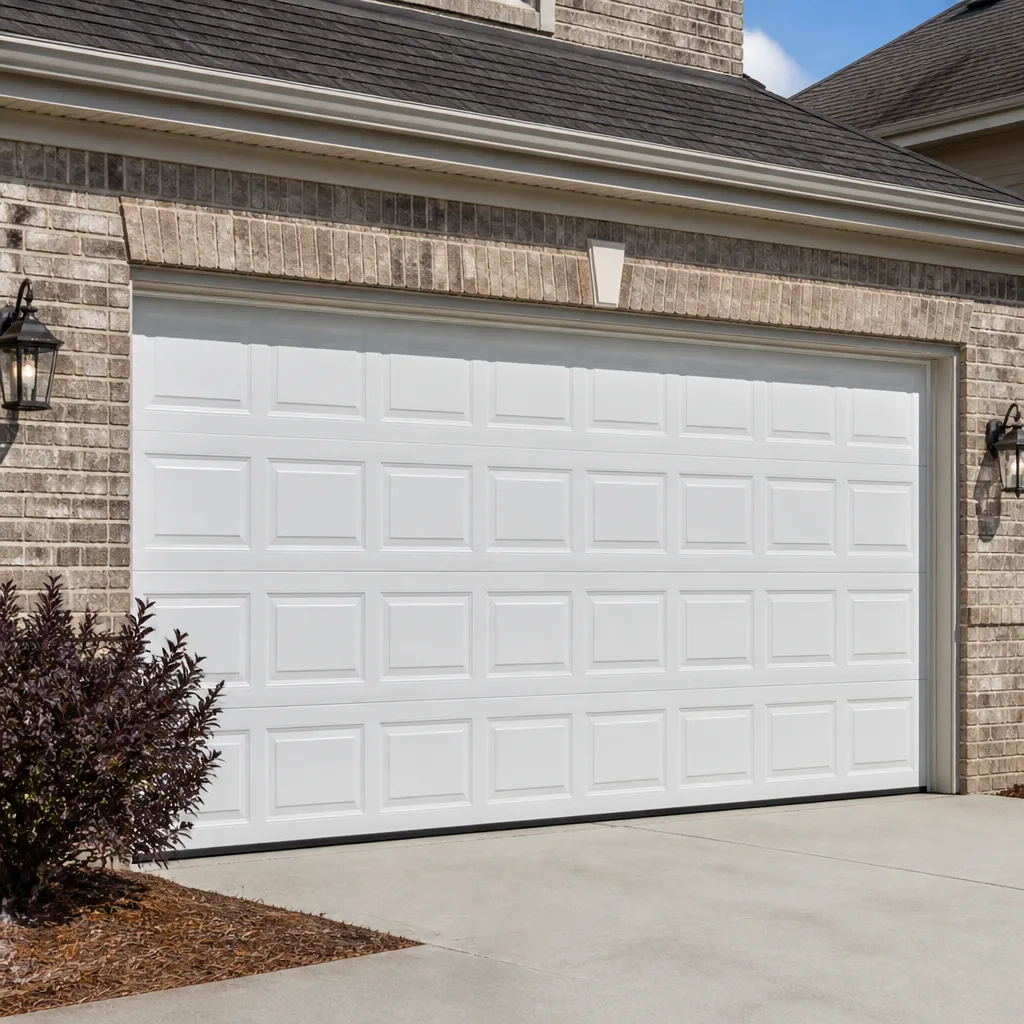 Raised-panel steel
 Carriage house
 Modern flush
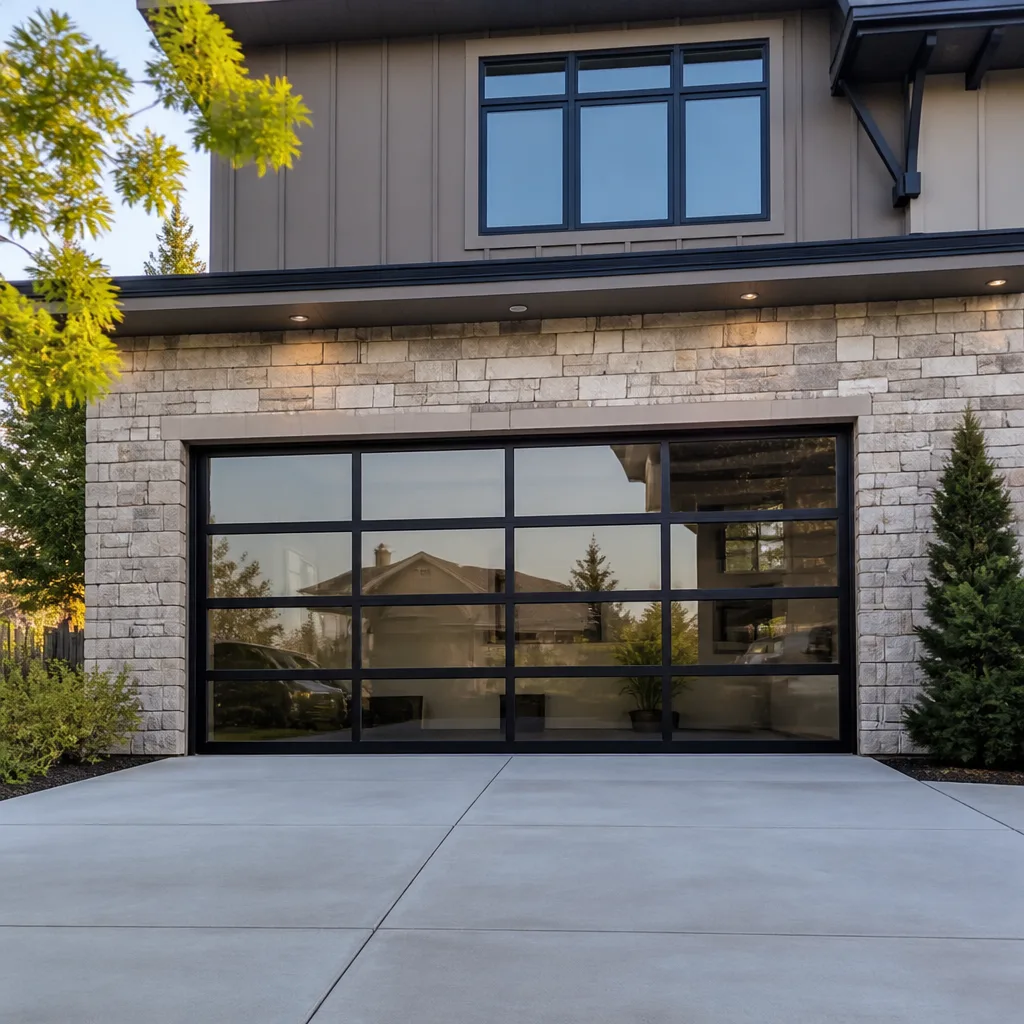 Full-view glass
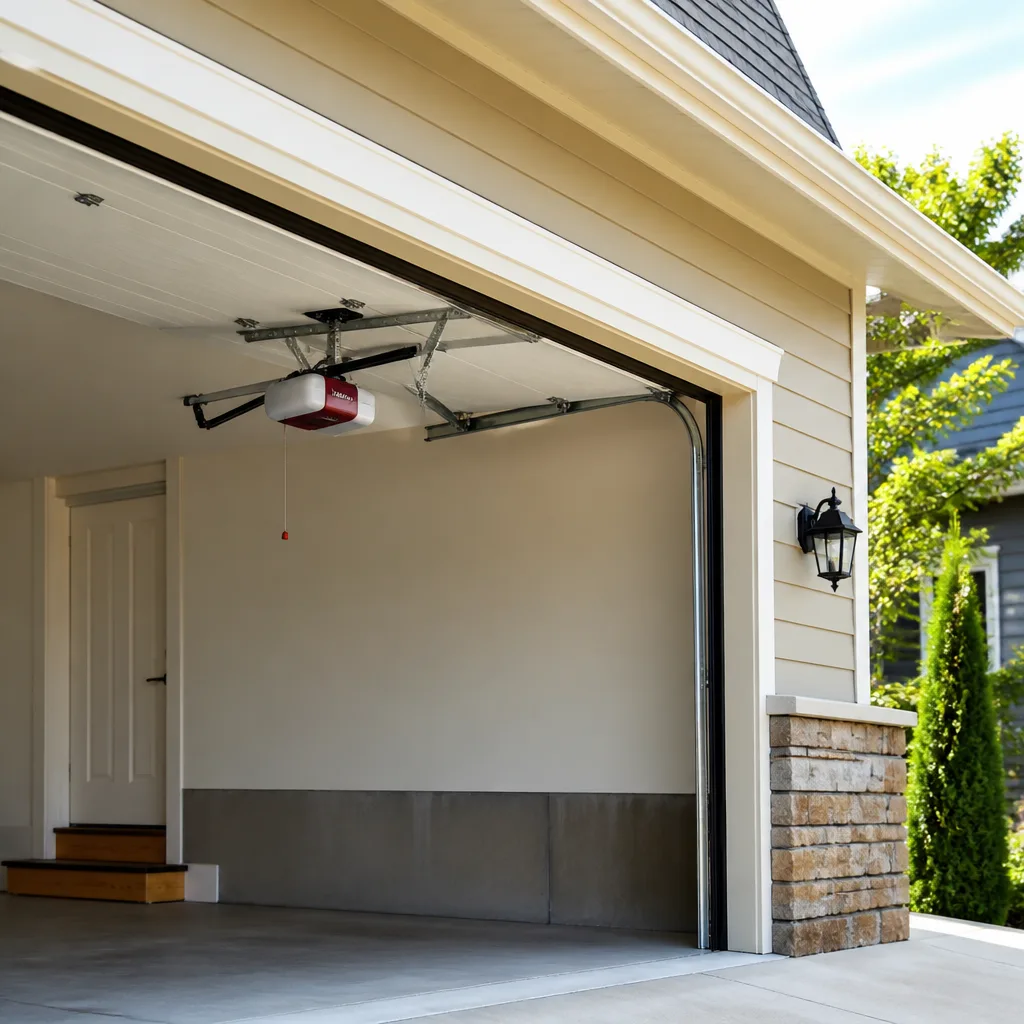 LiftMaster openers
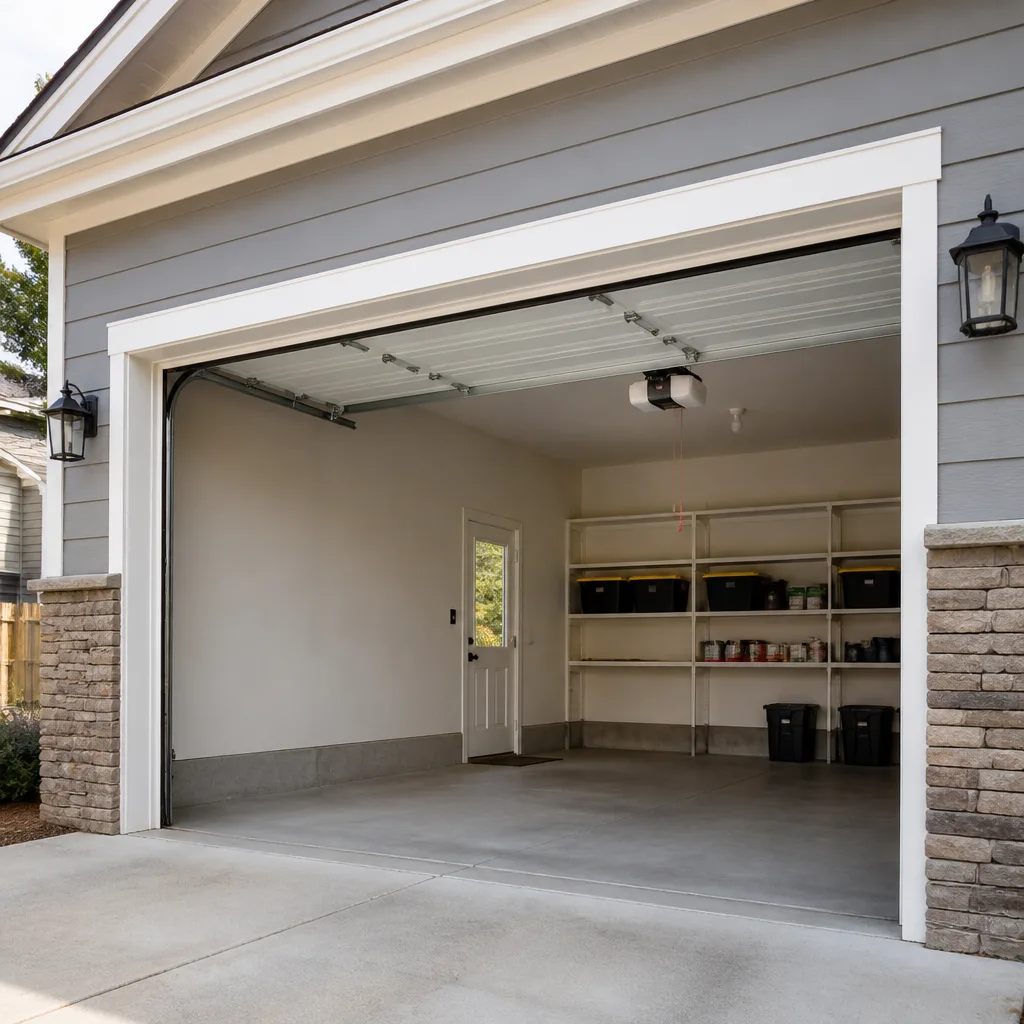 Chamberlain openers
Full 25-point door and opener safety check with every visit - springs, cables, rollers, tracks, and your LiftMaster or Chamberlain opener included
You get a price before we start. It does not change when the truck arrives.
Get your free estimateGarage Door Warning Signs: A West Jordan Homeowner’s Reference Guide
A garage door that’s slightly slow to open is annoying. A garage door with a separated spring is a safety emergency – and to someone who doesn’t know what to look for, both can just look like “the door is acting weird.” That gap in understanding is where costly damage and real injuries happen. This guide draws a clear line between the symptoms you can watch for a few days and the ones that mean stop using the door right now. Every sign gets the mechanical reason behind it, so you understand what’s actually failing inside your system. We’ll cover spring inspection, opener behavior, and why West Jordan’s temperature swings can make a door that worked fine yesterday suddenly bind or drop.
Quick Answer
Garage door warning signs fall into two tiers. Tier one – grinding, slow travel, minor vibration, a door that reverses unexpectedly – means schedule service soon but careful use is okay. Tier two – a visibly broken or separated spring, a door that crashes down, cables hanging loose, or a door that won’t stay up – means leave it closed and call a technician immediately. Never operate a door with a broken spring, because the opener is now lifting the full door weight alone and can fail suddenly.
Styles & brands we work with
- Raised-panel steel
- Carriage house
- Modern flush
- Full-view glass
- LiftMaster openers
- Chamberlain openers
Table of Contents
- The Two-Tier System: Watch It vs. Stop Now
- How to Inspect Your Springs in 30 Seconds
- What Your Door’s Noises Are Telling You
- Opener Behavior: Slow Travel, Reversals, and the Motor That Runs but Doesn’t Lift
- Why West Jordan Temperature Swings Change How Your Door Behaves
- The Manual Balance Test Every Homeowner Should Know
- Visual Checks Beyond the Springs
- Keeping a Simple Symptom Record
The Two-Tier System: Watch It vs. Stop Now
Most garage door advice lumps every symptom together. That’s not useful. A door that squeaks needs lubrication; a door with a snapped torsion spring needs a technician today. Treating them the same either wastes your money on an emergency call or, far worse, keeps you running a door that’s about to fail dangerously.
Here’s how we sort warning signs, and why the split matters mechanically.
Tier One – Watch closely, schedule service:
- Grinding or squealing during travel (usually rollers, hinges, or a dry track)
- Door moves slower than it used to (opener strain, worn rollers, or spring tension loss)
- Minor shaking or rattling (loose hardware or a track slightly out of alignment)
- Opener light flickers or the remote responds inconsistently (opener logic board or safety sensor issue)
- Door reverses right after touching the floor (travel limit or force setting drift)
- A single rough cycle that doesn’t repeat
Tier Two – Stop using the door, call now:
- A torsion spring with a visible gap, or an extension spring that’s stretched and hanging
- Any loud bang from the spring area followed by the door feeling extremely heavy
- Cables that are loose, frayed, or off their drums
- The door drops fast or slams instead of lowering under control
- The door won’t stay open when you lift it halfway by hand
- Bent or separated track sections, or rollers popped out of the track
- Visible damage to the panels or bottom bracket where the cable attaches
The mechanical reason for the split: a tier-one symptom is usually friction or a setting – the system still has a fail-safe. A tier-two symptom means a load-bearing component (spring, cable, or bracket) has already failed or is failing, and the door’s weight is now being controlled by something not designed to hold it. That’s when sudden collapse happens. If anything on the tier-two list applies to your door in West Jordan, leave it closed and call.
How to Inspect Your Springs in 30 Seconds
Springs do almost all the lifting work on your door. They store energy when the door closes and release it when the door opens, so the opener only has to guide the door, not lift its full weight. When a spring breaks, that weight transfers instantly to the opener and cables. You can spot a broken spring in half a minute without touching anything.
- Find your spring setup. Look above the door. A torsion spring is a horizontal coil running along a shaft above the door’s center. Extension springs are two coils running along the horizontal tracks on each side.
- Check a torsion spring for the gap. A healthy torsion spring is one continuous, tightly wound coil. A broken one has a clear gap, usually about two inches, where the coil has separated. It may also show a visible halo of rust dust at the break.
- Check extension springs for stretch. A healthy extension spring is a tight coil. A failing one looks stretched, sagging, or hangs loose with a gap between coils.
- Look for the safety cable. Extension springs should have a steel cable running through the coil. If you see the spring hanging free with no cable, stop and call.
Do not touch, wind, unwind, or try to adjust a torsion spring. Those coils are under extreme tension, and the winding bars used to set them can slip with enough force to cause serious injury. This is one job that belongs to a trained technician with the right tools. We work with springs on doors from Clopay, Amarr, Wayne Dalton, and Raynor, and the inspection is the same across all of them.
What Your Door’s Noises Are Telling You
Noise is the cheapest diagnostic tool you own, but only if you distinguish between the sounds. A grinding noise and a popping noise come from completely different mechanisms and point to different fixes.
- Grinding: metal-on-metal friction. Usually dry or worn nylon rollers, hinges that need lubrication, or a track the rollers are scraping against. It’s progressive, meaning it gets worse slowly, which is why it belongs in tier one.
- Squealing or squeaking: the same friction family but higher-pitched, often from a dry torsion shaft, hinges, or the bearing plates. Lubrication and hardware inspection usually resolve it.
- Popping or snapping: this one deserves attention. A single loud pop during travel can be a spring winding or unwinding, a cable jumping its drum, or a hinge pulling loose. If it repeats in the same spot every cycle, something is binding. If it happens once and the door suddenly feels heavier, suspect the spring and stop using the door.
- Banging or slamming: the door is dropping faster than it should, usually a spring tension or opener force issue. This leans toward tier two if it happens on every close.
- Rattling: loose bolts, a vibrating opener rail, or a panel that’s worked loose from its hinges. Usually minor, but worth tightening before it becomes a track problem.
Listen on a quiet cycle with the car out of the garage. A door that rumbles a little is normal on an older Craftsman or LiftMaster system. A door that grinds, pops, or bangs is telling you a specific part is failing.
Opener Behavior: Slow Travel, Reversals, and the Motor That Runs but Doesn’t Lift
Opener symptoms look alike on the surface but trace back to completely different failures. Knowing which one you’re seeing saves you from replacing a unit that just needed a repair.
- Motor runs but the door doesn’t move: the opener is working, but the drive is not. That points to a stripped drive gear, a broken trolley, a snapped chain or belt, or a failed capacitor. It’s rarely a reason to replace the whole opener. Our garage door opener repair service handles this diagnosis as a core job, not a throwaway step before an upsell.
- Slow travel: the opener is straining against extra resistance. Common causes are a spring that’s lost tension, dry tracks, or worn rollers. The opener is the messenger here, not necessarily the problem.
- Door reverses before touching the floor: the travel limit setting has drifted, or the safety sensors are misaligned. A quick realignment of the sensors or a limit adjustment often fixes it.
- Door reverses on the way up: usually a force setting that’s too sensitive, or a bind in the track the opener is reacting to.
- Remote or keypad works intermittently: battery, antenna, or logic board issue. Modern smart-drive openers have more electronics in play, and diagnosis gets more specific.
One rule applies across all of them. If the opener is doing the lifting work a spring should be doing, repair the spring first. Replacing an opener on a door with a weak spring just puts a fresh motor under the same strain. We diagnose the whole system, not just the box on the ceiling.
Why West Jordan Temperature Swings Change How Your Door Behaves
West Jordan sits in a high-desert valley, and the swing between a cold winter morning and a warm afternoon is large. Metal expands and contracts with those swings. Springs lose tension in cold, tracks shift slightly, and lubricant thickens when the temperature drops. That’s why a door that worked fine yesterday can suddenly bind, grind, or feel heavier today.
Here’s the important distinction: a one-time event is not a symptom. If your door groaned once on the first cold morning and then ran normally, temperature is the likely cause and there’s nothing to fix. If the behavior persists across several cycles, or if the door feels heavier and lifts slower every day, that’s a symptom. The temperature change exposed a spring that was already near the end of its life, or a roller that was already worn flat.
What to watch for in West Jordan specifically:
- Cold-morning stiffness that clears by afternoon: usually thickened lubricant. It’s minor, and lubrication with a proper door-rated product helps.
- A door that binds in cold but not in warm: a track or spring tension issue that temperature exposes.
- Rapid cycling on hot days: a door used heavily in summer wears springs faster. Spring cycles are finite, and a household that opens and closes the door many times a day reaches that limit sooner.
We treat temperature-related complaints carefully, because a one-time event and a genuine failing spring can feel identical to a homeowner. The difference is whether it repeats.
The Manual Balance Test Every Homeowner Should Know
This simple test tells you whether your springs are still carrying the door’s weight. It’s the closest thing to a home diagnostic for the spring system, and it doesn’t require any tools.
- Disconnect the opener. Pull the release cord (usually red) so the door runs on its carriage only. The door is now manual.
- Lift the door to about halfway. Use both hands, one on each side, and lift steadily. Be ready for it to feel heavier than expected.
- Let go at the halfway point. A properly balanced door should stay roughly where you left it. If it drops or slams down, the springs are not carrying the weight. If it drifts up on its own, the springs are over-tensioned.
- Reconnect the opener only if the door held. If the door dropped, don’t reconnect. Leave it closed and call a technician.
A door that falls during this test is showing you the same failure mode that causes sudden drops when the opener releases. That’s a spring problem, and it’s a stop-now signal. A door that drifts up is telling you a spring has too much tension, which is also a technician job, because releasing torsion tension is the exact operation that injures DIYers.
Run this test once or twice a year. It takes about a minute and tells you more about spring health than any visual check.
Visual Checks Beyond the Springs
Spend two minutes walking around the door with the light on. You’re looking for anything that has changed shape, shifted position, or come loose. These checks need no tools.
- Rollers in the track: every roller should sit in the track channel. A roller popped out of the track or a bent track section means the door can jump the track during travel. That’s tier two.
- Hinges and brackets: look for cracks, separation, or rust at the hinge points and the bottom bracket where the cable attaches. A cracked bottom bracket is a serious safety issue because that bracket holds the cable under tension.
- Cables: they should be taut, sitting cleanly on their drums at the top corners of the door. Loose, frayed, or off-drum cables are tier two. Don’t touch them.
- Panels: a panel that’s dented, cracked, or separating from its stiles can weaken the door structure. Small dents from a bump are cosmetic; a cracked panel or a door that’s out of square is not.
- Weather seal: the bottom seal should sit flush against the floor. A gap lets weather in and signals the door isn’t closing all the way, which is often a limit adjustment.
- Tracks: both vertical and horizontal tracks should be straight and parallel. Any bend, kink, or separation at the brackets needs attention.
If you spot something you can’t classify, that’s what we’re here for. A quick look tells you whether it’s a repair or a wait-and-watch.
Keeping a Simple Symptom Record
The most useful thing you can bring to a service call is a short record of what the door has been doing. It turns a vague “it’s acting weird” into a specific diagnosis, and it saves time on the visit.
For each symptom, note three things:
- When it happens: on opening, on closing, or both. Which direction matters because the spring load shifts through the cycle.
- How often: every cycle, or once in a while. Repeating patterns point to mechanical wear. One-off events point to temperature or a transient.
- What else changed: a new noise, a heavier feel, an opener light that flickers, or a remote that’s gotten balky.
Our technicians work across the full range of major brands – LiftMaster, Chamberlain, Genie, Clopay, Amarr, Wayne Dalton, Craftsman, and Raynor – so whatever name is on your door or opener, the symptom record helps us get to the right fix faster. We’ll tell you exactly what’s wrong and what it will cost before we start. If you’d rather not diagnose it yourself, schedule a garage door repair visit and we’ll do the inspection for you.
Common Mistakes to Avoid
- Running a door with a broken spring “just once.” The opener is now lifting the full weight alone, and the next cycle could snap the cable or strip the opener. Leave it closed until it’s fixed. It’s the most common mistake we see in West Jordan homes, and the risk is real.
- Using a lubricant that isn’t made for garage doors. WD-40 and general-purpose oils attract dust and can gum up the track in a dry-climate setting like West Jordan’s.
- Calling an opener problem a door problem, or the reverse. A slow door is often a spring, not a motor. A motor that runs without lifting the door is a drive issue, not a spring. Diagnosing the wrong component leads to replacing parts that are fine.
- Ignoring a door that reverses on its own. It can mean the safety sensor is failing, and a door that reverses unpredictably can close on a person or a car.
- Adjusting the force or travel limit to “fix” a heavy door. Crank the force up and you mask the real problem while putting more strain on the opener and springs.
- Trying to wind or unwind a torsion spring with household tools. This is the single most dangerous thing a homeowner can attempt on a garage door, and it causes serious injuries every year.
- Waiting on a one-time cold-morning grind and then forgetting it. Temperature can reveal a spring already near failure. If it repeats, call.
See the difference
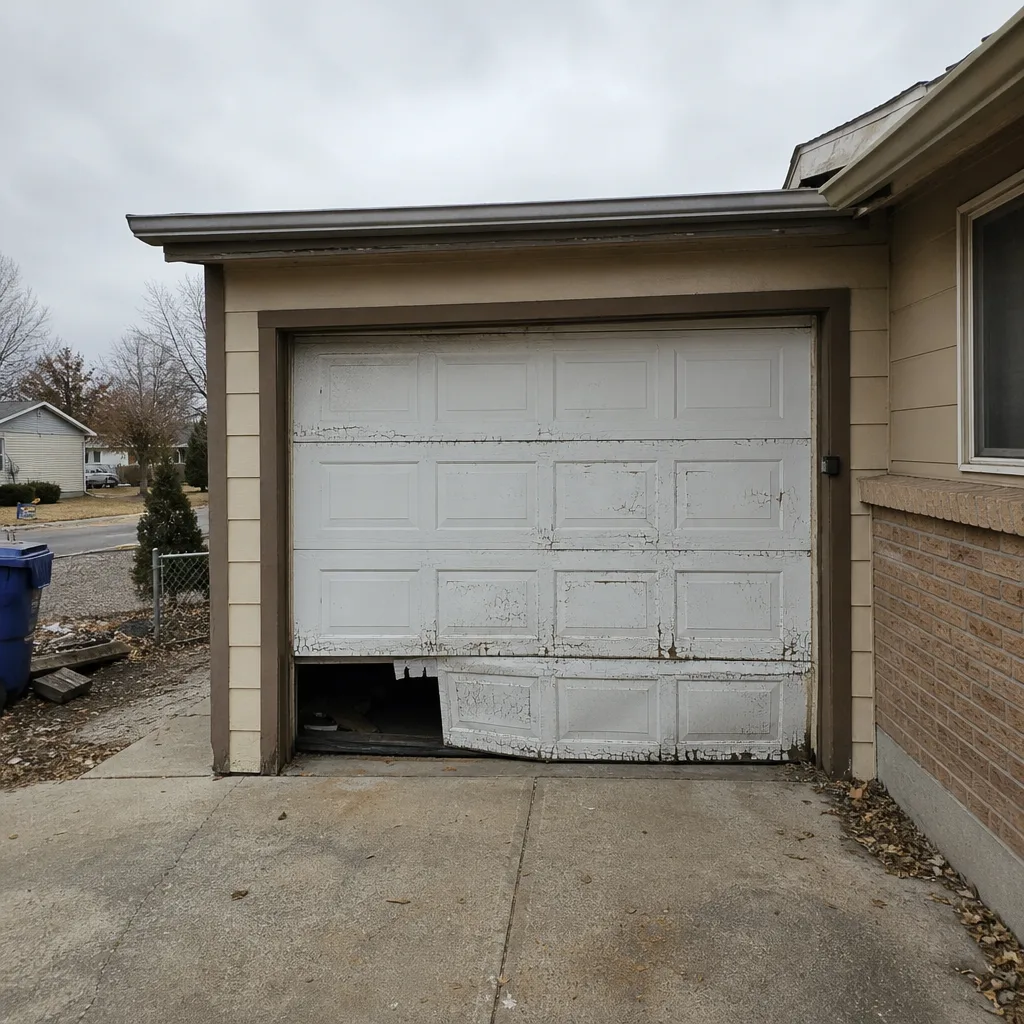 Before
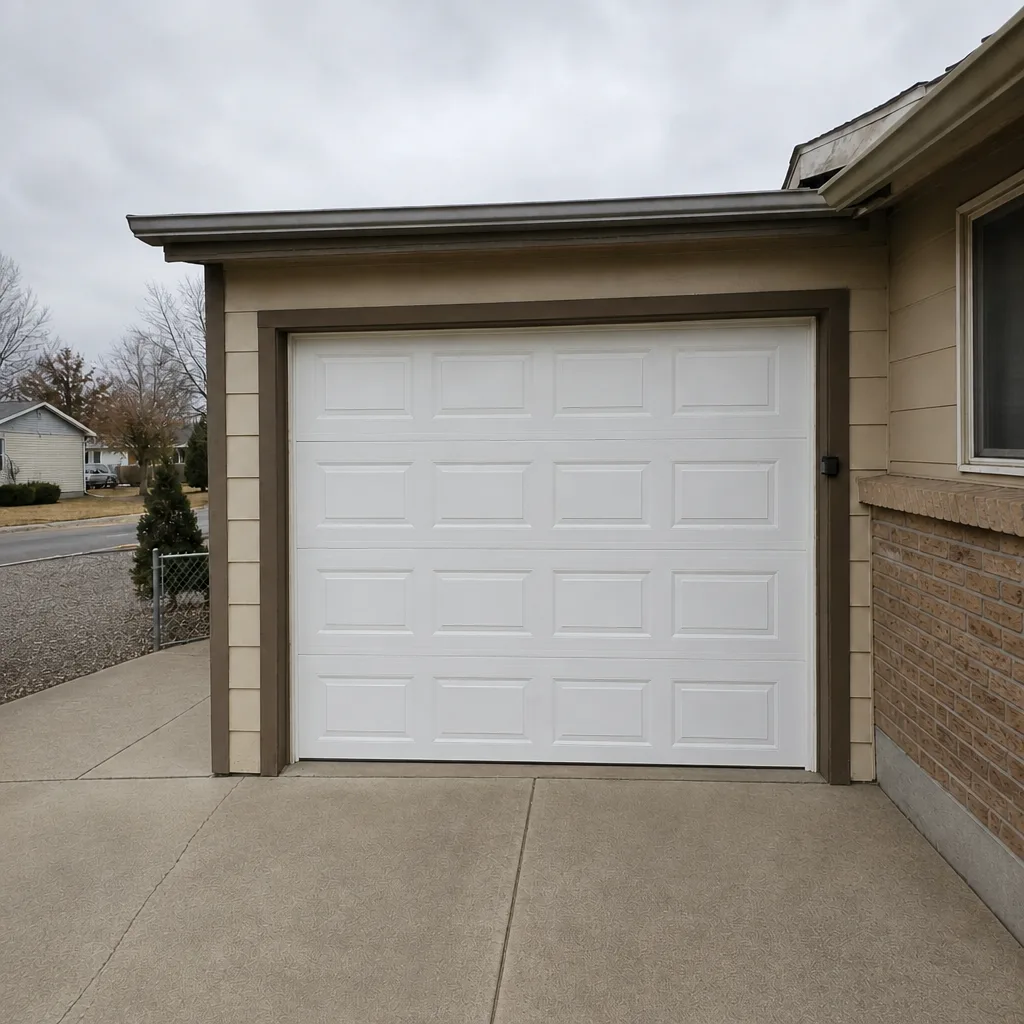 After
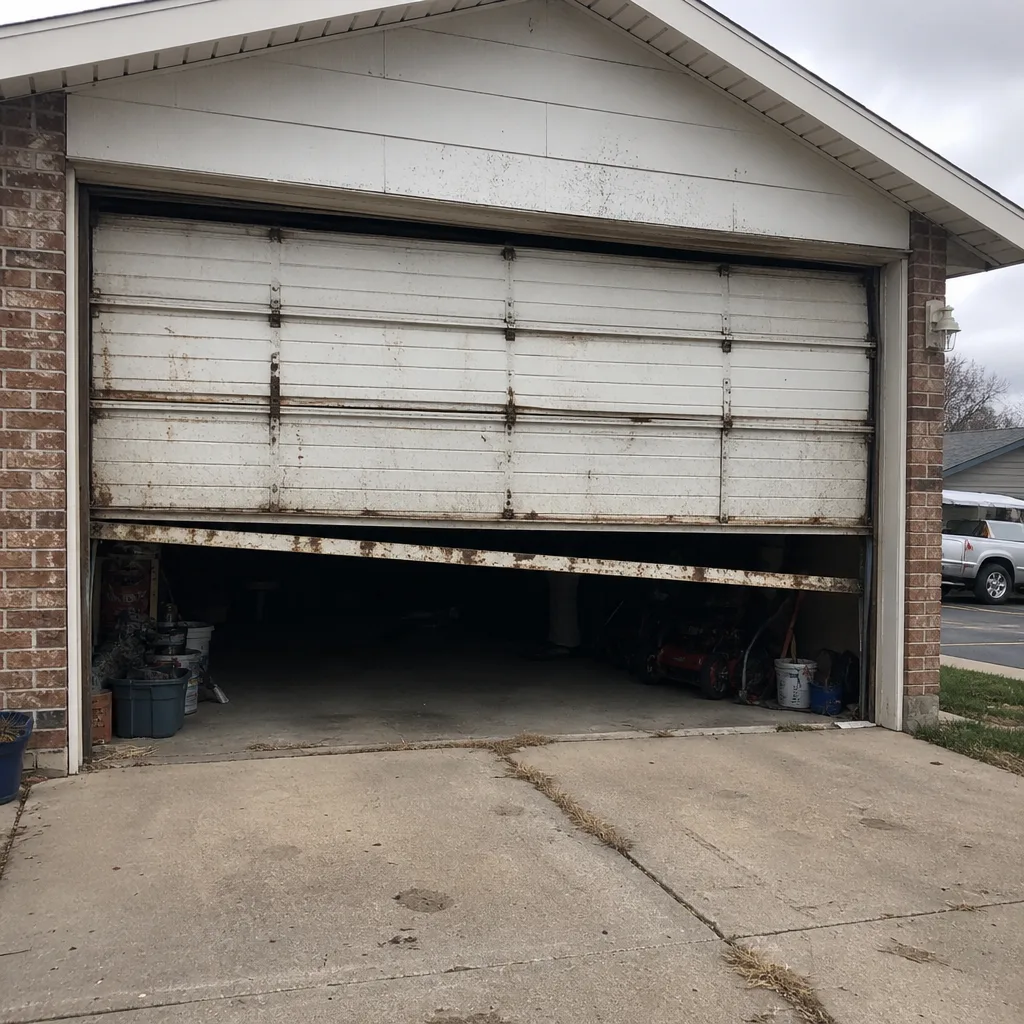 Before
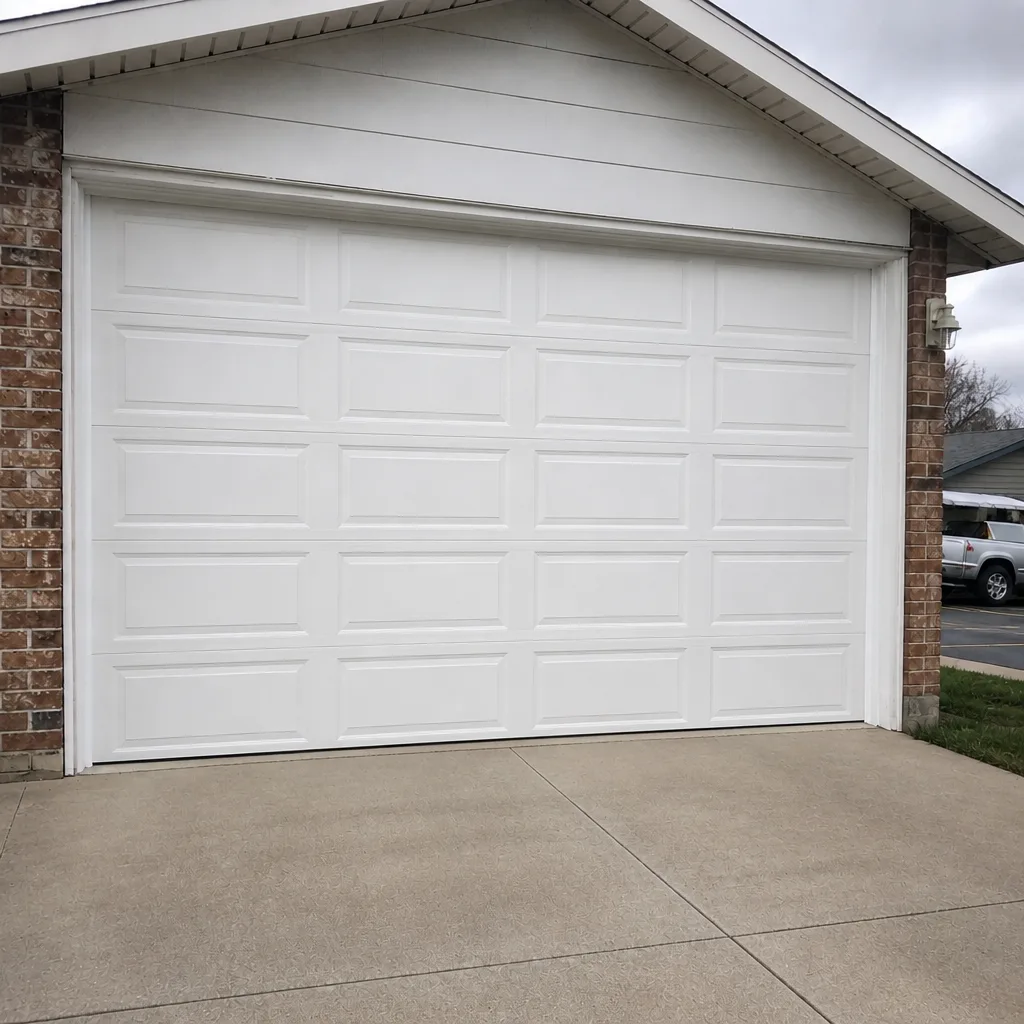 After
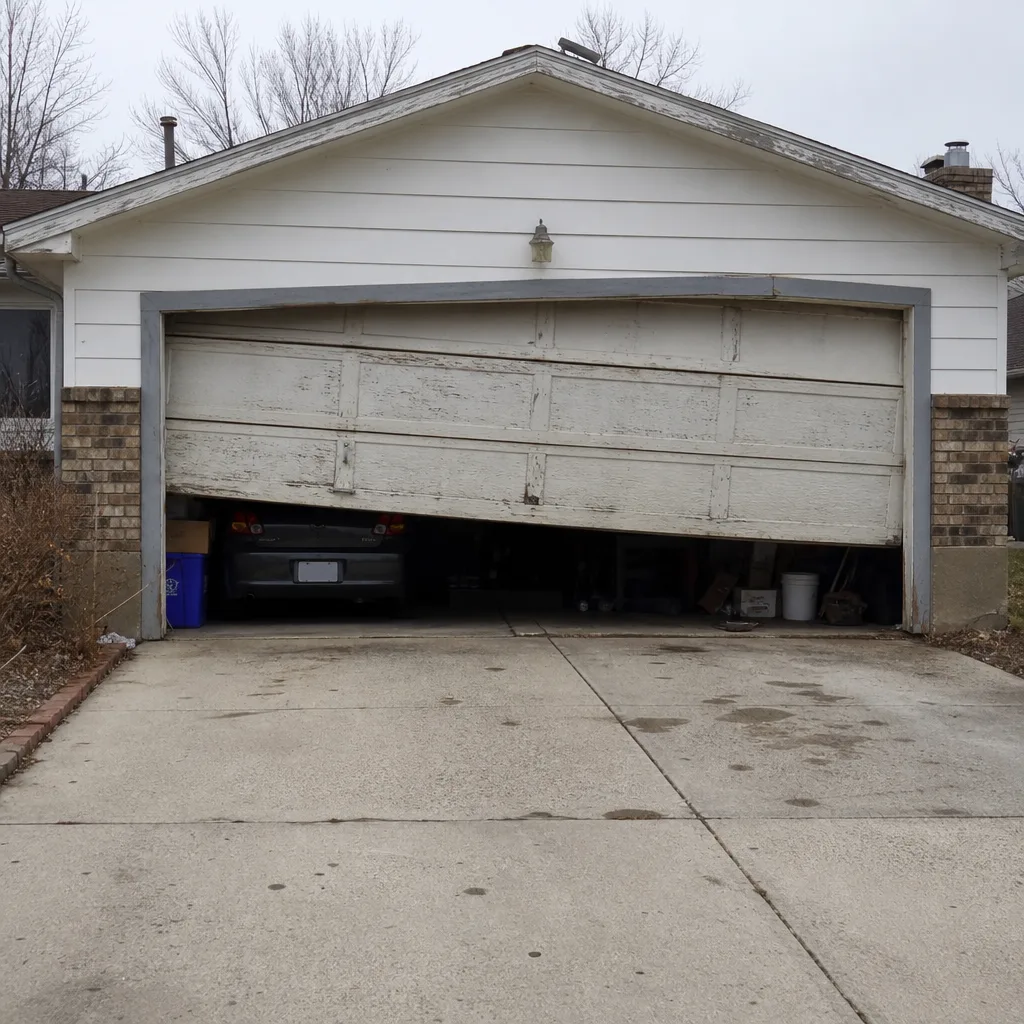 Before
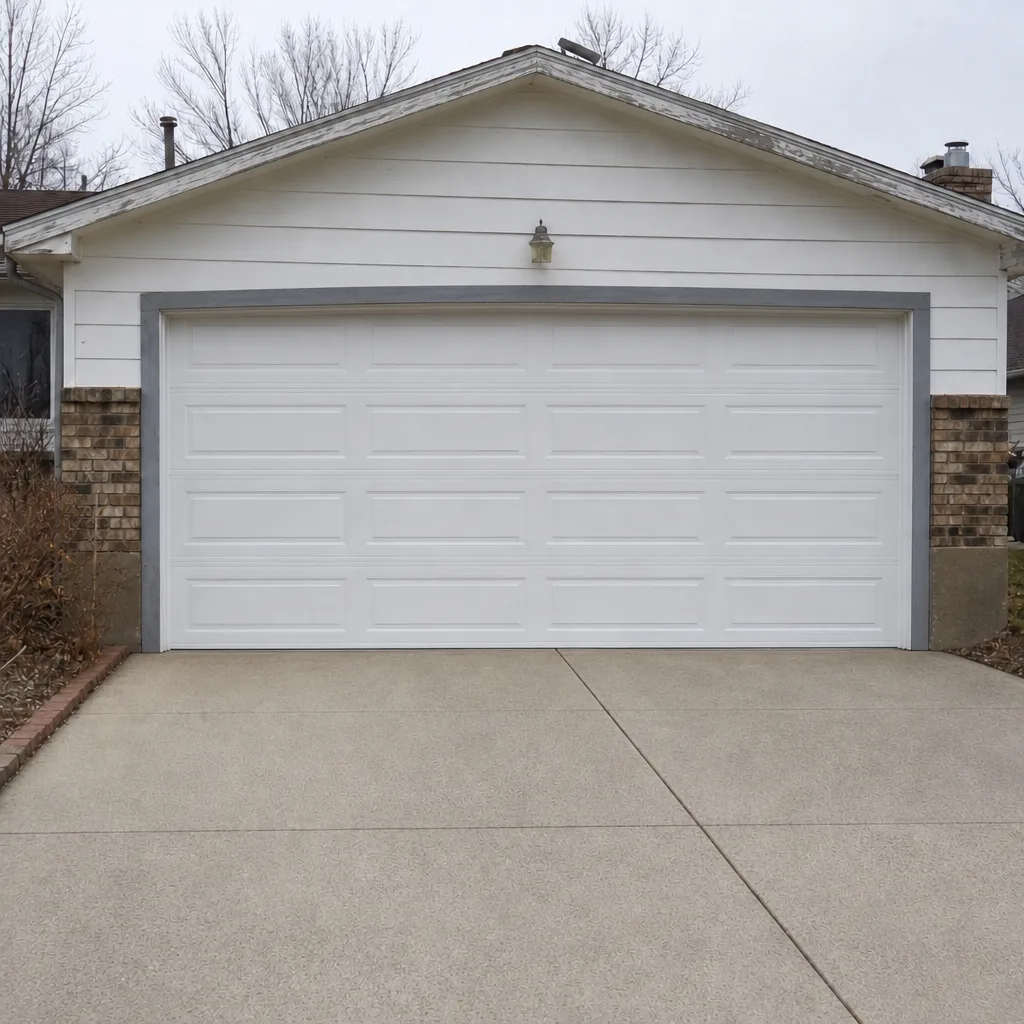 After
When to Call a Professional
Call a professional if your door sits on the tier-two list, if a symptom repeats across multiple cycles, or if the manual balance test shows the door dropping or drifting. Call immediately if you see a broken spring, a loose cable, a cracked bottom bracket, or a door that slams. In those cases, don’t run the door to “see what happens” – leave it closed. For tier-one symptoms, the same call applies, just without the urgency. Repair-first is the right approach here, because plenty of systems that get replaced only needed a spring, a roller set, or an opener drive gear. Northbridge Garage Door Repair offers free estimates in West Jordan, and we’ll tell you exactly what’s wrong and what it will cost before we start. Call (888) 594-1936.
Frequently Asked Questions
A visibly broken or separated spring is the most serious warning sign, because the door’s full weight is now held by the cables and opener rather than the spring. Stop using the door and call a technician. A door that drops or slams, a loose cable, or a cracked bottom bracket are equally serious and need the same response.
A grinding, squealing, or rattling door is a watch-it symptom, usually friction or loose hardware, and careful use is fine while you schedule service. A loud pop followed by a heavy door, or a slam on every close, is a stop-now signal. The pop usually means a spring has broken or a cable has jumped. Call (888) 594-1936 for an exact quote – estimates are free.
Yes, the door can sometimes still open with a broken spring, but that’s exactly when it’s most dangerous, because the opener is lifting the full weight. Don’t take that as a sign the door is fine. Stop using it and call a technician.
Temperature swings in West Jordan can make a door bind, grind, or feel heavier, especially when a cold morning follows a warm afternoon. A one-time event that doesn’t repeat is usually harmless. If the change persists across several cycles, it’s exposing a real symptom and the door should be inspected. Call us for a free estimate.
No. Torsion springs are under extreme tension, and the winding operation can release that energy suddenly with enough force to cause serious injury. It’s a job for a trained technician with proper winding bars and tools. We handle spring replacement on doors from every major brand, and the estimate is free.
Most opener symptoms don’t call for a replacement. A motor that runs without lifting the door, a slow door, and a reversing door are usually drive, spring, or sensor issues that can be repaired. A replacement makes sense when the unit has failed internally beyond repair or when you’re ready for a safety upgrade. We’ll tell you honestly which situation you’re in.
The Bottom Line
Not every warning sign is the same, and that distinction is the whole point. Grinding, slow travel, and minor vibration are watch-it symptoms you can schedule around. A broken spring, a loose cable, a door that slams or won’t hold halfway – those are stop-now symptoms that need the door left closed. Learn the spring check, run the manual balance test twice a year, and note when a behavior repeats, because a repeating symptom is the one that matters. West Jordan’s temperature swings can make a door act up for a day, but a problem that persists is a problem to fix. Our team is here to help when you need it.
If you’ve found a warning sign and aren’t sure which tier it’s in, call Northbridge Garage Door Repair at (888) 594-1936 for a free estimate. We answer 24/7. Fast dispatch from 7am to 7pm, Sunday through Friday. We work on the brand you already have, and we’ll tell you exactly what’s wrong before any work starts.
Written by the team at Northbridge Garage Door Repair, serving West Jordan since 2012.